Yun Ui Jeong, Yang Dong Kwon
Department of Food Science and Biotechnology, Sungkyunkwan University, Suwon, Gyeonggi-do 16419, Korea.
Department of Veterinary Pharmacology and Toxicology, College of Veterinary Medicine, Jeonbuk National University, Iksan, Jeollabuk-do 54596, Korea.
Antioxidants (Basel). 2020 Nov 21;9(11):1163. doi: 10.3390/antiox9111163.
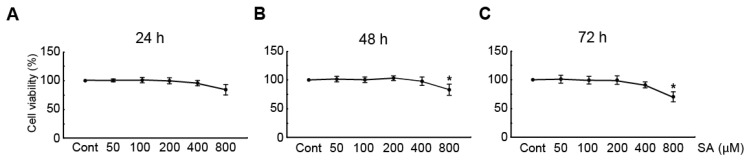
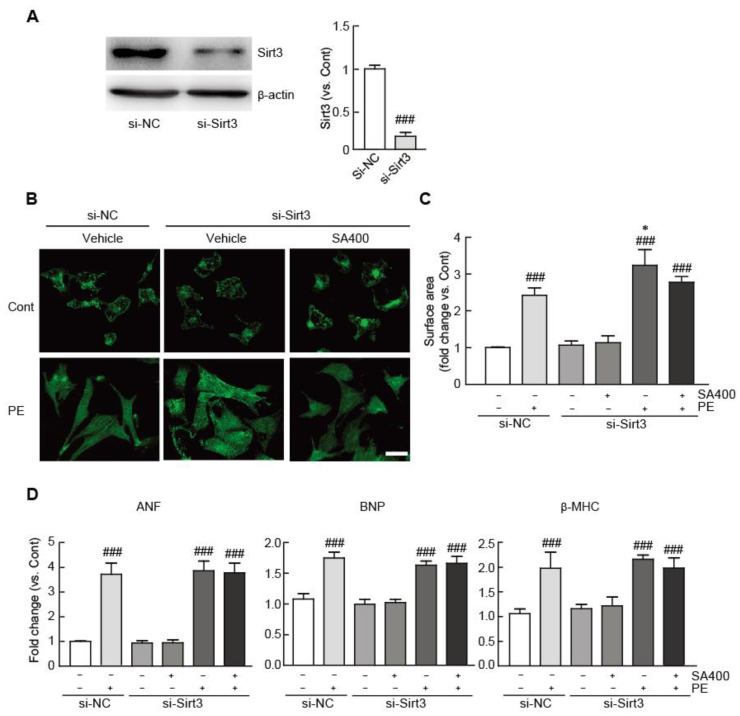
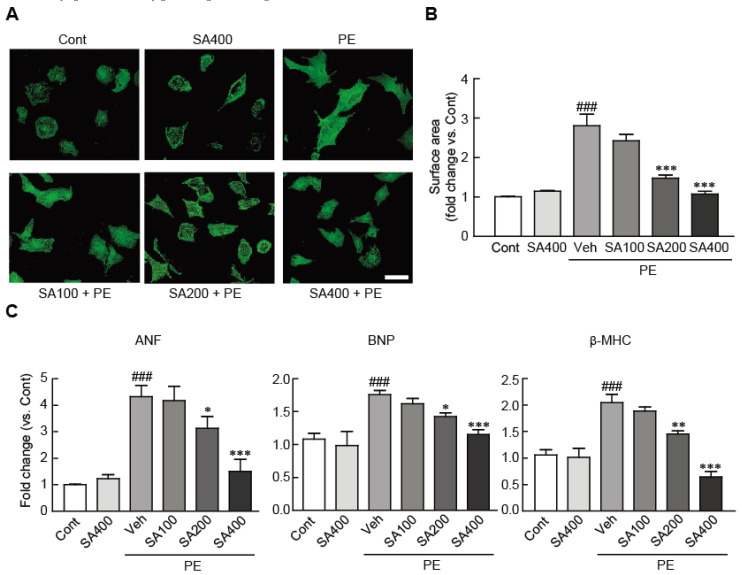
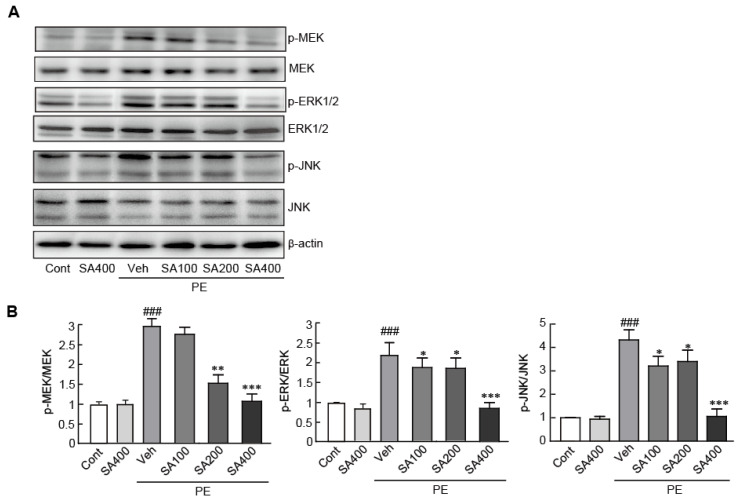
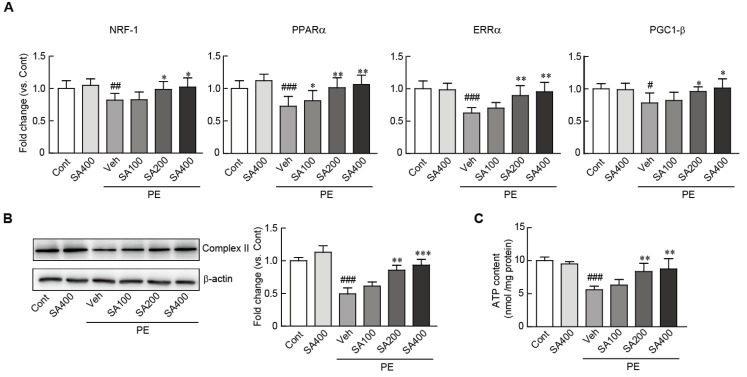
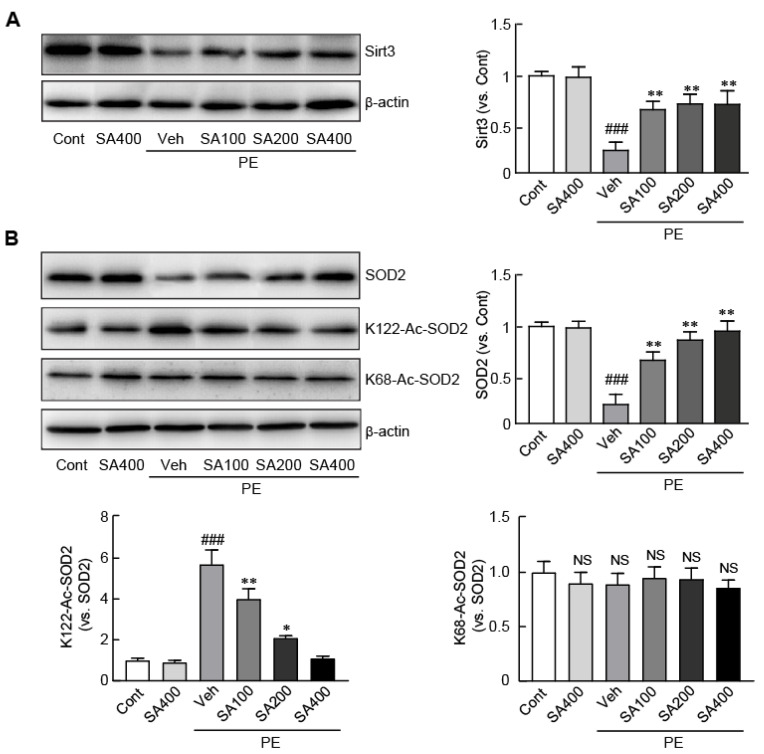
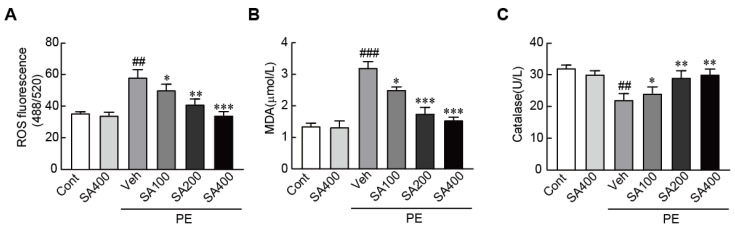
Sinapic acid (SA) is a naturally occurring phenolic compound with antioxidant properties. It also has a wide range of pharmacological properties, such as anti-inflammatory, anticancer, and hepatoprotective properties. The present study aimed to evaluate the potential pharmacological effects of SA against hypertrophic responses in neonatal rat cardiomyocytes. In order to evaluate the preventive effect of SA on cardiac hypertrophy, phenylephrine (PE)-induced hypertrophic cardiomyocytes were treated with subcytotoxic concentrations of SA. SA effectively suppressed hypertrophic responses, such as cell size enlargement, sarcomeric rearrangement, and fetal gene re-expression. In addition, SA significantly inhibited the expression of mitogen-activated protein kinase (MAPK) proteins as pro-hypertrophic factors and protected the mitochondrial functions from hypertrophic stimuli. Notably, SA activated Sirt3, a mitochondrial deacetylase, and SOD2, a mitochondrial antioxidant, in hypertrophic cardiomyocytes. SA also inhibited oxidative stress in hypertrophic cardiomyocytes. However, the protective effect of SA was significantly reduced in Sirt3-silenced hypertrophic cardiomyocytes, indicating that SA exerts its beneficial effect through Sirt3/SOD signaling. In summary, this is the first study to reveal the potential pharmacological action and inhibitory mechanism of SA as an antioxidant against cardiac hypertrophy, suggesting that SA could be utilized for the treatment of cardiac hypertrophy.
芥子酸(SA)是一种具有抗氧化特性的天然酚类化合物。它还具有广泛的药理特性,如抗炎、抗癌和保肝特性。本研究旨在评估SA对新生大鼠心肌细胞肥大反应的潜在药理作用。为了评估SA对心脏肥大的预防作用,用亚细胞毒性浓度的SA处理苯肾上腺素(PE)诱导的肥大心肌细胞。SA有效地抑制了肥大反应,如细胞大小增大、肌节重排和胎儿基因重新表达。此外,SA显著抑制作为促肥大因子的丝裂原活化蛋白激酶(MAPK)蛋白的表达,并保护线粒体功能免受肥大刺激。值得注意的是,SA在肥大心肌细胞中激活了线粒体脱乙酰酶Sirt3和线粒体抗氧化剂SOD2。SA还抑制了肥大心肌细胞中的氧化应激。然而,SA在Sirt3沉默的肥大心肌细胞中的保护作用显著降低,表明SA通过Sirt3/SOD信号发挥其有益作用。总之,这是第一项揭示SA作为抗氧化剂对抗心脏肥大的潜在药理作用和抑制机制的研究,表明SA可用于治疗心脏肥大。