Chongqing Key Laboratory for Oral Diseases and Biomedical Sciences, Chongqing, China.
Chongqing Municipal Key Laboratory of Oral Biomedical Engineering of Higher Education, Chongqing, China.
Oxid Med Cell Longev. 2022 Oct 10;2022:3319056. doi: 10.1155/2022/3319056. eCollection 2022.
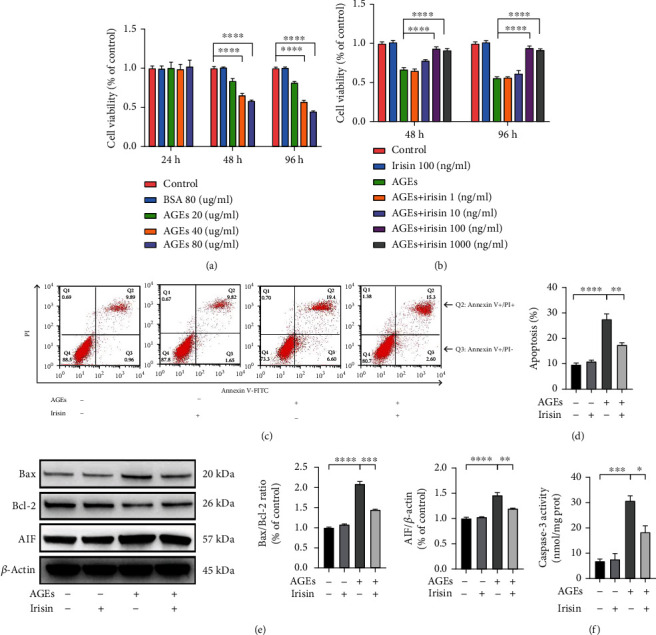
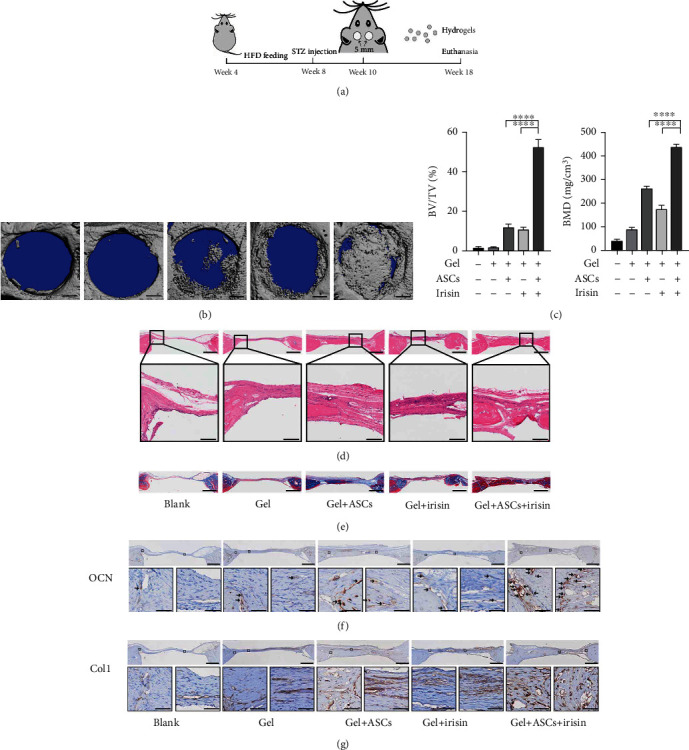
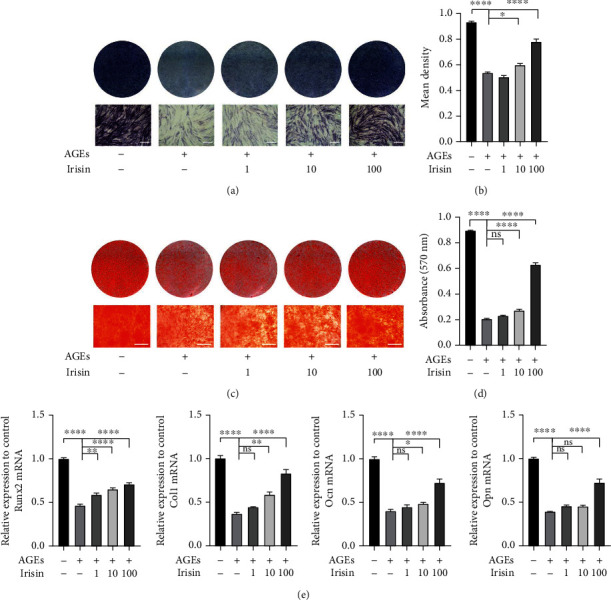
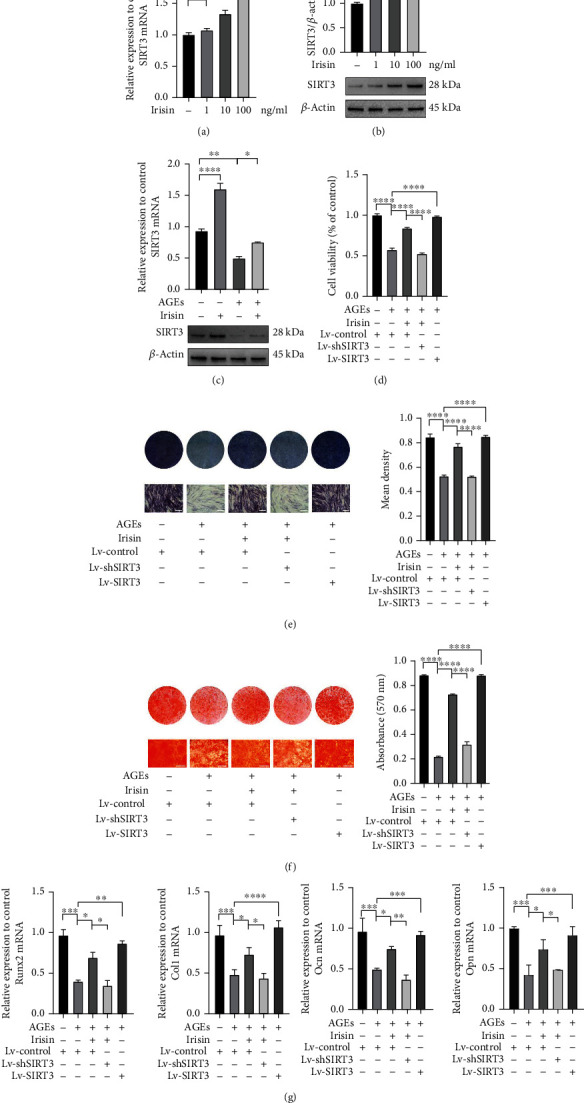
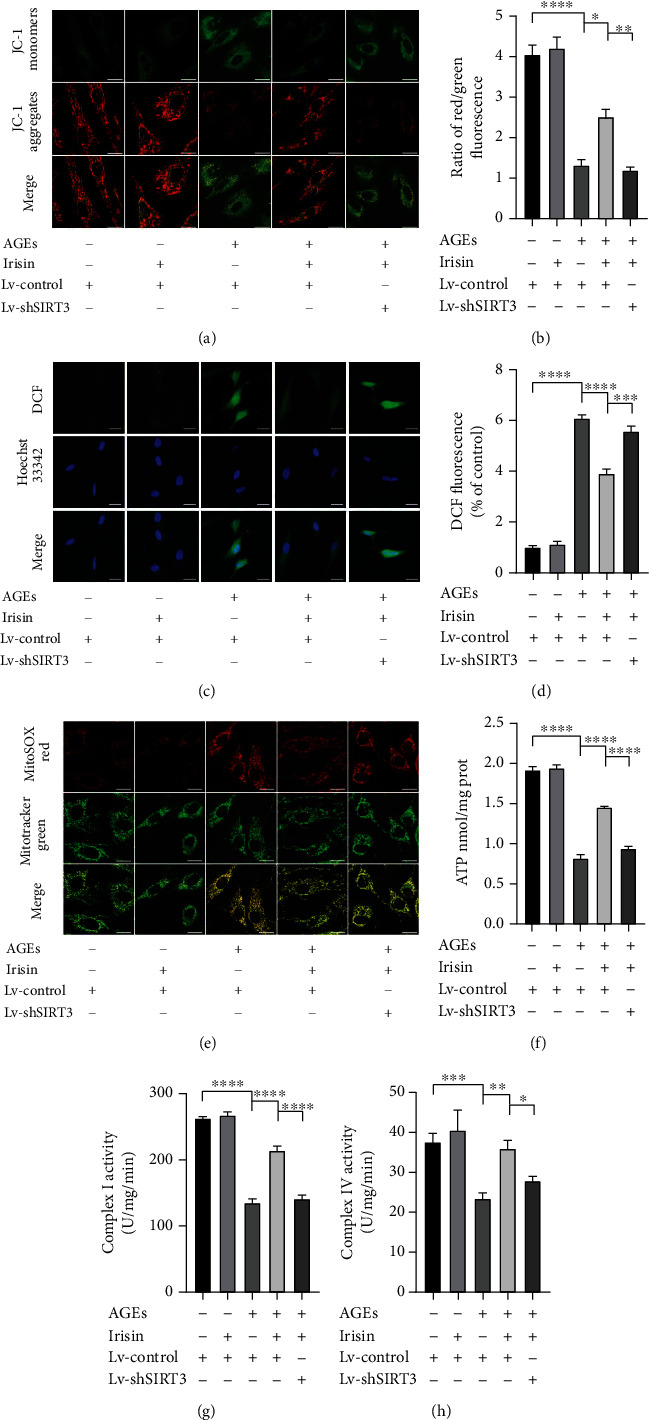
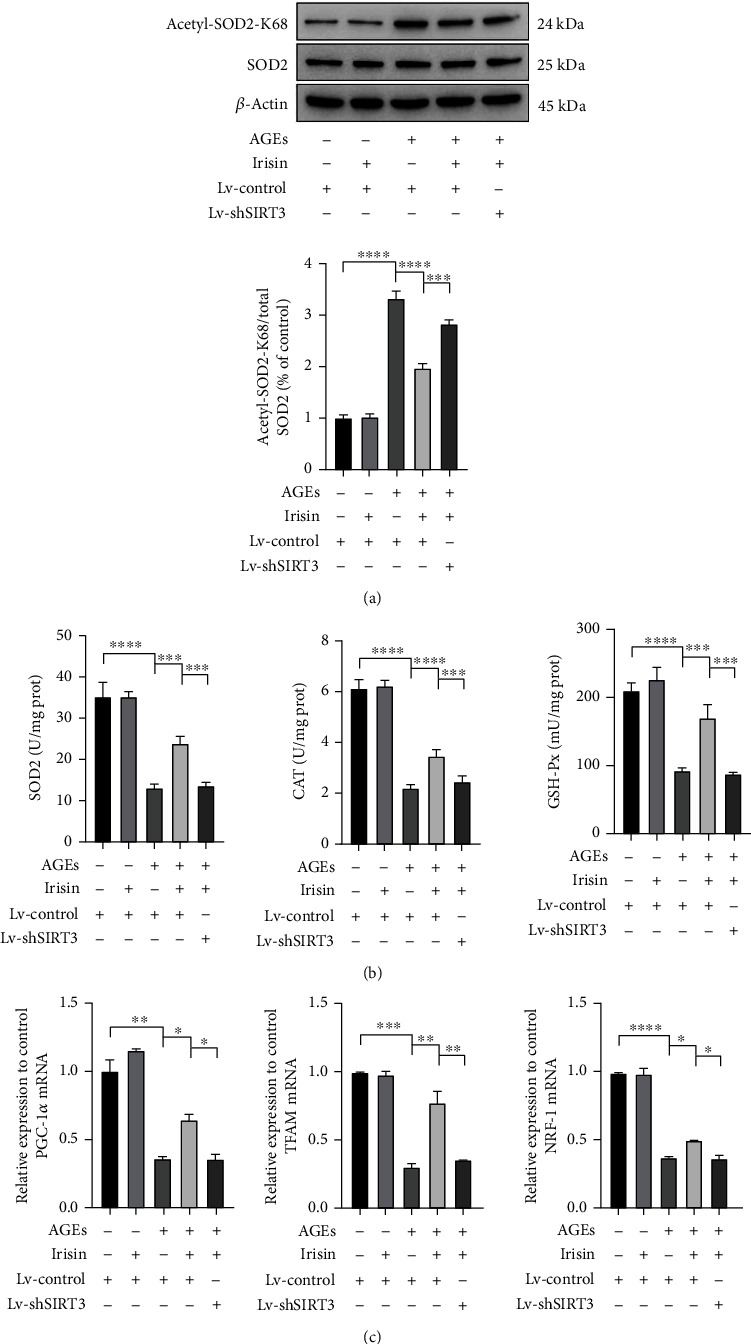
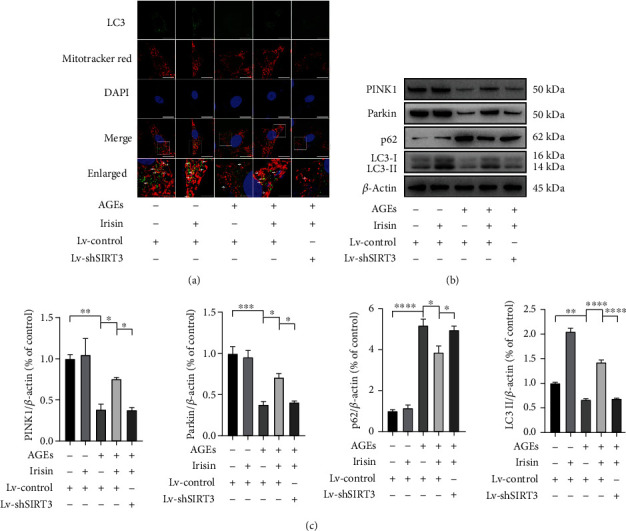
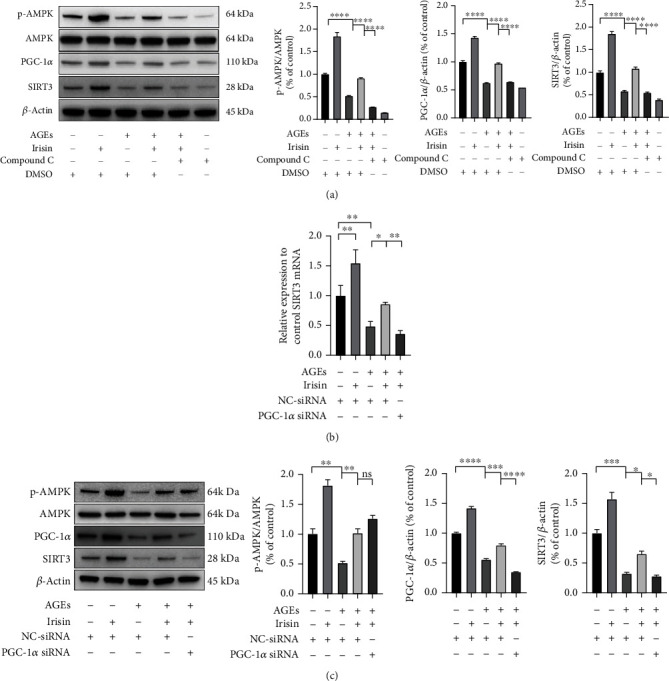
Advanced glycation end products (AGEs) accumulate in the bone tissue of patients with diabetes mellitus, resulting in oxidative stress, poor bone healing, or regeneration. Irisin, a novel exercise-induced myokine, is involved in the regulation of bone metabolism. However, the effects of irisin on adipose-derived stem cell (ASC) osteogenic differentiation and bone healing under diabetic conditions remain poorly understood. ASCs were obtained from inguinal fat of Sprague-Dawley rats and treated with different concentrations of AGEs and irisin. Cell proliferation, apoptosis, and osteogenic differentiation abilities of ASCs were detected. To explore the regulatory role of sirtuin 3 (SIRT3), ASCs were transfected with lentivirus-mediated SIRT3 overexpression or knockdown vectors. Next, we investigated mitochondrial functions, mitophagy, and mitochondrial biogenesis in different groups. Moreover, SOD2 acetylation and potential signaling pathways were assessed. Additionally, a diabetic rat model was used to evaluate the effect of irisin on bone healing in calvarial critical-sized defects (CSDs) in vivo. Our results showed that irisin incubation mitigated the inhibitory effects of AGEs on ASCs by increasing cell viability and promoting osteogenesis. Moreover, irisin modulated mitochondrial membrane potential, intracellular ROS levels, mitochondrial O status, ATP generation, complex I and IV activities, mitophagy, and mitochondrial biogenesis via a SIRT3-mediated pathway under AGEs exposure. Furthermore, in calvarial CSDs of diabetic rats, transplantation of gels encapsulating irisin-pretreated ASCs along with irisin largely enhanced bone healing. These findings suggest that irisin attenuates AGE-induced ASC dysfunction through SIRT3-mediated maintenance of oxidative stress homeostasis and regulation of mitophagy and mitochondrial biogenesis. Thus, our studies shed new light on the role of irisin in promoting the ASC osteogenesis and targeting SIRT3 as a novel therapeutic intervention strategy for bone regeneration under diabetic conditions.
糖基化终产物(AGEs)在糖尿病患者的骨组织中积累,导致氧化应激、骨愈合不良或再生不良。鸢尾素是一种新型运动诱导的肌因子,参与骨代谢的调节。然而,鸢尾素在糖尿病条件下对脂肪源性干细胞(ASC)成骨分化和骨愈合的影响仍知之甚少。从 Sprague-Dawley 大鼠腹股沟脂肪中获得 ASC,并用不同浓度的 AGEs 和鸢尾素处理。检测 ASC 的细胞增殖、凋亡和成骨分化能力。为了探讨 SIRT3 的调节作用,用慢病毒介导的 SIRT3 过表达或敲低载体转染 ASC。然后,我们研究了不同组的线粒体功能、线粒体自噬和线粒体生物发生。此外,评估了 SOD2 乙酰化和潜在的信号通路。此外,还使用糖尿病大鼠模型评估了鸢尾素对体内颅骨临界尺寸缺损(CSD)骨愈合的影响。我们的结果表明,鸢尾素孵育通过增加细胞活力和促进成骨来减轻 AGEs 对 ASC 的抑制作用。此外,鸢尾素通过 SIRT3 介导的途径调节线粒体膜电位、细胞内 ROS 水平、线粒体 O 状态、ATP 生成、复合物 I 和 IV 活性、线粒体自噬和线粒体生物发生。此外,在糖尿病大鼠的颅骨 CSD 中,凝胶包封经鸢尾素预处理的 ASC 并联合鸢尾素的移植极大地促进了骨愈合。这些发现表明,鸢尾素通过 SIRT3 介导的氧化应激稳态维持和调节线粒体自噬和线粒体生物发生来减轻 AGE 诱导的 ASC 功能障碍。因此,我们的研究揭示了鸢尾素在促进 ASC 成骨中的作用,并将 SIRT3 作为糖尿病条件下骨再生的一种新的治疗干预策略。