
SARS-CoV-2 的非结构蛋白 1 结构。
Structure of Nonstructural Protein 1 from SARS-CoV-2.
机构信息
Department of Biochemistry and Molecular Genetics, University of Alabama at Birmingham School of Medicine, Birmingham, Alabama, USA.
Department of Microbiology, University of Alabama at Birmingham School of Medicine, Birmingham, Alabama, USA
出版信息
J Virol. 2021 Jan 28;95(4). doi: 10.1128/JVI.02019-20.
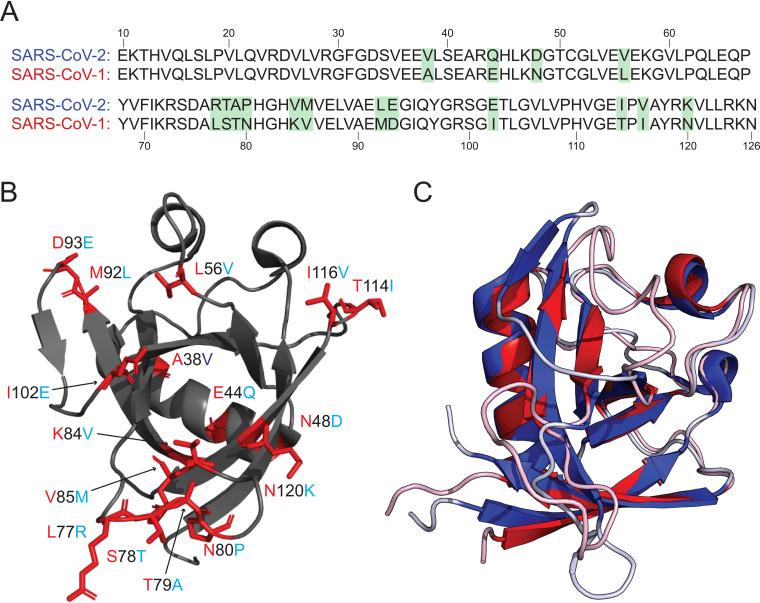
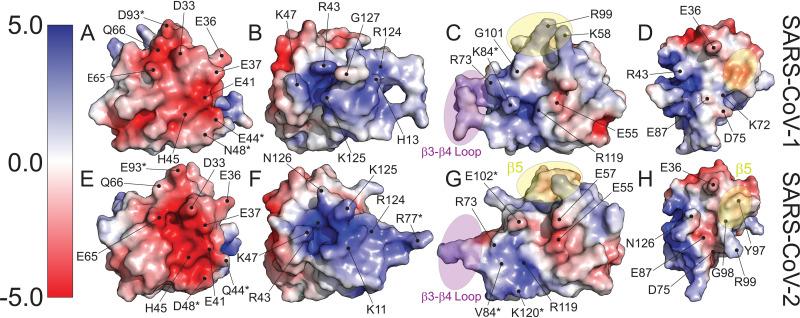
The periodic emergence of novel coronaviruses (CoVs) represents an ongoing public health concern with significant health and financial burdens worldwide. The most recent occurrence originated in the city of Wuhan, China, where a novel coronavirus (severe acute respiratory syndrome coronavirus 2 [SARS-CoV-2]) emerged causing severe respiratory illness and pneumonia. The continual emergence of novel coronaviruses underscores the importance of developing effective vaccines as well as novel therapeutic options that target either viral functions or host factors recruited to support coronavirus replication. The CoV nonstructural protein 1 (nsp1) has been shown to promote cellular mRNA degradation, block host cell translation, and inhibit the innate immune response to virus infection. Interestingly, deletion of the nsp1-coding region in infectious clones prevented the virus from productively infecting cultured cells. Because of nsp1's importance in the CoV life cycle, it has been highlighted as a viable target for both antiviral therapy and vaccine development. However, the fundamental molecular and structural mechanisms that underlie nsp1 function remain poorly understood, despite its critical role in the viral life cycle. Here, we report the high-resolution crystal structure of the amino globular portion of SARS-CoV-2 nsp1 (residues 10 to 127) at 1.77-Å resolution. A comparison of our structure with the SARS-CoV-1 nsp1 structure reveals how mutations alter the conformation of flexible loops, inducing the formation of novel secondary structural elements and new surface features. Paired with the recently published structure of the carboxyl end of nsp1 (residues 148 to 180), our results provide the groundwork for future studies focusing on SARS-CoV-2 nsp1 structure and function during the viral life cycle. Severe acute respiratory syndrome coronavirus 2 (SARS-CoV-2) is the causative agent of the COVID-19 pandemic. One protein known to play a critical role in the coronavirus life cycle is nonstructural protein 1 (nsp1). As such, it has been highlighted in numerous studies as a target for both the development of antivirals and the design of live-attenuated vaccines. Here, we report the high-resolution crystal structure of nsp1 derived from SARS-CoV-2 at 1.77-Å resolution. This structure will facilitate future studies focusing on understanding the relationship between structure and function for nsp1. In turn, understanding these structure-function relationships will allow nsp1 to be fully exploited as a target for both antiviral development and vaccine design.
新型冠状病毒(CoV)的周期性出现是全球公共卫生关注的持续问题,对健康和经济造成了重大负担。最近一次发生在中国武汉市,一种新型冠状病毒(严重急性呼吸综合征冠状病毒 2[SARS-CoV-2])出现,导致严重呼吸道疾病和肺炎。新型冠状病毒的持续出现凸显了开发有效疫苗以及针对病毒功能或宿主因子的新型治疗选择的重要性,这些宿主因子被招募来支持冠状病毒复制。CoV 的非结构蛋白 1(nsp1)已被证明可促进细胞 mRNA 降解、阻断宿主细胞翻译,并抑制先天免疫反应病毒感染。有趣的是,传染性克隆中 nsp1 编码区的缺失阻止了病毒在培养细胞中有效感染。由于 nsp1 在 CoV 生命周期中的重要性,它已被突出为抗病毒治疗和疫苗开发的可行靶标。然而,尽管 nsp1 在病毒生命周期中起着至关重要的作用,但它的基本分子和结构机制仍知之甚少。在这里,我们报告了 SARS-CoV-2 nsp1(残基 10 至 127)氨基球状部分的高分辨率晶体结构,分辨率为 1.77-Å。我们的结构与 SARS-CoV-1 nsp1 结构的比较表明,突变如何改变柔性环的构象,诱导新的二级结构元件和新表面特征的形成。结合最近发表的 nsp1 羧基端结构(残基 148 至 180),我们的结果为未来研究提供了基础,重点是 SARS-CoV-2 nsp1 在病毒生命周期中的结构和功能。严重急性呼吸综合征冠状病毒 2(SARS-CoV-2)是 COVID-19 大流行的病原体。已知在冠状病毒生命周期中起关键作用的一种蛋白质是非结构蛋白 1(nsp1)。因此,它在许多研究中被强调为开发抗病毒药物和设计活疫苗的靶标。在这里,我们报告了 SARS-CoV-2 衍生的 nsp1 的高分辨率晶体结构,分辨率为 1.77-Å。该结构将促进未来专注于理解 nsp1 结构与功能之间关系的研究。反过来,理解这些结构-功能关系将使 nsp1 能够充分用作抗病毒开发和疫苗设计的靶标。





 Zotero 插件