Division of International Epidemiology and Population Studies, Fogarty International Center, National Institutes of Health, Bethesda, MD, USA.
School of Public Health, Fudan University, Key Laboratory of Public Health Safety, Ministry of Education, Shanghai, China.
Science. 2021 Jan 15;371(6526). doi: 10.1126/science.abe2424. Epub 2020 Nov 24.
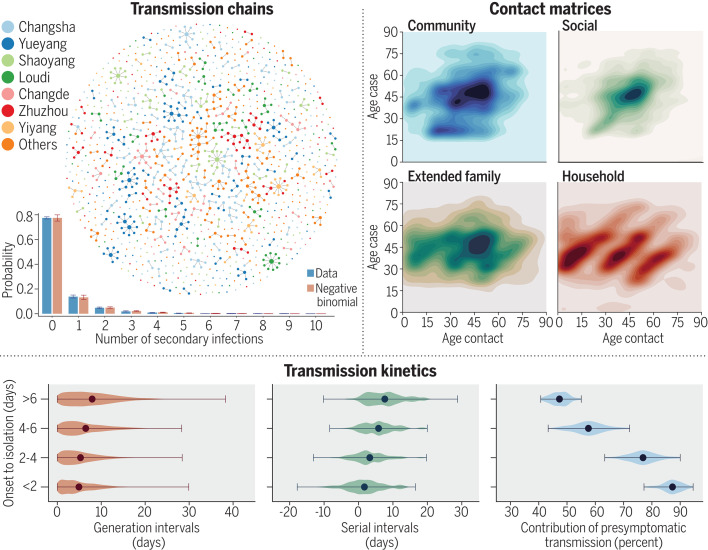
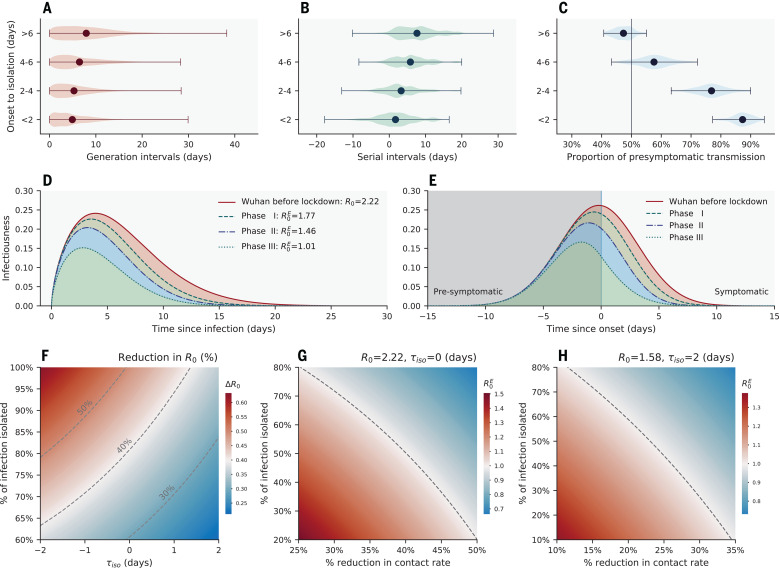
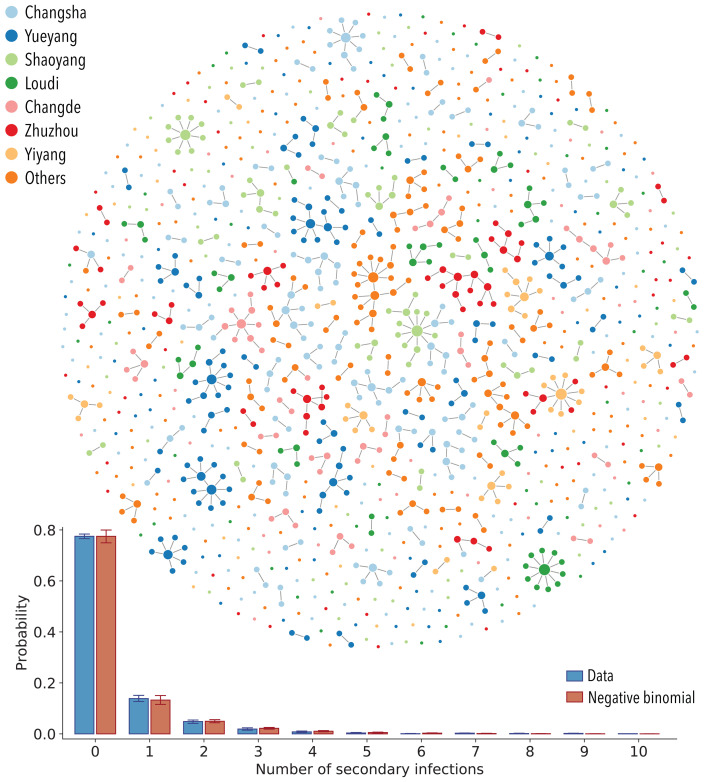
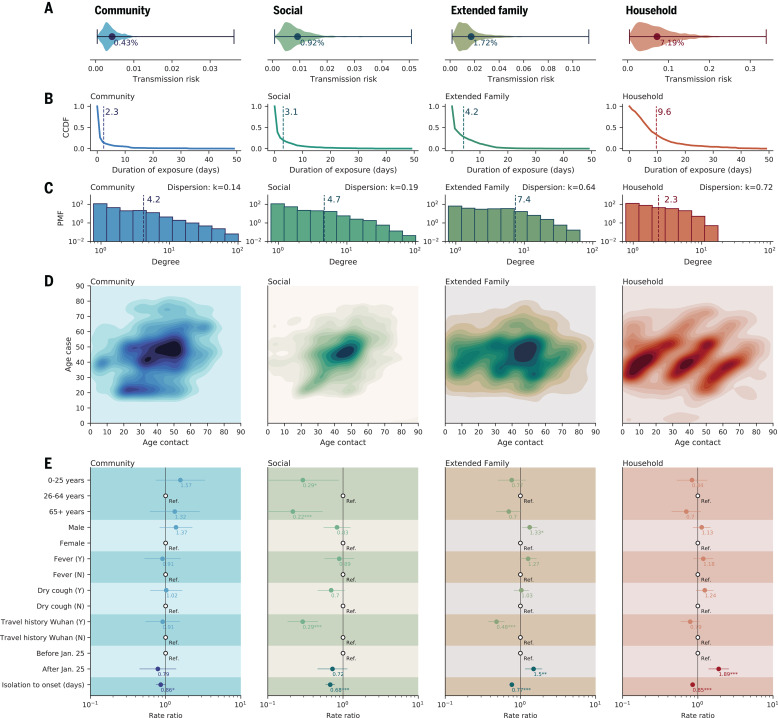
A long-standing question in infectious disease dynamics concerns the role of transmission heterogeneities, which are driven by demography, behavior, and interventions. On the basis of detailed patient and contact-tracing data in Hunan, China, we find that 80% of secondary infections traced back to 15% of severe acute respiratory syndrome coronavirus 2 (SARS-CoV-2) primary infections, which indicates substantial transmission heterogeneities. Transmission risk scales positively with the duration of exposure and the closeness of social interactions and is modulated by demographic and clinical factors. The lockdown period increases transmission risk in the family and households, whereas isolation and quarantine reduce risks across all types of contacts. The reconstructed infectiousness profile of a typical SARS-CoV-2 patient peaks just before symptom presentation. Modeling indicates that SARS-CoV-2 control requires the synergistic efforts of case isolation, contact quarantine, and population-level interventions because of the specific transmission kinetics of this virus.
传染病动力学中长期存在的一个问题是传播异质性的作用,它是由人口统计学、行为和干预措施驱动的。基于中国湖南的详细患者和接触者追踪数据,我们发现 80%的继发感染可追溯到 15%的严重急性呼吸综合征冠状病毒 2(SARS-CoV-2)原发感染,这表明存在大量的传播异质性。传播风险与暴露持续时间、社交互动的密切程度呈正相关,并受人口统计学和临床因素的调节。封锁期增加了家庭和家庭内的传播风险,而隔离和检疫则降低了所有类型接触的风险。典型 SARS-CoV-2 患者的传染性重建谱在症状出现前达到峰值。模型表明,由于这种病毒的特定传播动力学,SARS-CoV-2 的控制需要病例隔离、接触检疫和人群干预的协同努力。