National Chengdu Center for Safety Evaluation of Drugs, State Key Laboratory of Biotherapy/Collaborative Innovation Center for Biotherapy, West China Hospital, Sichuan University, 610041, Chengdu, People's Republic of China.
Ministry of Education, Collaborative Innovation Center of Advanced Drug Delivery System and Biotech Drugs in Universities of Shandong, Yantai University, 264005, Yantai, People's Republic of China.
Nat Commun. 2020 Nov 24;11(1):5962. doi: 10.1038/s41467-020-19780-z.
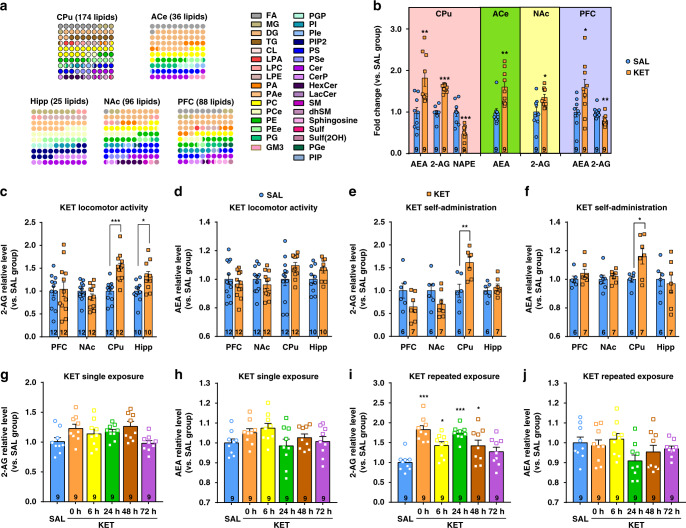
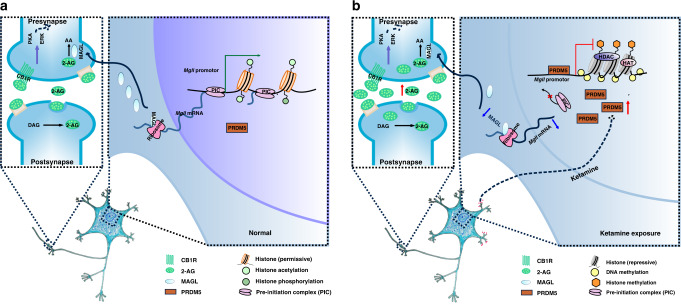
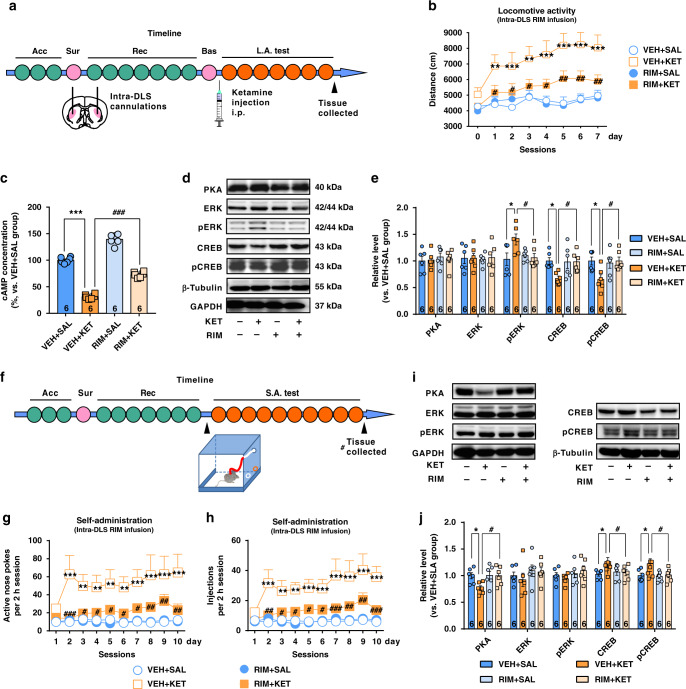
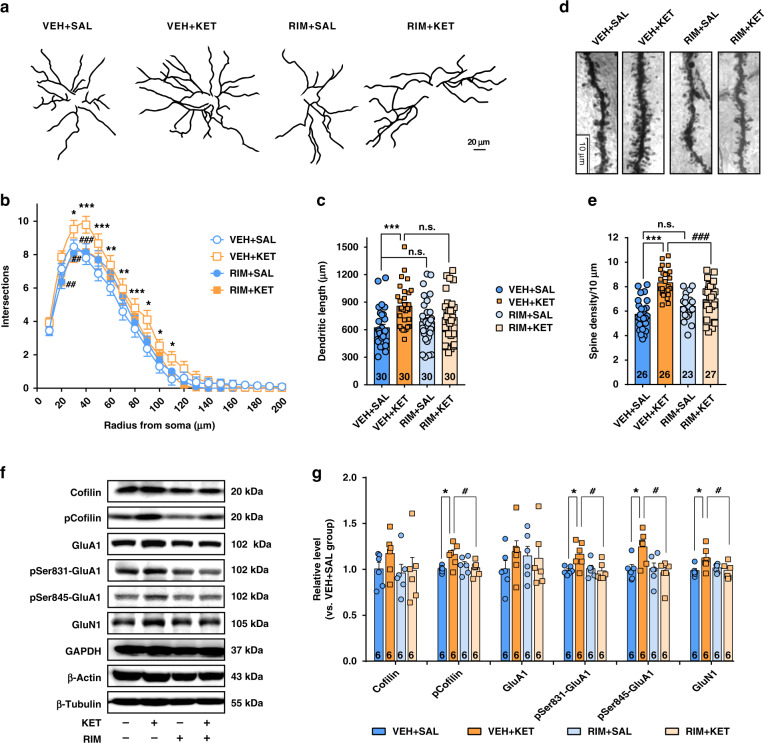
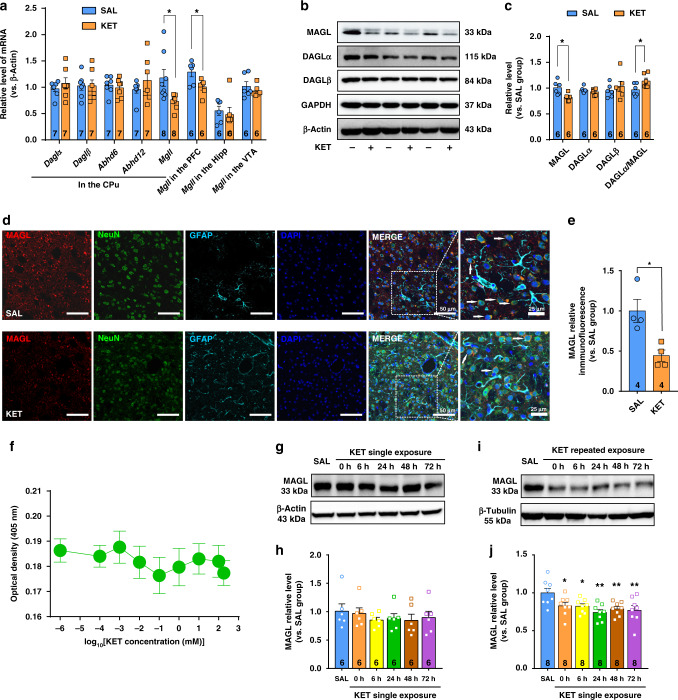
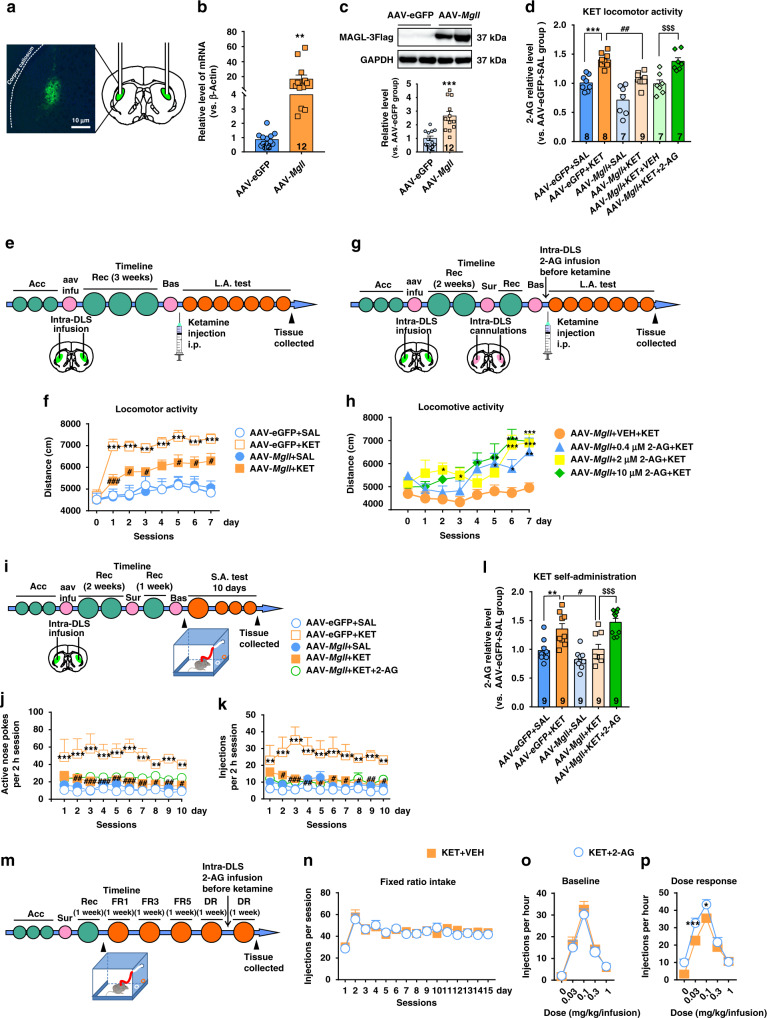
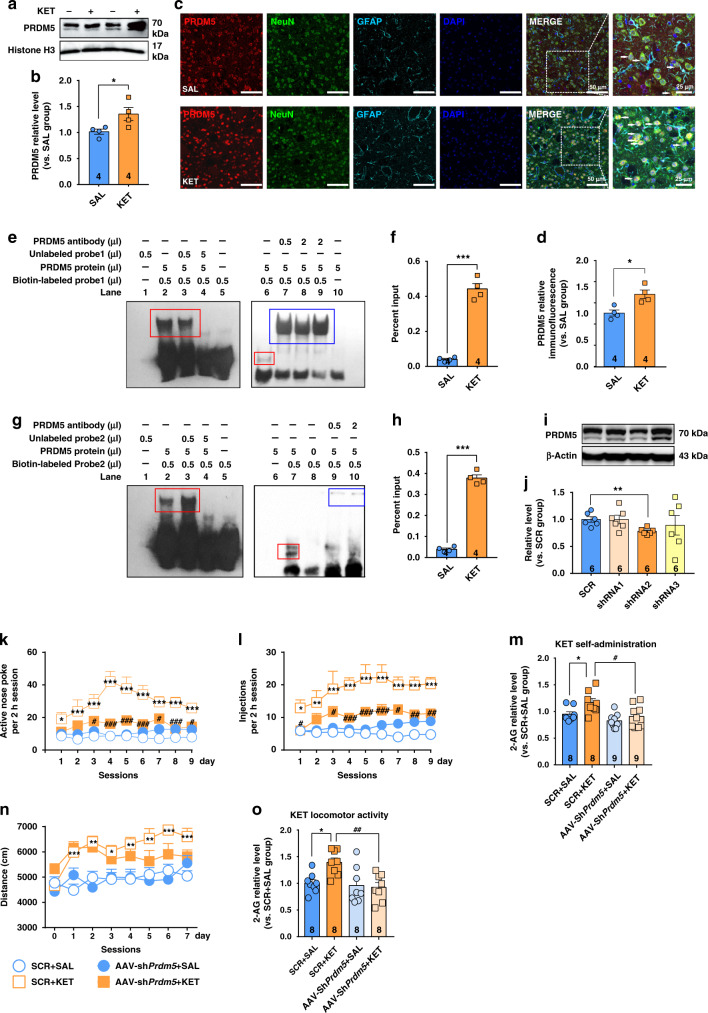
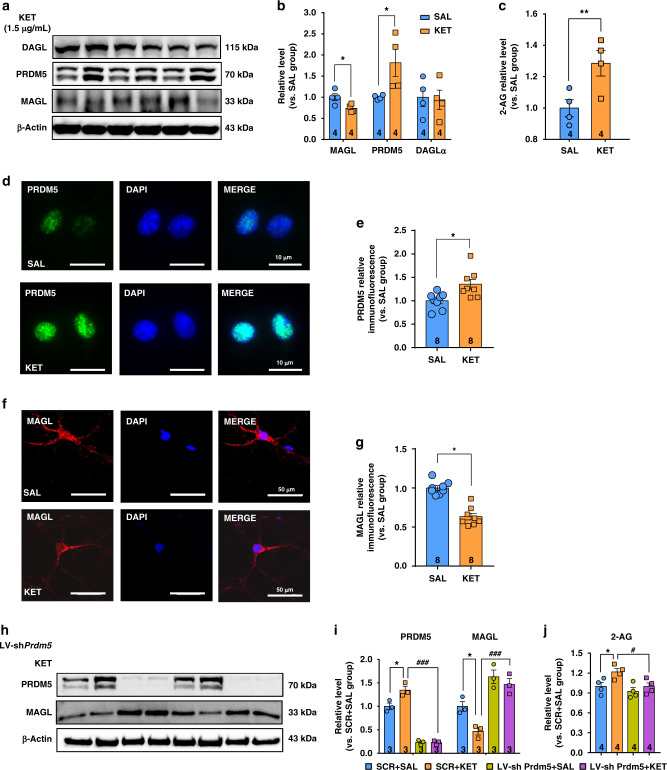
The abuse potential of ketamine limits its clinical application, but the precise mechanism remains largely unclear. Here we discovered that ketamine significantly remodels the endocannabinoid-related lipidome and activates 2-arachidonoylglycerol (2-AG) signaling in the dorsal striatum (caudate nucleus and putamen, CPu) of mice. Elevated 2-AG in the CPu is essential for the psychostimulant and reinforcing effects of ketamine, whereas blockade of the cannabinoid CB1 receptor, a predominant 2-AG receptor, attenuates ketamine-induced remodeling of neuronal dendrite structure and neurobehaviors. Ketamine represses the transcription of the monoacylglycerol lipase (MAGL) gene by promoting the expression of PRDM5, a negative transcription factor of the MAGL gene, leading to increased 2-AG production. Genetic overexpression of MAGL or silencing of PRDM5 expression in the CPu robustly reduces 2-AG production and ketamine effects. Collectively, endocannabinoid signaling plays a critical role in mediating the psychostimulant and reinforcing properties of ketamine.
氯胺酮的滥用潜力限制了其临床应用,但确切的机制仍很大程度上不清楚。在这里,我们发现在小鼠背侧纹状体(尾壳核和壳核)中,氯胺酮显著重塑了内源性大麻素相关脂质组,并激活了 2-花生四烯酸甘油(2-AG)信号通路。CPu 中升高的 2-AG 对于氯胺酮的精神兴奋剂和强化作用至关重要,而阻断大麻素 CB1 受体(2-AG 的主要受体)可减弱氯胺酮诱导的神经元树突结构和神经行为重塑。氯胺酮通过促进 MAGL 基因的负转录因子 PRDM5 的表达来抑制单酰基甘油脂肪酶(MAGL)基因的转录,从而导致 2-AG 的产生增加。CPu 中 MAGL 的基因过表达或 PRDM5 表达的沉默强烈降低了 2-AG 的产生和氯胺酮的作用。总之,内源性大麻素信号在介导氯胺酮的精神兴奋剂和强化特性方面起着关键作用。