Beckman Institute for Advanced Science and Technology, University of Illinois at Urbana-Champaign, Urbana, IL, USA.
Department of Psychology, University of Illinois at Urbana-Champaign, Urbana, IL, USA.
Sci Rep. 2020 Nov 24;10(1):19409. doi: 10.1038/s41598-020-76160-9.
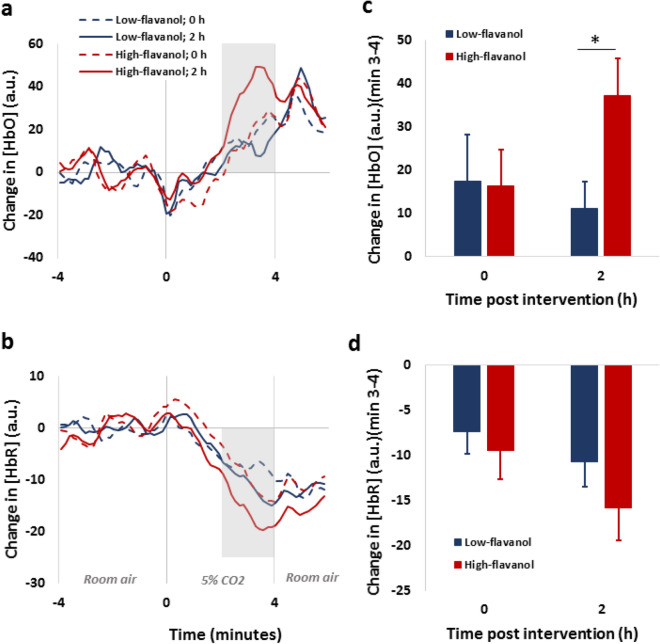
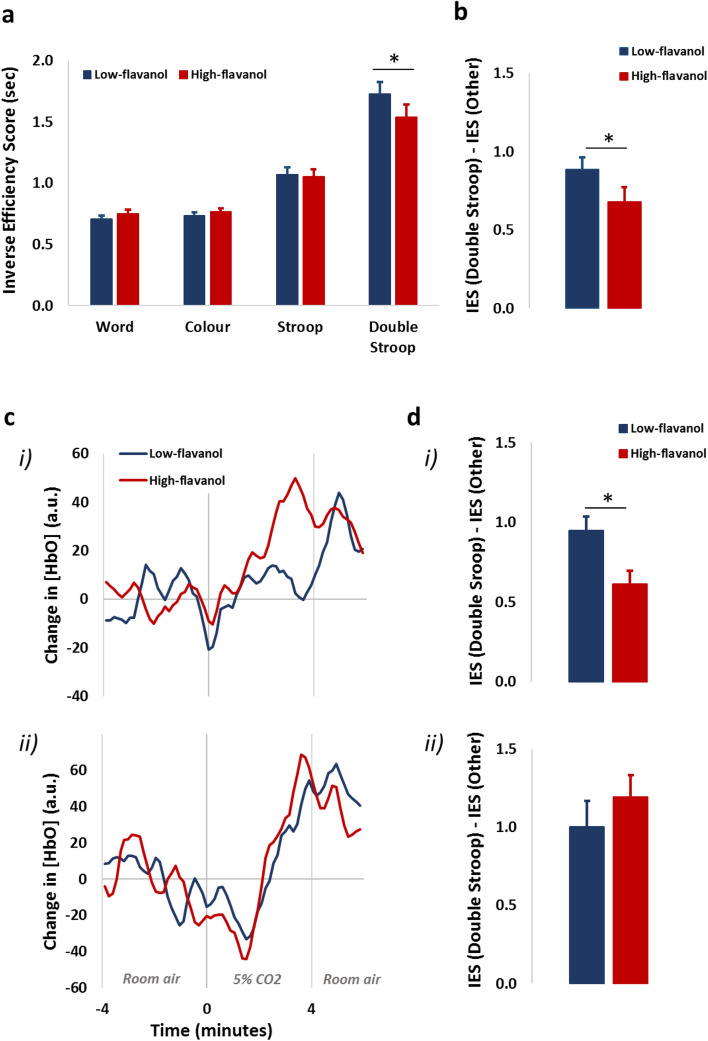
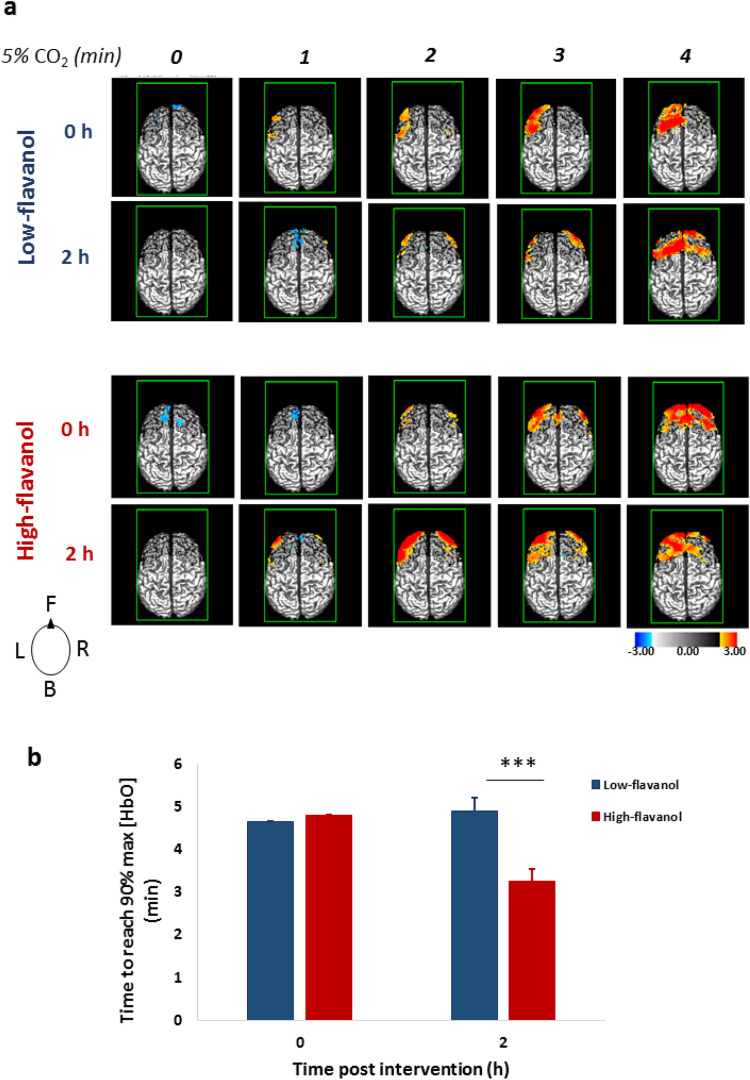
Cocoa flavanols protect humans against vascular disease, as evidenced by improvements in peripheral endothelial function, likely through nitric oxide signalling. Emerging evidence also suggests that flavanol-rich diets protect against cognitive aging, but mechanisms remain elusive. In a randomized double-blind within-subject acute study in healthy young adults, we link these two lines of research by showing, for the first time, that flavanol intake leads to faster and greater brain oxygenation responses to hypercapnia, as well as higher performance only when cognitive demand is high. Individual difference analyses further show that participants who benefit from flavanols intake during hypercapnia are also those who do so in the cognitive challenge. These data support the hypothesis that similar vascular mechanisms underlie both the peripheral and cerebral effects of flavanols. They further show the importance of studies combining physiological and graded cognitive challenges in young adults to investigate the actions of dietary flavanols on brain function.
可可黄烷醇可预防血管疾病,这可通过改善周边内皮功能得到证明,可能是通过一氧化氮信号传递。新出现的证据还表明,富含黄烷醇的饮食可预防认知能力下降,但机制仍不清楚。在一项针对健康年轻成年人的随机双盲自身对照急性研究中,我们首次将这两条研究线索联系起来,表明黄烷醇的摄入可导致对高碳酸血症的大脑氧合反应更快、更大,并且仅在认知需求高时才会提高表现。个体差异分析还表明,在高碳酸血症期间受益于黄烷醇摄入的参与者,在认知挑战中也是如此。这些数据支持这样一种假设,即黄烷醇对周边和大脑的影响存在相似的血管机制。它们进一步表明,结合生理和分级认知挑战在年轻成年人中进行研究的重要性,以研究饮食黄烷醇对大脑功能的作用。