School of Sciences (Biotechnology), RMIT University, PO Box 71, Bundoora, 3083, Australia.
Microscopy and Microanalysis Facility, school of Science Engineering and Health, RMIT University, GPO Box 2476V, Melbourne, Victoria, 3001, Australia.
BMC Complement Med Ther. 2020 Nov 25;20(1):365. doi: 10.1186/s12906-020-03122-z.
Momordica cochinchinensis (Cucurbitaceae) is a nutritionally and medicinally important fruit restricted to South East Asia with diverse morphological and genetic variations but there is limited information on its medicinal potential.
M. cochinchinensis aril from 44 different samples in Australia, Thailand and Vietnam were extracted using different solvents and tested for its anticancer potential. Anticancer activity of M. cochinchinensis aril on breast cancer (MCF7 and BT474) and melanoma (MM418C1 and D24) cells were compared to control fibroblasts (NHDF). The cytotoxicity of the cells following treatment with the aril extract was determined using CCK-8 assay. Biochemical and morphological changes were analysed using flow cytometry, confocal and transmission electron microscopy to determine the mechanism of cell death.
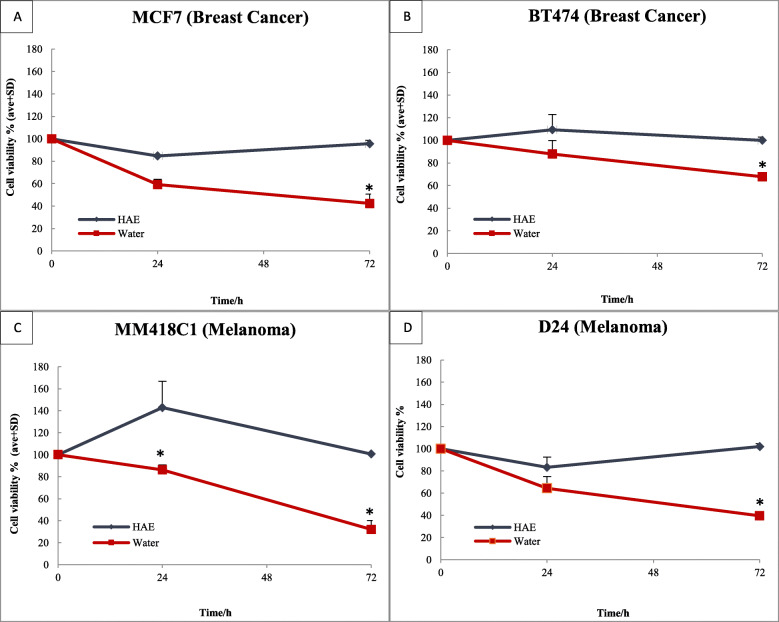
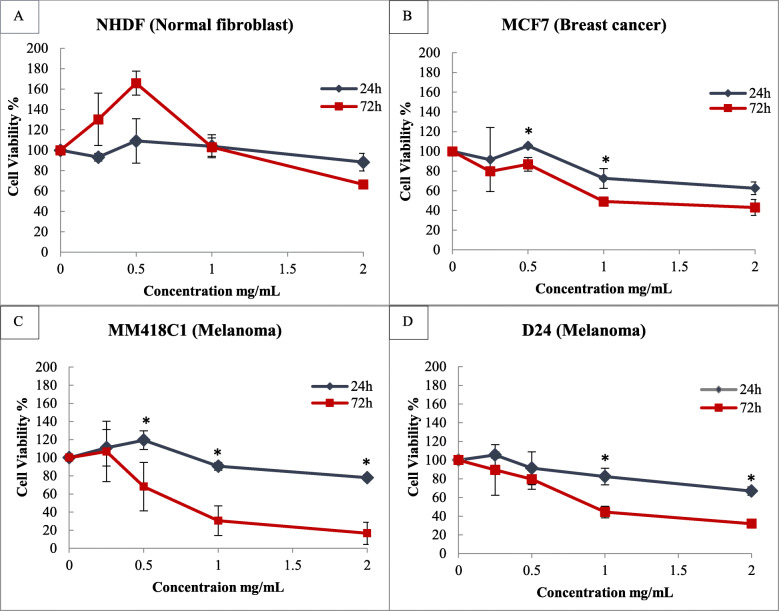
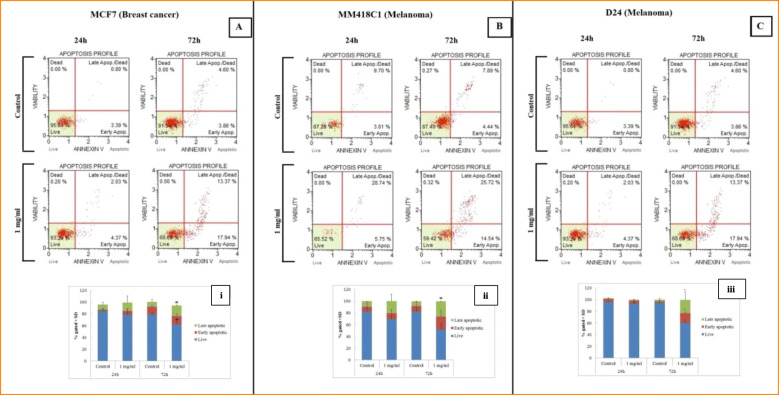
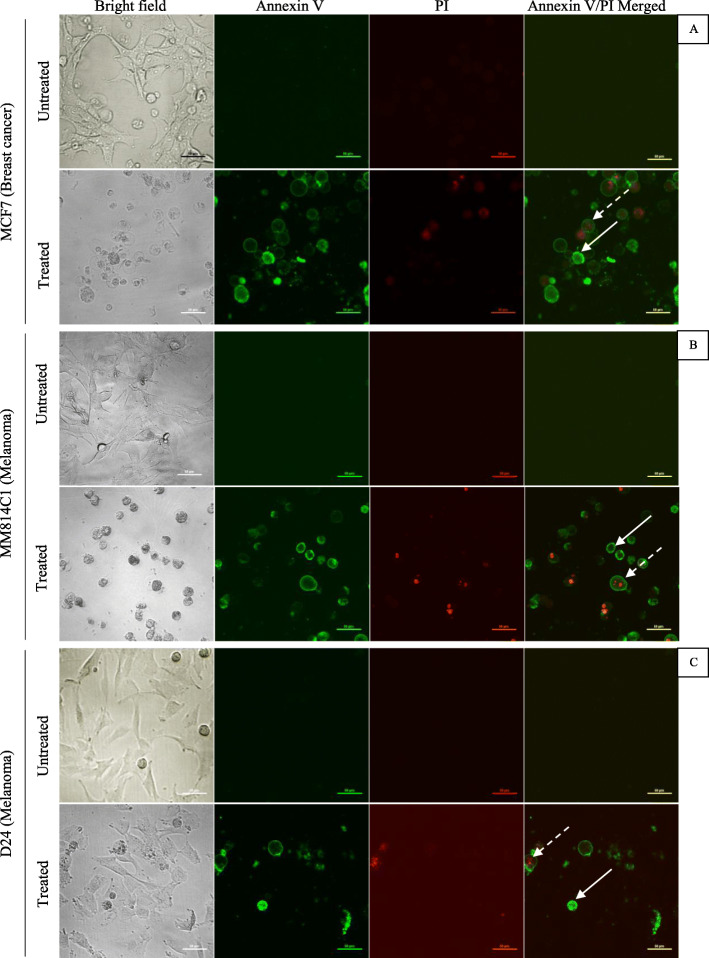
The water extract from the aril of M. cochinchinensis elicited significantly higher cytotoxicity towards breast cancer and melanoma cells than the HAE extract. The IC concentration for the crude water extract ranged from 0.49 to 0.73 mg/mL and induced both apoptotic and necrotic cell death in a dose- and time-dependant manner with typical biochemical and morphological characteristics. The greatest cytotoxicity was observed from Northern Vietnam samples which caused 70 and 50% melanoma and breast cancer cell death, respectively.
The water extract of M. cochinchinensis aril caused significant apoptosis and necrosis of breast cancer and melanoma cells, with varieties from Northern Vietnam possessing superior activity. This highlights the potential of this fruit in the development of novel anticancer agents against such tumours, with specific regions on where to collect the best variety and extraction solvent for optimum activity.
苦瓜(葫芦科)是一种营养丰富且具有药用价值的水果,主要分布在东南亚地区,具有多样化的形态和遗传变异,但关于其药用潜力的信息有限。
从澳大利亚、泰国和越南的 44 个不同样本中提取苦瓜的种仁,使用不同的溶剂,并测试其抗癌潜力。将苦瓜种仁对乳腺癌(MCF7 和 BT474)和黑色素瘤(MM418C1 和 D24)细胞的抗癌活性与对照成纤维细胞(NHDF)进行比较。用 CCK-8 法测定细胞经种仁提取物处理后的细胞毒性。采用流式细胞术、共聚焦和透射电子显微镜分析生化和形态变化,以确定细胞死亡的机制。
苦瓜种仁的水提取物对乳腺癌和黑色素瘤细胞的细胞毒性明显高于 HAE 提取物。粗水提取物的 IC 浓度范围为 0.49 至 0.73mg/ml,并以剂量和时间依赖的方式诱导细胞凋亡和坏死,具有典型的生化和形态特征。来自越南北部的样本具有最强的细胞毒性,分别导致 70%和 50%的黑色素瘤和乳腺癌细胞死亡。
苦瓜种仁的水提取物可显著诱导乳腺癌和黑色素瘤细胞发生凋亡和坏死,来自越南北部的品种具有更强的活性。这突出了这种水果在开发针对此类肿瘤的新型抗癌药物方面的潜力,具体包括在何处采集最佳品种以及提取溶剂以获得最佳活性。