Division of Hematology, CBB and Bone Marrow Transplantation, Chaim Sheba Medical Center, Tel Aviv University, Tel-Hashomer, Ramat Gan, Israel.
Goldyne Savad Institute of Gene Therapy, Hebrew University Hospital, Jerusalem, Israel.
J Hematol Oncol. 2020 Nov 25;13(1):158. doi: 10.1186/s13045-020-00993-0.
Chemoresistance remains a major treatment obstacle in multiple myeloma (MM). Novel new therapies are thus in need. Transient Receptor Potential Vanilloid type 1 (TRPV1) is a calcium-permeable ion channel that has been demonstrated to be expressed in solid tumors. Calcium channels have been shown to be involved in the regulation of cell proliferation, chemoresistance, migration and invasion. The aim of the current study was to evaluate its possible role in MM.
Pharmacological inhibitor was used to evaluate the role of TRPV1 in MM cell lines and primary MM cells. Flow cytometry, molecular analysis, fluorescent microscopy, proteomic analysis and xenograft in vivo model of MM with BM involvement were employed to assess the effect of TRPV1 inhibition and decipher its unique mechanism of action in MM.
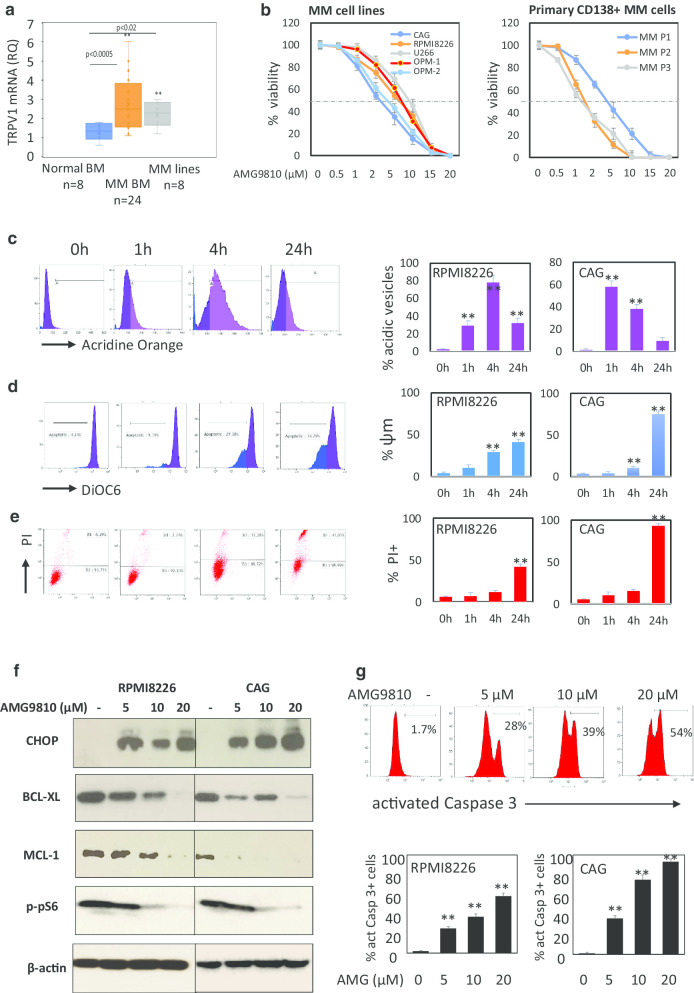
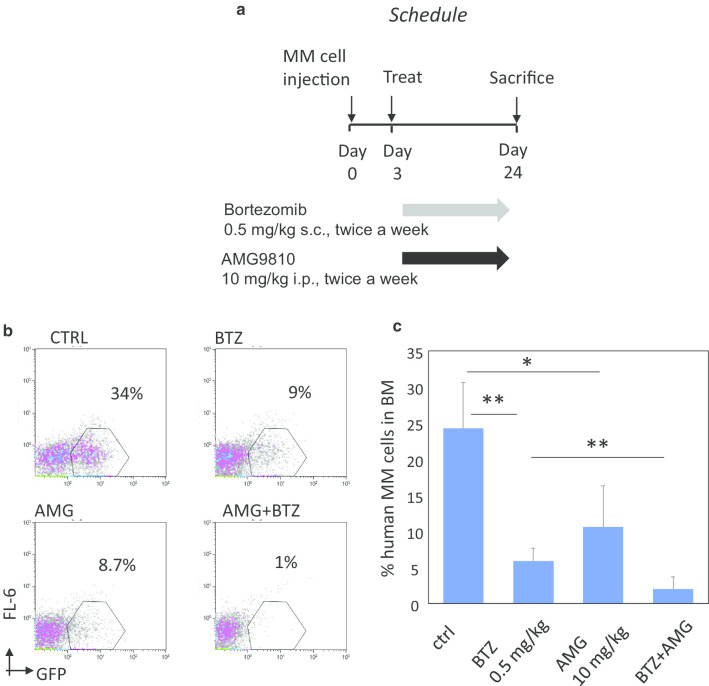
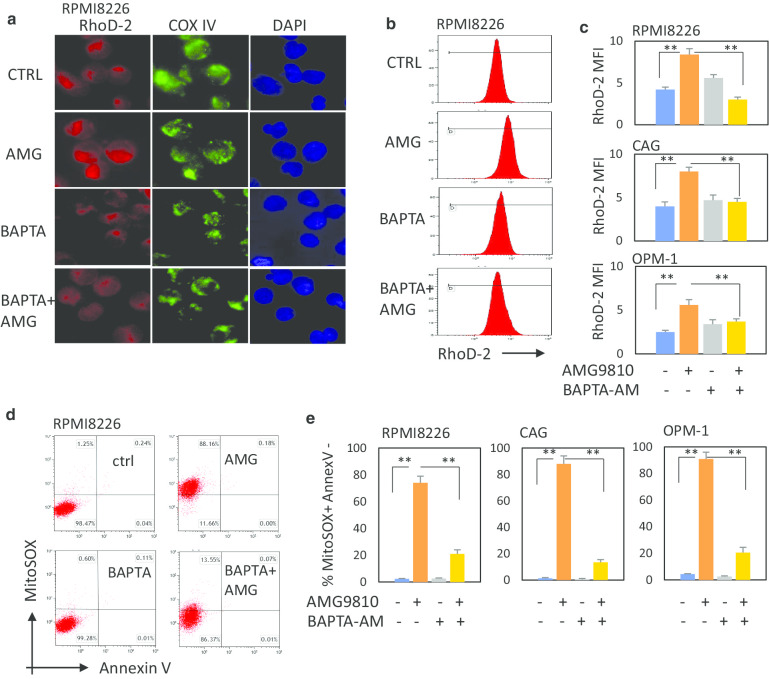
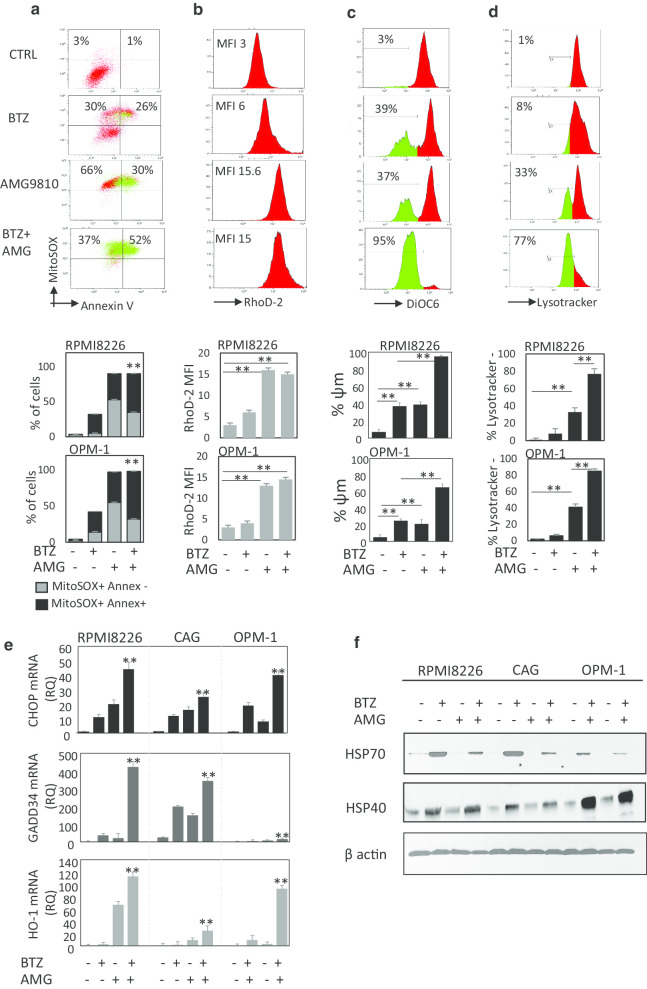
TRPV1 was found to be expressed by MM cell lines and primary MM cells. TRPV1 inhibition using the antagonist AMG9810-induced MM cell apoptosis and synergized with bortezomib, overcoming both CXCR4-dependent stroma-mediated and acquired resistance. In accordance, AMG9810 suppressed the expression and activation of CXCR4 in MM cells. TRPV1 inhibition increased mitochondrial calcium levels with subsequent mitochondrial ROS accumulation and depolarization. These effects were reversed by calcium chelation, suggesting the role of calcium perturbations in oxidative stress and mitochondrial destabilization. Furthermore, AMG9810 abolished bortezomib-induced accumulation of mitochondrial HSP70 and suppressed protective mitochondrial unfolded protein response. Proteomics revealed unique molecular signature related to the modification of ubiquitin signaling pathway. Consequently, 38 proteins related to the ubiquitylation machinery were downregulated upon combined bortezomib/AMG9810 treatment. Concomitantly, AMG9810 abolished bortezomib-induced ubiquitination of cytosolic and mitochondrial proteins. Furthermore, bortezomib/AMG9810 treatment induced mitochondrial accumulation of PINK1, significantly reduced the mitochondrial mass and promoted mitochondrial-lysosomal fusion, indicating massive mitophagy. Finally, in a recently developed xenograft model of systemic MM with BM involvement, bortezomib/AMG9810 treatment effectively reduced tumor burden in the BM of MM-bearing mice.
Altogether, our results unravel the mechanism mediating the strong synergistic anti-MM activity of bortezomib in combination with TRPV1 inhibition which may be translated into the clinic.
在多发性骨髓瘤(MM)中,化疗耐药仍然是一个主要的治疗障碍。因此,需要新的治疗方法。瞬时受体电位香草醛型 1(TRPV1)是一种钙通透性离子通道,已被证明在实体瘤中表达。钙通道已被证明参与细胞增殖、化疗耐药、迁移和侵袭的调节。本研究的目的是评估其在 MM 中的可能作用。
使用药理学抑制剂评估 TRPV1 在 MM 细胞系和原代 MM 细胞中的作用。采用流式细胞术、分子分析、荧光显微镜、蛋白质组学分析和骨髓受累 MM 的体内异种移植模型来评估 TRPV1 抑制的作用,并破译其在 MM 中的独特作用机制。
发现 TRPV1 在 MM 细胞系和原代 MM 细胞中表达。使用拮抗剂 AMG9810 抑制 TRPV1 诱导 MM 细胞凋亡,并与硼替佐米协同作用,克服 CXCR4 依赖性基质介导和获得性耐药。相应地,AMG9810 抑制 MM 细胞中 CXCR4 的表达和激活。TRPV1 抑制增加线粒体钙水平,随后导致线粒体 ROS 积累和去极化。这些作用可以通过钙螯合来逆转,表明钙波动在氧化应激和线粒体失稳中的作用。此外,AMG9810 消除了硼替佐米诱导的线粒体 HSP70 积累,并抑制了保护性线粒体未折叠蛋白反应。蛋白质组学揭示了与泛素信号通路修饰相关的独特分子特征。结果,38 种与泛素化机制相关的蛋白质在联合硼替佐米/AMG9810 治疗后下调。同时,AMG9810 消除了硼替佐米诱导的细胞质和线粒体蛋白的泛素化。此外,硼替佐米/AMG9810 治疗诱导 PINK1 在线粒体中的积累,显著减少线粒体质量并促进线粒体-溶酶体融合,表明大量的线粒体自噬。最后,在最近开发的骨髓受累系统性 MM 的异种移植模型中,硼替佐米/AMG9810 治疗有效减少了 MM 荷瘤小鼠骨髓中的肿瘤负担。
总之,我们的结果揭示了介导硼替佐米联合 TRPV1 抑制的强烈抗 MM 活性的机制,这可能转化为临床应用。