Samant Pradnya P, Niedzwiecki Megan M, Raviele Nicholas, Tran Vilinh, Mena-Lapaix Juan, Walker Douglas I, Felner Eric I, Jones Dean P, Miller Gary W, Prausnitz Mark R
School of Chemical and Biomolecular Engineering, Georgia Institute of Technology, Atlanta, GA 30332, USA.
Department of Environmental Health, Emory University, Atlanta, GA 30322, USA.
Sci Transl Med. 2020 Nov 25;12(571). doi: 10.1126/scitranslmed.aaw0285.
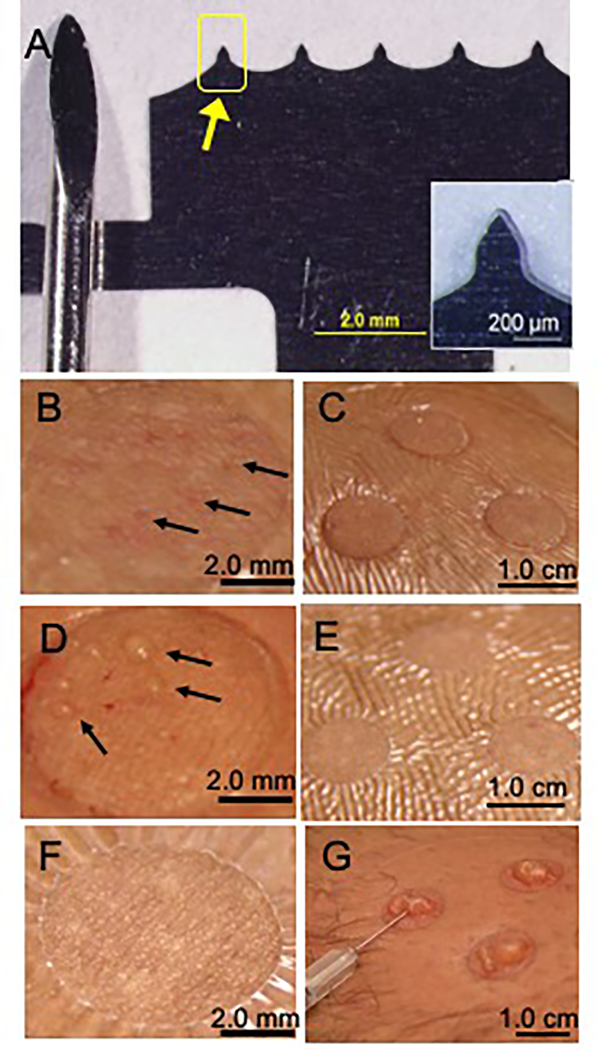
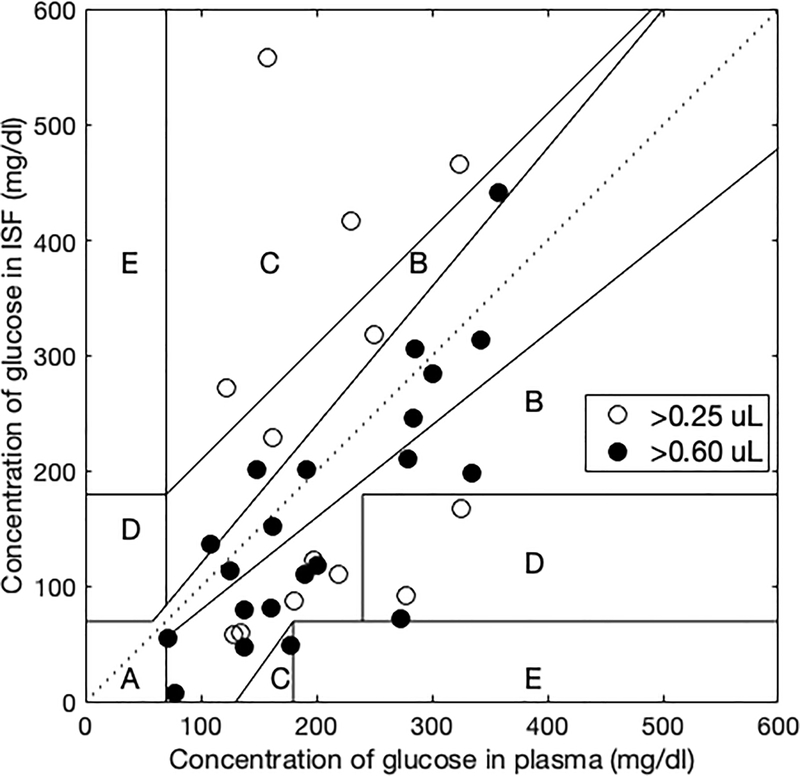
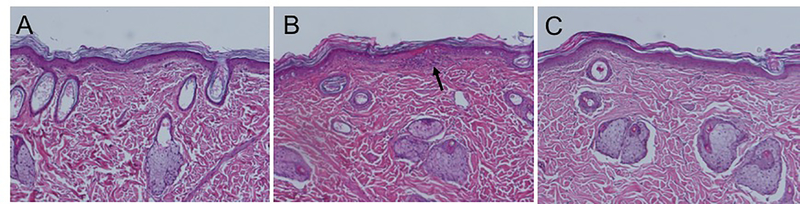
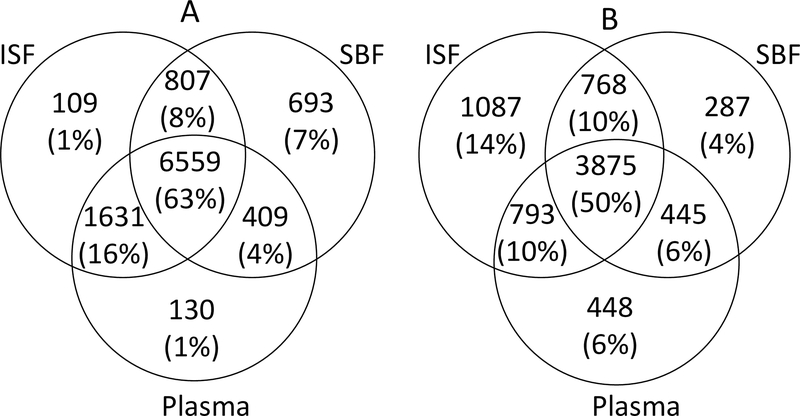
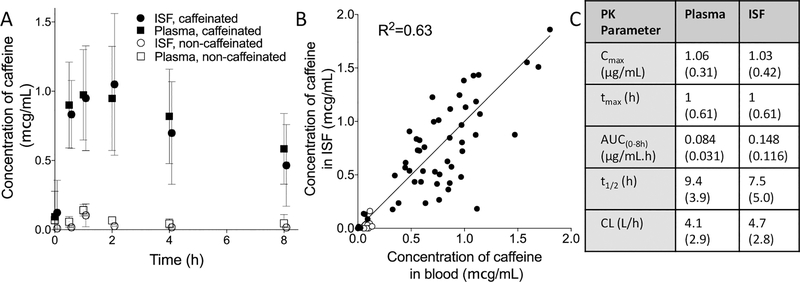
Tissue interstitial fluid (ISF) surrounds cells and is an underutilized source of biomarkers that complements conventional sources such as blood and urine. However, ISF has received limited attention due largely to lack of simple collection methods. Here, we developed a minimally invasive, microneedle-based method to sample ISF from human skin that was well tolerated by participants. Using a microneedle patch to create an array of micropores in skin coupled with mild suction, we sampled ISF from 21 human participants and identified clinically relevant and sometimes distinct biomarkers in ISF when compared to companion plasma samples based on mass spectrometry analysis. Many biomarkers used in research and current clinical practice were common to ISF and plasma. Because ISF does not clot, these biomarkers could be continuously monitored in ISF similar to current continuous glucose monitors but without requiring an indwelling subcutaneous sensor. Biomarkers distinct to ISF included molecules associated with systemic and dermatological physiology, as well as exogenous compounds from environmental exposures. We also determined that pharmacokinetics of caffeine in healthy adults and pharmacodynamics of glucose in children and young adults with diabetes were similar in ISF and plasma. Overall, these studies provide a minimally invasive method to sample dermal ISF using microneedles and demonstrate human ISF as a source of biomarkers that may enable research and translation for future clinical applications.
组织间质液(ISF)环绕着细胞,是一种未得到充分利用的生物标志物来源,可补充血液和尿液等传统来源。然而,由于缺乏简单的采集方法,ISF受到的关注有限。在此,我们开发了一种基于微针的微创方法,用于从人体皮肤采集ISF,参与者对该方法耐受性良好。使用微针贴片在皮肤上制造微孔阵列并辅以轻度抽吸,我们从21名人类参与者身上采集了ISF,并基于质谱分析,与配对的血浆样本相比,在ISF中鉴定出临床相关且有时不同的生物标志物。研究和当前临床实践中使用的许多生物标志物在ISF和血浆中是常见的。由于ISF不会凝结,这些生物标志物可以在ISF中持续监测,类似于当前的连续血糖监测仪,但无需植入皮下传感器。ISF特有的生物标志物包括与全身和皮肤生理学相关的分子,以及环境暴露中的外源性化合物。我们还确定,咖啡因在健康成年人中的药代动力学以及葡萄糖在糖尿病儿童和年轻成年人中的药效动力学在ISF和血浆中相似。总体而言,这些研究提供了一种使用微针采集真皮ISF的微创方法,并证明人体ISF是一种生物标志物来源,可能有助于未来临床应用的研究和转化。