Department of Integrated Traditional Chinese Medicine and Western Medicine, Obstetrics and Gynecology Hospital of Fudan University, Shanghai, 200011, People's Republic of China.
Shanghai Key Laboratory of Female Reproductive Endocrine Related Diseases, Shanghai 200011, People's Republic of China.
Drug Des Devel Ther. 2020 Nov 17;14:4975-4992. doi: 10.2147/DDDT.S279553. eCollection 2020.
To verify the effects of modified Gengnianchun formula (MGNC), a traditional Chinese medicine, on a stressed diminished ovarian reserve (DOR) animal model and predict the underlying mechanisms through network pharmacology strategies.
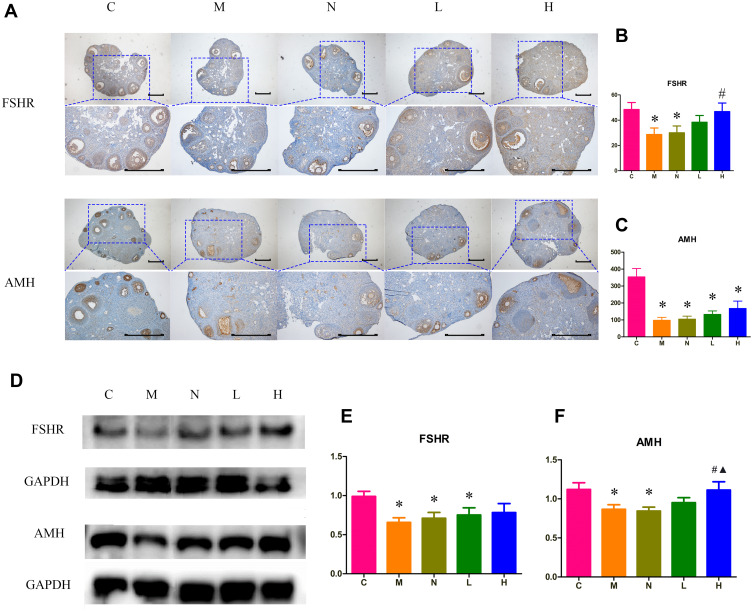
Sexually mature female C57BL/6 mice were allocated to five groups, abbreviated as the control (C) group, stress manipulated model (M) group, stress with normal saline gavage (N) group, stress with low-dose MGNC gavage (L) group, and stress with high-dose MGNC gavage (H) group. Body weight and the estrous cycle were monitored during the stress and gavage process. Serum stress hormones and reproductive hormones were evaluated by ELISA. Ovarian follicle counts were calculated, and ovarian follicle-stimulating hormone receptor (FSHR) and anti-Müllerian hormone (AMH) expression were assessed by Western blotting and immunohistochemistry. Network pharmacology strategies included active compound screening, drug and disease target analysis, gene ontology analysis, pathway analysis, and visualization of results.
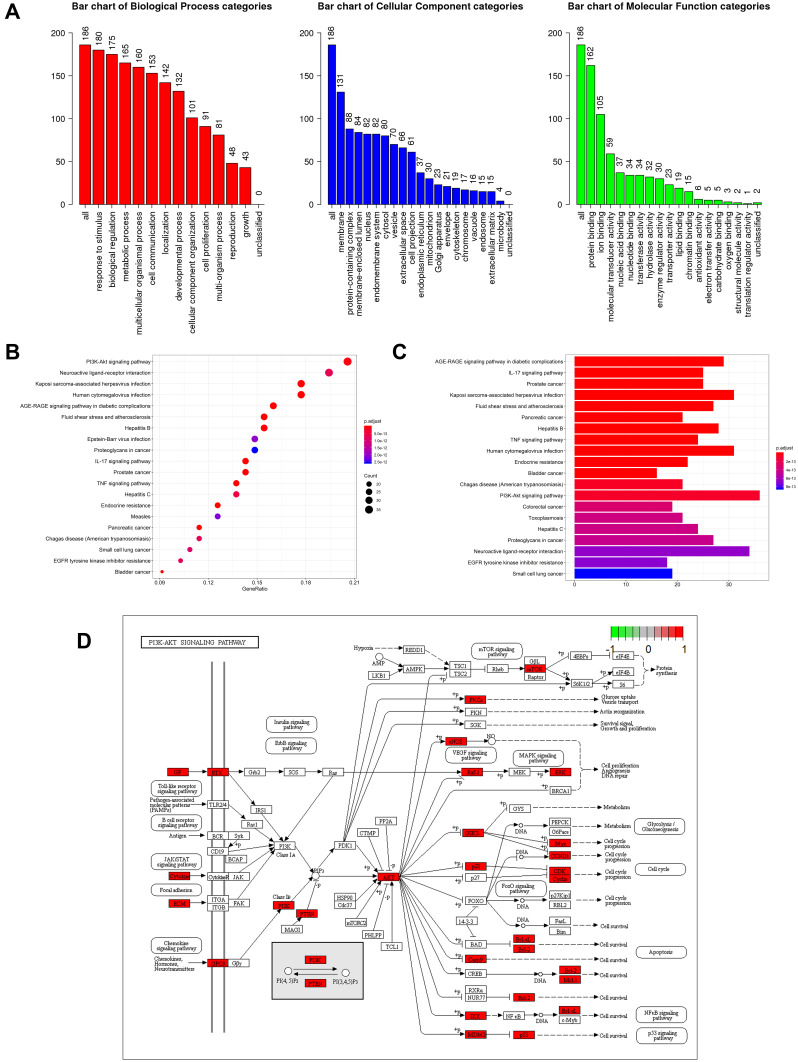
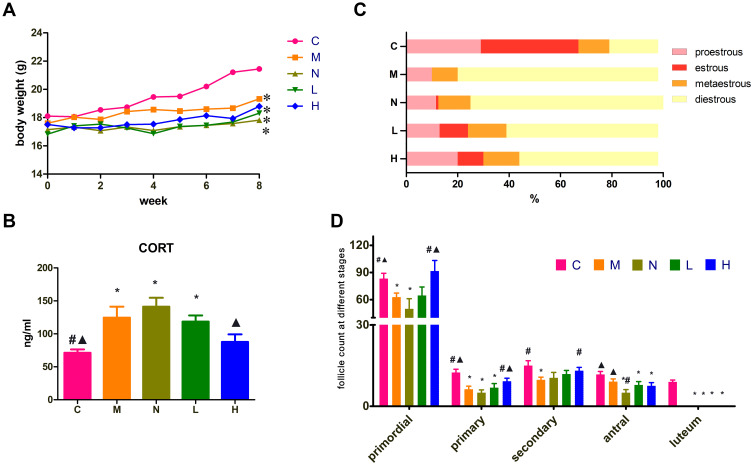
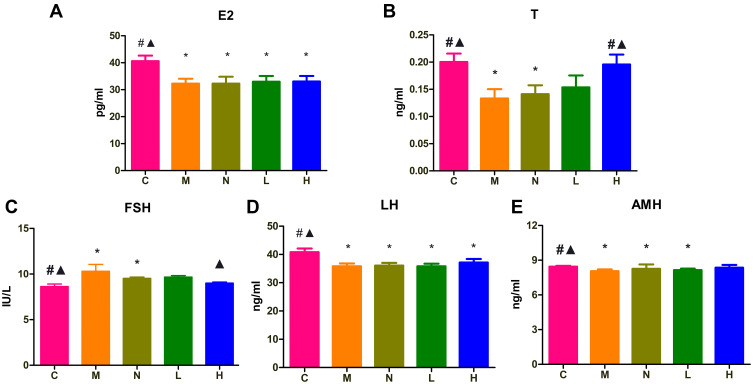
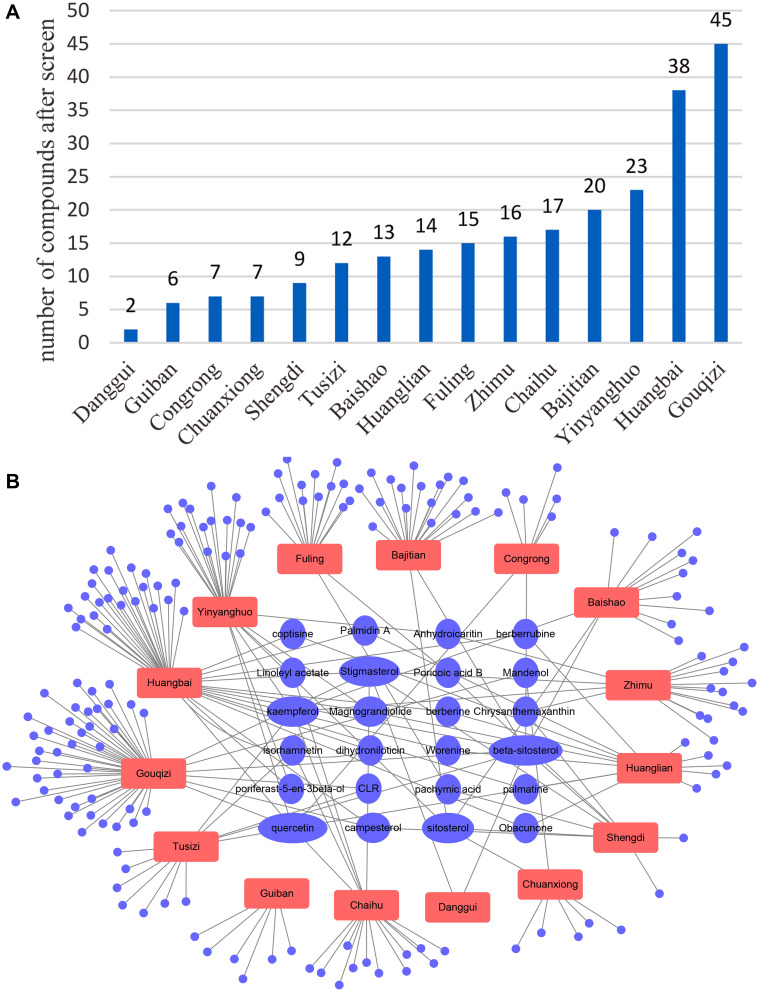
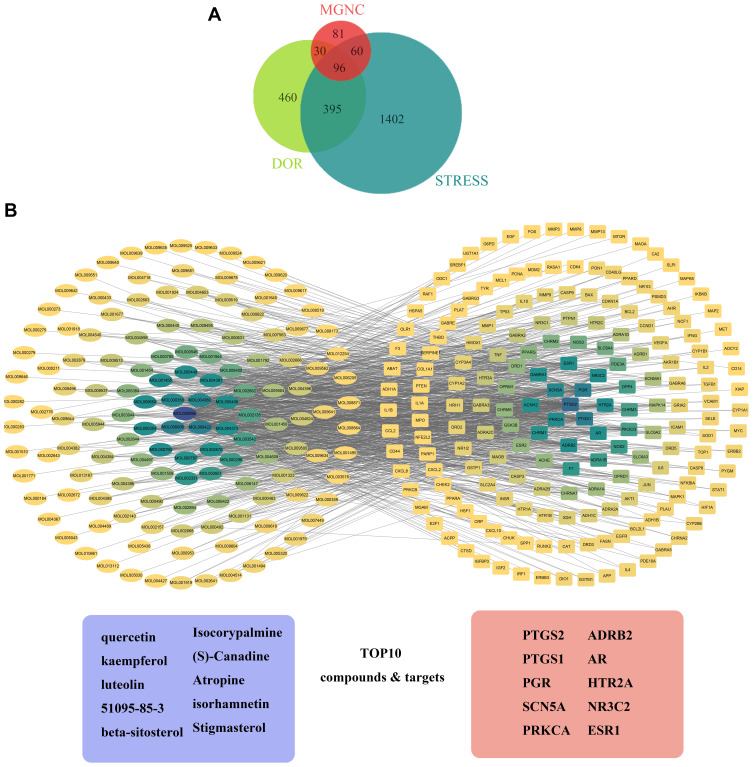
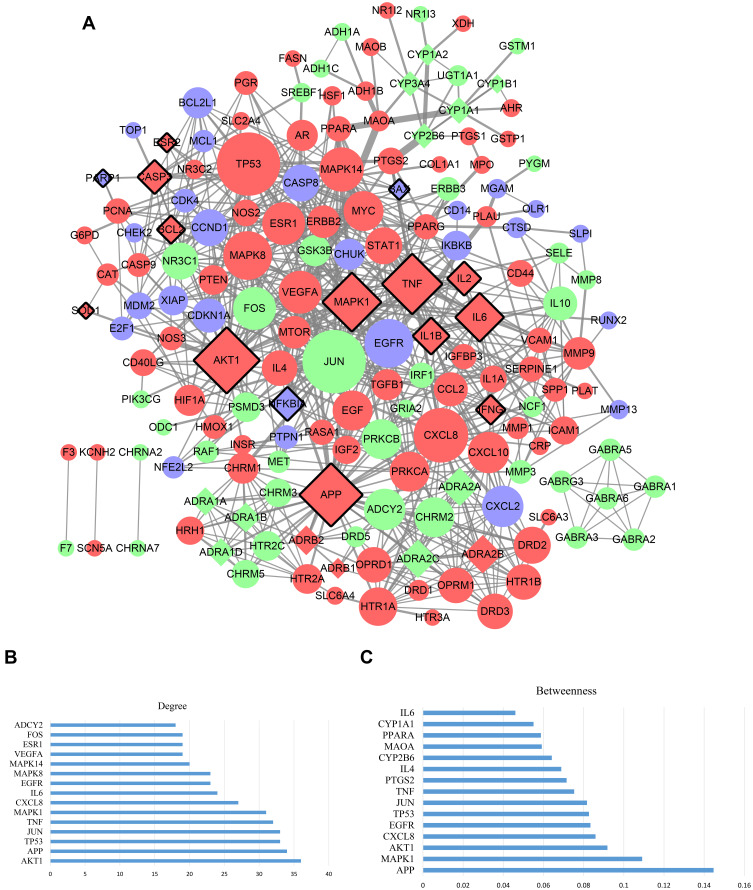
MGNC treatment significantly decreased serum corticosterone (CORT) and follicle-stimulating hormone (FSH) levels and increased testosterone (T) levels in the H group compared with the M and N groups. Primordial and preantral follicle counts and ovarian AMH and FSHR expression were significantly increased in the H group compared to those in the M and N groups. Through pharmacokinetic screening, we found 244 active compounds in MGNC. A total of 186 candidate intersection target genes of disease and MGNC were further screened to construct the interaction network. Gene ontology and KEGG pathway enrichment analysis ultimately unveiled a series of key targets that mainly mediated the effects of MGNC on DOR induced by chronic stress. The PI3K-Akt pathway may serve as the critical pathway underlying this therapeutic mechanism.
MGNC is a promising formula to treat DOR induced by chronic stress, and the PI3K-Akt pathway may play an essential role in this effect.
验证中药更年春方(MGNC)对应激性卵巢储备功能减退(DOR)动物模型的影响,并通过网络药理学策略预测其潜在机制。
将性成熟雌性 C57BL/6 小鼠分为五组,分别为对照组(C 组)、应激处理模型组(M 组)、应激生理盐水灌胃组(N 组)、应激低剂量 MGNC 灌胃组(L 组)和应激高剂量 MGNC 灌胃组(H 组)。在应激和灌胃过程中监测体重和发情周期。通过 ELISA 评估血清应激激素和生殖激素。计算卵巢卵泡计数,并通过 Western blot 和免疫组织化学评估卵巢卵泡刺激素受体(FSHR)和抗苗勒管激素(AMH)的表达。网络药理学策略包括活性化合物筛选、药物和疾病靶标分析、基因本体分析、通路分析以及结果可视化。
与 M 组和 N 组相比,MGNC 治疗可显著降低 H 组血清皮质酮(CORT)和卵泡刺激素(FSH)水平,增加睾酮(T)水平。与 M 组和 N 组相比,H 组原始卵泡和窦前卵泡计数以及卵巢 AMH 和 FSHR 表达显著增加。通过药代动力学筛选,我们发现 MGNC 中有 244 种活性化合物。进一步筛选了 186 个疾病和 MGNC 的候选交集靶基因,以构建相互作用网络。基因本体和 KEGG 通路富集分析最终揭示了一系列主要介导 MGNC 对慢性应激诱导的 DOR 作用的关键靶标。PI3K-Akt 通路可能是这种治疗机制的关键通路。
MGNC 是一种有前途的治疗慢性应激诱导的 DOR 的配方,PI3K-Akt 通路可能在这种作用中发挥重要作用。