Lu Qijue, Wang Xinyu, Zhu Ji, Fei Xiang, Chen Hezhong, Li Chunguang
Department of Thoracic Surgery, Changhai Hospital, The Second Military Medical University, Shanghai, People's Republic of China.
Onco Targets Ther. 2020 Nov 18;13:11883-11897. doi: 10.2147/OTT.S284192. eCollection 2020.
Hypoxia and tumor-associated macrophage (TAM) are key regulators in remodeling the microenvironment of esophageal squamous cell carcinoma (ESCC). Hypoxia could stimulate tumor cells to secrete more exosomes and activate TAMs to M2 type. Here, we investigated the function and the underlying mechanism of tumor-derived exosomal hsa-circ-0048117 in TAM polarization in ESCC. Collectively, these data indicate that PC cells generate miR-301a-3p-rich exosomes in a hypoxic microenvironment, which then polarize macrophages to promote malignant behaviors of PC cells.
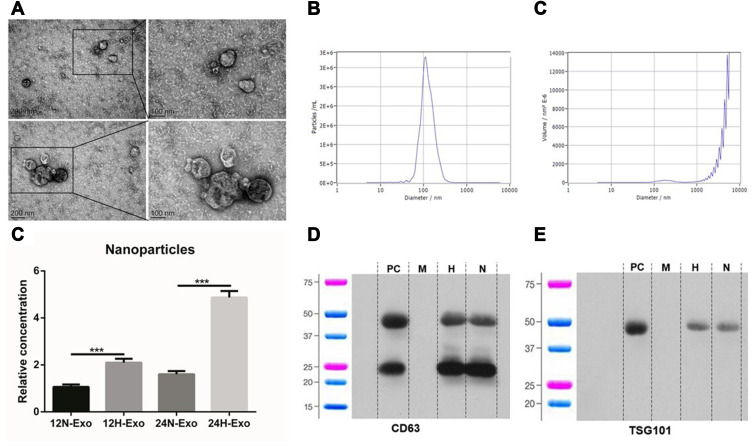
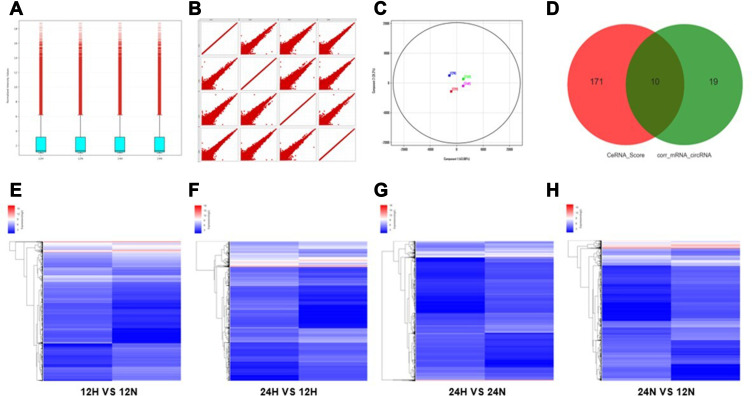
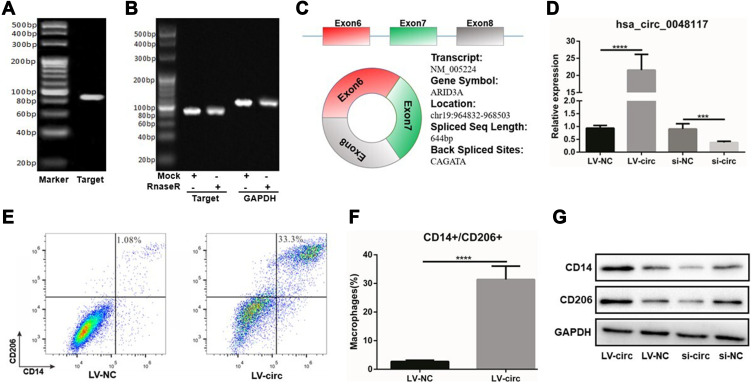
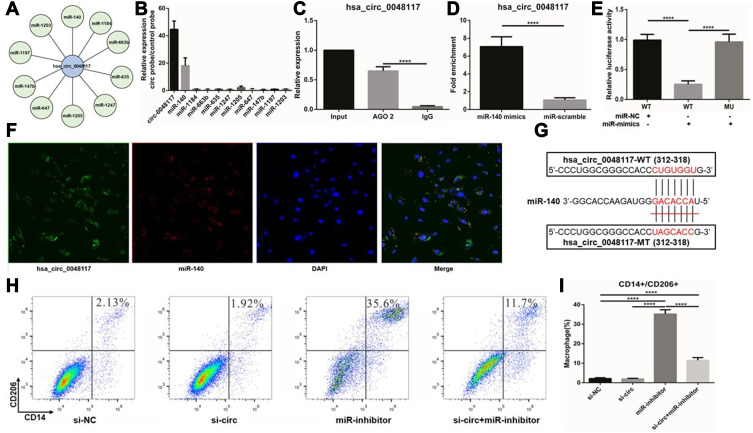
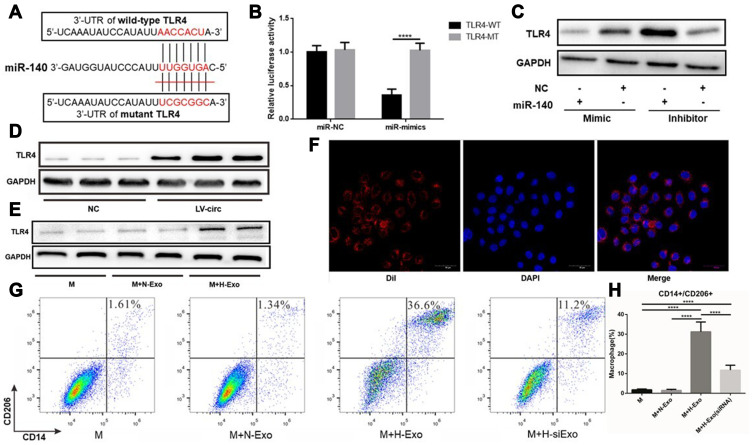
Transmission electron microscopy (TEM) and nanoparticle tracking analysis (NTA) were used to analyze the physical characteristics of exosomes. High-throughput sequencing and bioinformatic analysis were performed to screen the potential exosomal circRNA. FISH, Ago2 RIP, pull-down and dual-luciferase reporter assay were conducted to figure out the correlation among hsa-circ-0048117, miR-140 and toll-like receptor 4 (TLR4). Flow cytometry and Western blot were used to evaluate their joint effect in macrophages polarization. Then, the invasion and migration ability were evaluated by transwell experiment. At last, serum exo-hsa-circ-0048117 in ESCC patients was compared and the correlation between its expression and T stage, N stage and TNM grades was analyzed.
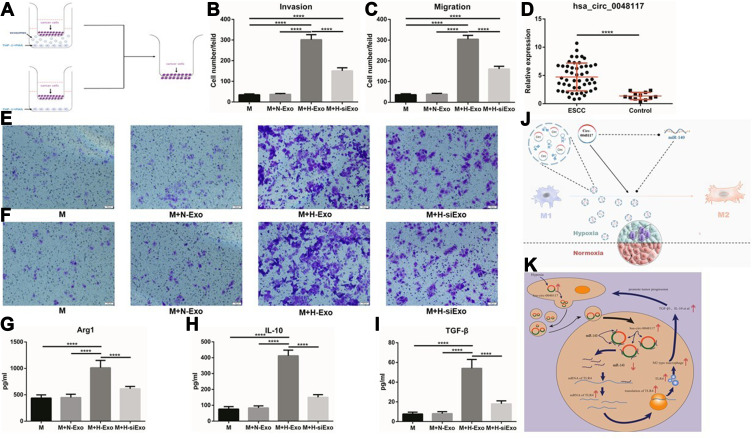
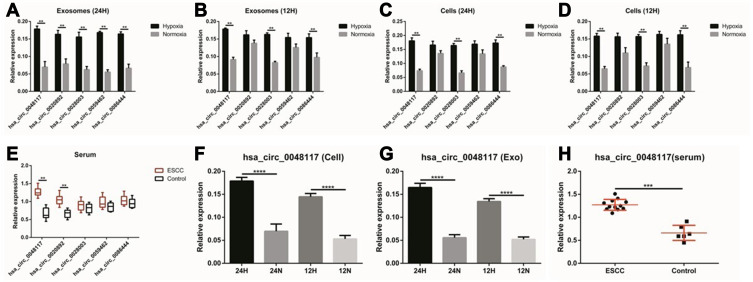
Hsa-circ-0048117 was significantly upregulated and enriched in exosomes secreted by hypoxia pre-challenged tumor cells and contributed to M2 macrophage polarization. Hsa-circ-0048117 depletion in macrophage led to inhibition of M2 polarization while restoration of hsa-circ-0048117 could rescue the process. Moreover, hsa-circ-0048117 could act as sponge of miR-140 by competing with TLR4 to facilitate the M2 macrophage polarization. Exo-hsa-circ-0048117 could be transmitted to macrophages to promote M2 polarization and M2 macrophages could enhance the ability of invasion and migration of tumor cells by secreting Arg1, IL-10 and TGF-β. Higher serum exo-hsa-circ-0048117 predicted an advanced T and N stage and positively correlated with TNM grade.
Our findings indicated that ESCC cells generate hsa-circ-0048117-rich exosomes in a hypoxic microenvironment; hsa-circ-0048117 was believed to promote M2 macrophage polarization which favors the malignant behaviors of ESCC cells. These results reminded us that exosomal hsa-circ-0048117 may play a key role in remodeling the microenvironment and modulating progression in ESCC.
缺氧和肿瘤相关巨噬细胞(TAM)是重塑食管鳞状细胞癌(ESCC)微环境的关键调节因子。缺氧可刺激肿瘤细胞分泌更多外泌体,并将TAM激活为M2型。在此,我们研究了肿瘤来源的外泌体hsa-circ-0048117在ESCC中TAM极化的功能及潜在机制。总体而言,这些数据表明胰腺癌细胞在缺氧微环境中产生富含miR-301a-3p的外泌体,进而使巨噬细胞极化以促进胰腺癌细胞的恶性行为。
采用透射电子显微镜(TEM)和纳米颗粒跟踪分析(NTA)来分析外泌体的物理特征。进行高通量测序和生物信息学分析以筛选潜在的外泌体环状RNA。采用荧光原位杂交(FISH)、AGO2-RIP、下拉实验和双荧光素酶报告基因检测来明确hsa-circ-0048117、miR-140和Toll样受体4(TLR4)之间的相关性。使用流式细胞术和蛋白质免疫印迹法来评估它们在巨噬细胞极化中的联合作用。然后,通过Transwell实验评估侵袭和迁移能力。最后,比较ESCC患者血清中的外泌体hsa-circ-0048117,并分析其表达与T分期、N分期和TNM分级之间的相关性。
Hsa-circ-0048117在缺氧预处理的肿瘤细胞分泌的外泌体中显著上调并富集,有助于M2巨噬细胞极化。巨噬细胞中hsa-circ-0048117的缺失导致M2极化受到抑制,而hsa-circ-0048117的恢复可以挽救这一过程。此外,hsa-circ-0048117可以通过与TLR4竞争作为miR-140的海绵,促进M2巨噬细胞极化。外泌体hsa-circ-0048117可以传递给巨噬细胞以促进M2极化,而M2巨噬细胞可以通过分泌精氨酸酶1(Arg1)、白细胞介素-10(IL-10)和转化生长因子-β(TGF-β)增强肿瘤细胞的侵袭和迁移能力。血清外泌体hsa-circ-0048117水平较高预示着T分期和N分期较晚,且与TNM分级呈正相关。
我们的研究结果表明,ESCC细胞在缺氧微环境中产生富含hsa-circ-0048117的外泌体;hsa-circ-0048117被认为可促进M2巨噬细胞极化,这有利于ESCC细胞的恶性行为。这些结果提醒我们,外泌体hsa-circ-0048117可能在重塑ESCC微环境和调节其进展中起关键作用。