Department of Radiation Oncology, National Cancer Center/National Clinical Research Center for Cancer/Cancer Hospital, Chinese Academy of Medical Sciences and Peking Union Medical College, Beijing 100021, China.
Department of Hepatobiliary Surgery, National Cancer Center/National Clinical Research Center for Cancer/Cancer Hospital, Chinese Academy of Medical Sciences and Peking Union Medical College, Beijing 100021, China.
Int J Mol Sci. 2024 May 31;25(11):6082. doi: 10.3390/ijms25116082.
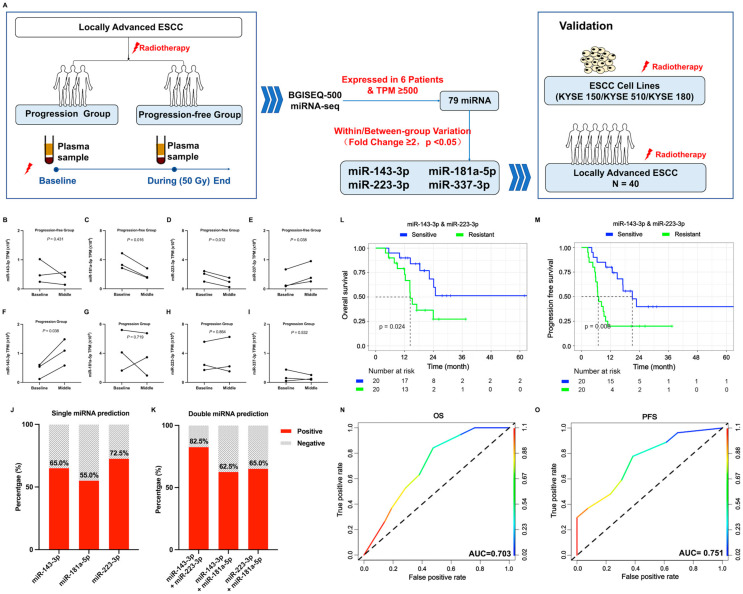
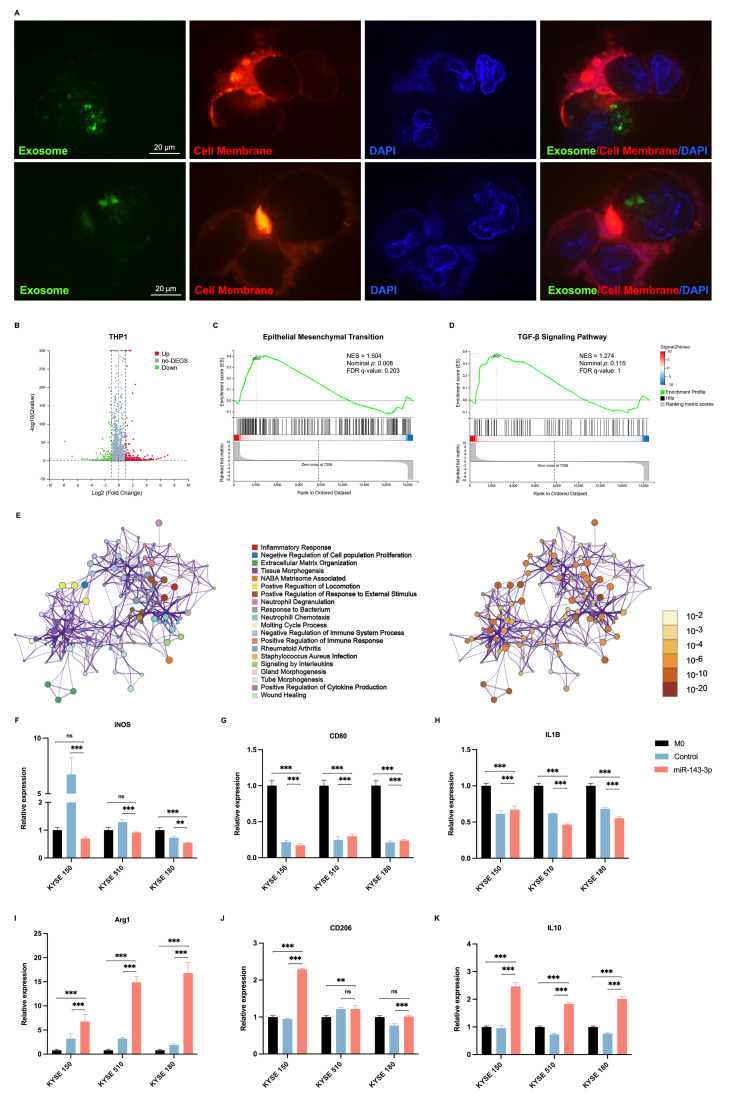
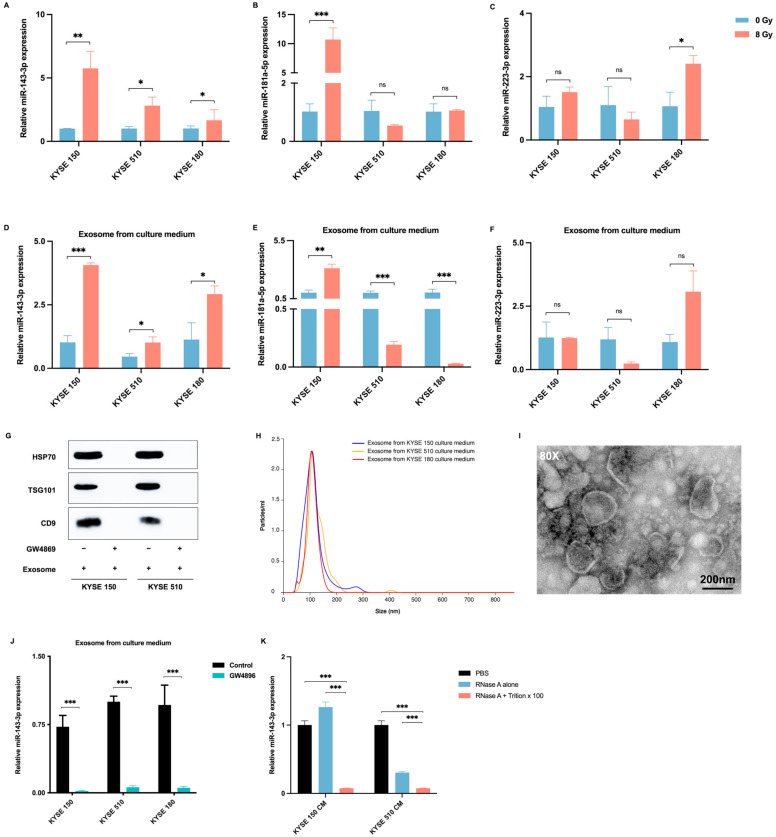
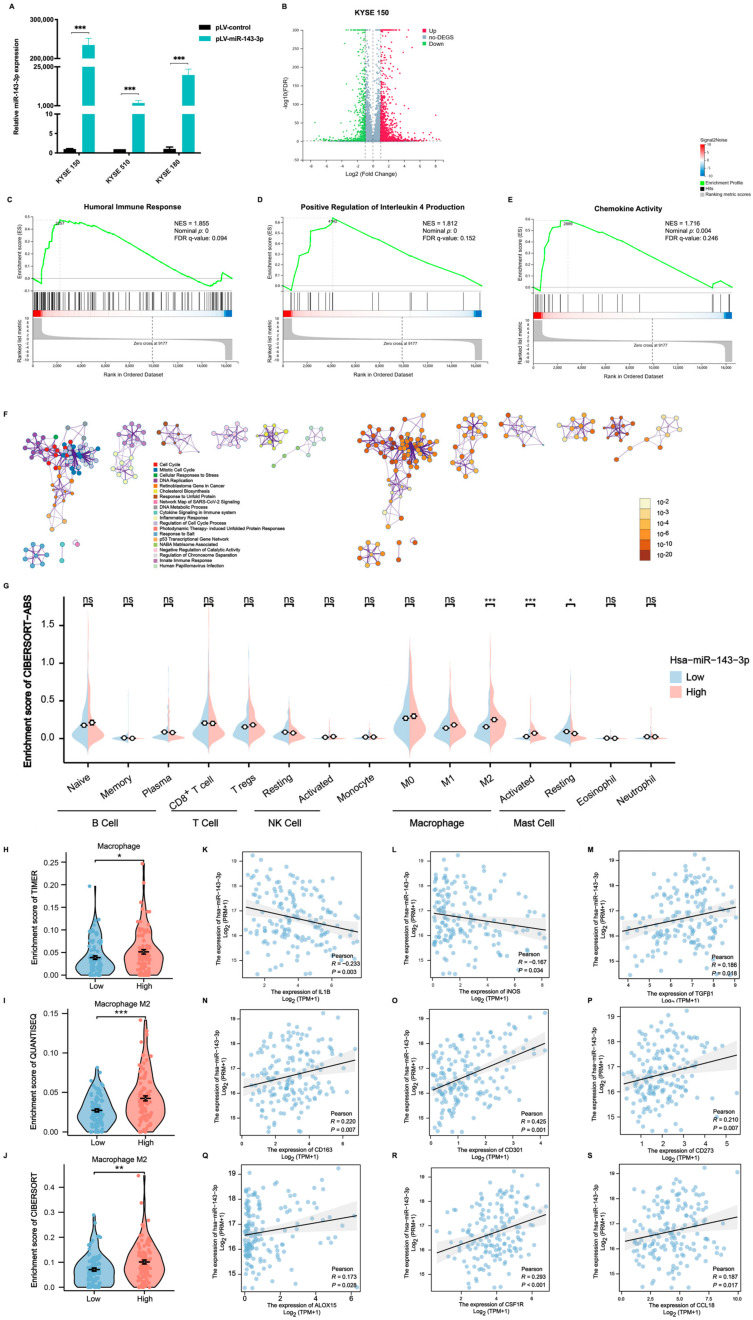
We aimed to determine whether monitoring tumor-derived exosomal microRNAs (miRNAs) could be used to assess radiotherapeutic sensitivity in patients with locally advanced esophageal squamous cell carcinoma (ESCC). RNA sequencing was employed to conduct a comparative analysis of miRNA expression levels during radiotherapy, focusing on identifying miRNAs associated with progression. Electron microscopy confirmed the existence of exosomes, and co-cultivation assays and immunofluorescence validated their capacity to infiltrate macrophages. To determine the mechanism by which exosomal miR-143-3p regulates the interplay between ESCC cells and M2 macrophages, ESCC cell-derived exosomes were co-cultured with macrophages. Serum miR-143-3p and miR-223-3p were elevated during radiotherapy, suggesting resistance to radiation and an unfavorable prognosis for ESCC. Increased levels of both miRNAs independently predicted shorter progression-free survival ( = 0.015). We developed a diagnostic model for ESCC using serum microRNAs, resulting in an area under the curve of 0.751. Radiotherapy enhanced the release of miR-143-3p from ESCC cell-derived exosomes. Immune cell infiltration analysis at the Cancer Genome Atlas (TCGA) database revealed that ESCC cell-derived miR-143-3p triggered M2 macrophage polarization. Mechanistically, miR-143-3p upregulation affected chemokine activity and cytokine signaling pathways. Furthermore, ESCC cell exosomal miR-143-3p could be transferred to macrophages, thereby promoting their polarization. Serum miR-143-3p and miR-223-3p could represent diagnostic and prognostic markers for patients with ESCC undergoing radiotherapy. Unfavorable prognosis could be linked to the increased levels of ESCC cell-derived exosomal miR-143-3p, which might promote tumor progression by interacting with macrophages.
我们旨在确定监测肿瘤衍生的外泌体 microRNAs(miRNAs)是否可用于评估局部晚期食管鳞状细胞癌(ESCC)患者的放射治疗敏感性。采用 RNA 测序对放射治疗过程中的 miRNA 表达水平进行了比较分析,重点鉴定与进展相关的 miRNAs。电子显微镜证实了外泌体的存在,共培养实验和免疫荧光验证了它们浸润巨噬细胞的能力。为了确定外泌体 miR-143-3p 调节 ESCC 细胞与 M2 巨噬细胞相互作用的机制,将 ESCC 细胞衍生的外泌体与巨噬细胞共培养。放射治疗过程中血清 miR-143-3p 和 miR-223-3p 升高,表明对辐射的耐药性和 ESCC 的不利预后。这两种 miRNA 水平的升高均可独立预测无进展生存期较短(=0.015)。我们使用血清 microRNAs 开发了 ESCC 的诊断模型,曲线下面积为 0.751。放射治疗增强了 ESCC 细胞衍生的外泌体中 miR-143-3p 的释放。癌症基因组图谱(TCGA)数据库的免疫细胞浸润分析表明,ESCC 细胞衍生的 miR-143-3p 触发了 M2 巨噬细胞极化。从机制上讲,miR-143-3p 的上调影响趋化因子活性和细胞因子信号通路。此外,ESCC 细胞外泌体 miR-143-3p 可转移至巨噬细胞,从而促进其极化。血清 miR-143-3p 和 miR-223-3p 可作为接受放疗的 ESCC 患者的诊断和预后标志物。不良预后可能与 ESCC 细胞衍生的外泌体 miR-143-3p 水平升高有关,该水平升高可能通过与巨噬细胞相互作用促进肿瘤进展。