Brownfield Elisha, Cole David J, Segal Richard L, Pilcher Elizabeth, Shaw Darlene, Stuart Gail, Smith Gigi
Division of General Medicine, Strategic Leadership Development, Medical University of South Carolina (MUSC), Charleston, SC, USA.
Medical University of South Carolina (MUSC), Charleston, SC, USA.
J Healthc Leadersh. 2020 Nov 17;12:135-142. doi: 10.2147/JHL.S263533. eCollection 2020.
In an era of increasing complexity, leadership development is an urgent need for academic health science centers (AHSCs). The Association of American Medical Colleges (AAMC) and others have described the need for a focus on organizational leadership development and more rigorous evaluation of outcomes. Although the business literature notes the importance of evaluating institutional leadership culture, there is sparse conversation in the medical literature about this vital aspect of leadership development. Defining the leadership attributes that best align with and move an AHSC forward must serve as the foundational framework for strategic leadership development.
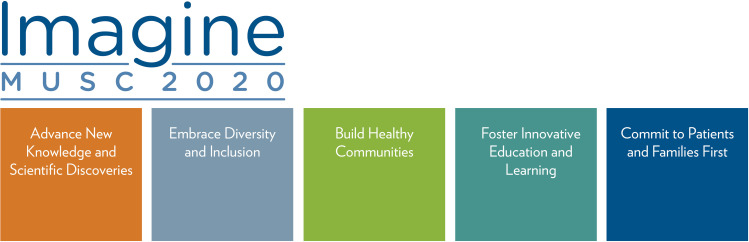
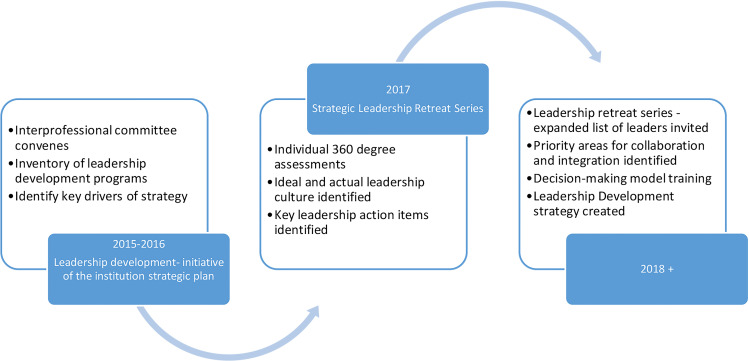
In 2015, the Medical University of South Carolina (MUSC) began a systematic process to approach strategic leadership development for the organization. An interprofessional group completed an inventory of our leadership development programs and identified key drivers of a new institutional strategic plan. A strategic leadership advisory committee designed a series of leadership retreats to evaluate both individual and collective leadership development needs.
Three key drivers were identified as critical attributes for the success of our institutional strategy. Four specific areas of focus for the growth of the institution's ideal leadership culture were identified, with specific action items or behaviors developed for our leaders to model. As a result of this foundational work, we have now launched the MUSC Leadership Institute.
Knowledge of our current leadership culture, key drivers of strategy and our desired collective leadership attributes are the basis for building our institutional leadership development strategy. This will be a longitudinal process that will start with senior leadership engagement, organizational restructuring, new programming and involve significant experimentation. Disciplined, thoughtful evaluation will be required to find the right model. In addition to individual transformation with leadership development, MUSC will measure specifically identified strategic outcomes and performance metrics for the institution.
在一个日益复杂的时代,领导力发展对于学术健康科学中心(AHSCs)而言是一项迫切需求。美国医学院协会(AAMC)及其他机构已阐述了专注于组织领导力发展及对成果进行更严格评估的必要性。尽管商业文献指出了评估机构领导文化的重要性,但医学文献中关于领导力发展这一关键方面的讨论却很少。确定与AHSC最契合并推动其前进的领导特质,必须成为战略领导力发展的基础框架。
2015年,南卡罗来纳医科大学(MUSC)启动了一个系统流程,以推进该组织的战略领导力发展。一个跨专业团队完成了对我们领导力发展项目的清查,并确定了新的机构战略计划的关键驱动因素。一个战略领导力咨询委员会设计了一系列领导力务虚会,以评估个人和集体的领导力发展需求。
确定了三个关键驱动因素,作为我们机构战略成功的关键特质。确定了机构理想领导文化发展的四个具体重点领域,并为我们的领导者制定了具体的行动项目或行为模式。基于这项基础性工作,我们现已成立了MUSC领导力研究所。
了解我们当前的领导文化、战略的关键驱动因素以及我们期望的集体领导特质,是构建我们机构领导力发展战略的基础。这将是一个纵向过程,始于高层领导的参与、组织架构调整、新的项目规划,并涉及大量试验。需要进行严谨、深入的评估,以找到合适的模式。除了通过领导力发展实现个人转变外,MUSC还将衡量机构具体确定的战略成果和绩效指标。