Dipartimento di Scienze Mediche e Traslazionali Universita' "Federico II" & URT dell'Istituto di Endocrinologia e Oncologia Sperimentale "Gaetano Salvatore," Consiglio Nazionale delle Ricerche (CNR), Napoli, Italy.
Dipartimento di Medicina Molecolare e Biotecnologie Mediche, Napoli, Italy.
Front Endocrinol (Lausanne). 2020 Nov 9;11:588685. doi: 10.3389/fendo.2020.588685. eCollection 2020.
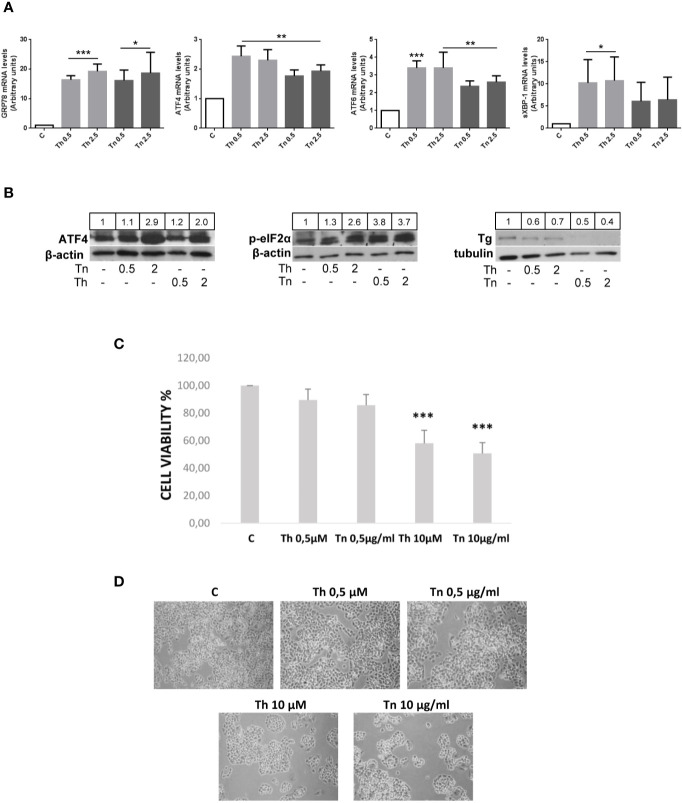
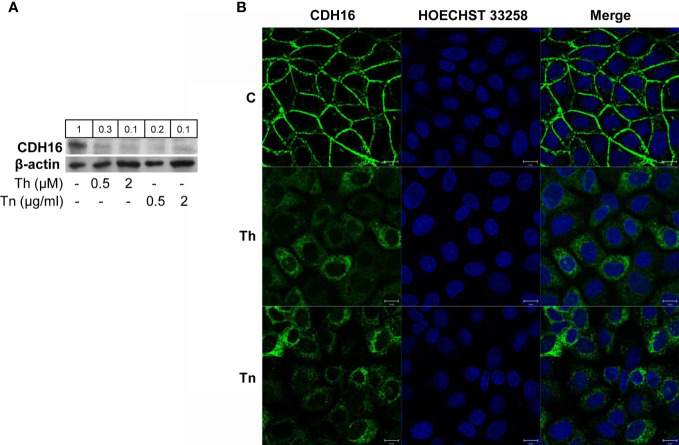
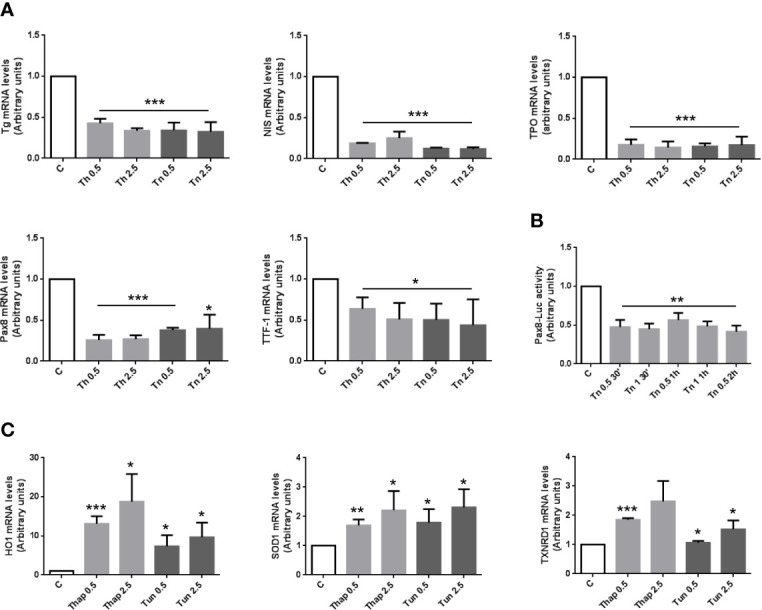
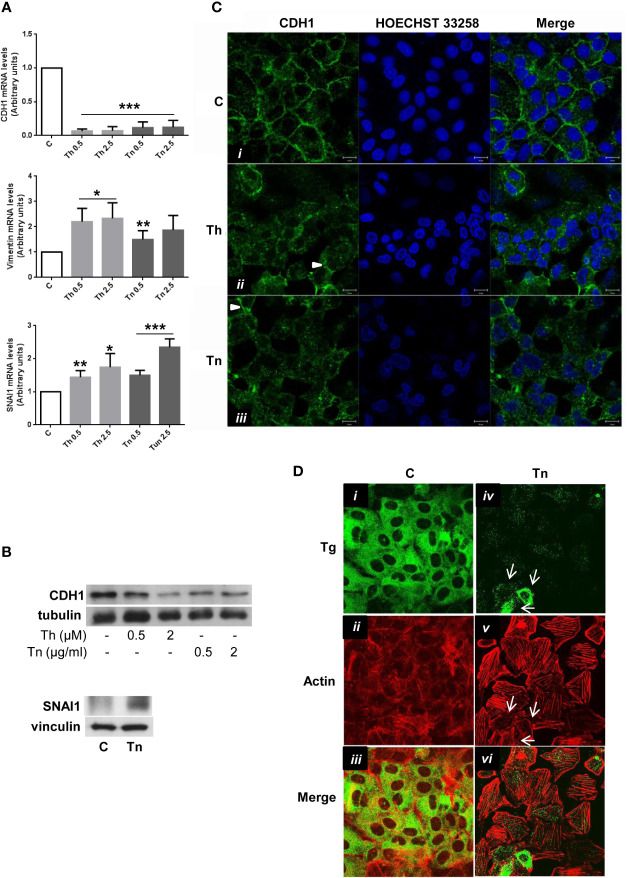
The endoplasmic reticulum stress and the unfolded protein response are triggered following an imbalance between protein load and protein folding. Until recently, two possible outcomes of the unfolded protein response have been considered: life or death. We sought to substantiate a third alternative, dedifferentiation, mesenchymal shift, and activation of the antioxidant response by using typical endocrine cells, i.e. thyroid cells. The thyroid is a unique system both of endoplasmic reticulum stress (a single protein, thyroglobulin represents the majority of proteins synthesized in the endoplasmic reticulum by the thyrocyte) and of polarized epithelium (the single layer of thyrocytes delimiting the follicle). Following endoplasmic reticulum stress, in thyroid cells the folding of thyroglobulin was disrupted. The mRNAs of unfolded protein response were induced or spliced (X-box binding protein-1). Differentiation was inhibited: mRNA levels of thyroid specific genes, and of thyroid transcription factors were dramatically downregulated, at least in part, transcriptionally. The dedifferentiating response was accompanied by an upregulation of mRNAs of antioxidant genes. Moreover, cadherin-1, and the thyroid (and kidney)-specific cadherin-16 mRNAs were downregulated, vimentin, and SNAI1 mRNAs were upregulated. In addition, loss of cortical actin and stress fibers formation were observed. Together, these data indicate that ER stress in thyroid cells induces dedifferentiation, loss of epithelial organization, shift towards a mesenchymal phenotype, and activation of the antioxidant response, highlighting, at the same time, a new and wide strategy to achieve survival following ER stress, and, as a sort of the other side of the coin, a possible new molecular mechanism of decline/loss of function leading to a deficit of thyroid hormones formation.
内质网应激和未折叠蛋白反应是在蛋白质负荷和蛋白质折叠之间失衡后触发的。直到最近,人们一直认为未折叠蛋白反应有两种可能的结果:生存或死亡。我们试图通过使用典型的内分泌细胞,即甲状腺细胞,来证实第三种选择,即去分化、间充质转化和抗氧化反应的激活。甲状腺既是内质网应激(一种蛋白质,即甲状腺球蛋白,代表甲状腺细胞在内质网中合成的大多数蛋白质)的独特系统,也是极化上皮(单层甲状腺细胞包围滤泡)的独特系统。在内质网应激后,甲状腺细胞中的甲状腺球蛋白折叠被破坏。未折叠蛋白反应的 mRNAs 被诱导或剪接(X 盒结合蛋白-1)。分化受到抑制:甲状腺特异性基因和甲状腺转录因子的 mRNA 水平显著下调,至少部分是转录下调。去分化反应伴随着抗氧化基因的 mRNAs 上调。此外,钙黏蛋白-1 和甲状腺(和肾脏)特异性钙黏蛋白-16 的 mRNAs 下调,波形蛋白和 SNAI1 的 mRNAs 上调。此外,还观察到皮质肌动蛋白的丢失和应力纤维的形成。总之,这些数据表明,甲状腺细胞中的内质网应激诱导去分化、上皮组织丧失、向间充质表型的转变,以及抗氧化反应的激活,同时强调了一种新的、广泛的策略,以在内质网应激后实现生存,并且作为硬币的另一面,可能是导致甲状腺激素形成不足的功能下降/丧失的新分子机制。