Reik Anna, Holzapfel Christina
Institute for Nutritional Medicine, School of Medicine, University Hospital "Klinikum Rechts der Isar", Technical University of Munich, Munich, Germany.
Front Nutr. 2020 Nov 10;7:586985. doi: 10.3389/fnut.2020.586985. eCollection 2020.
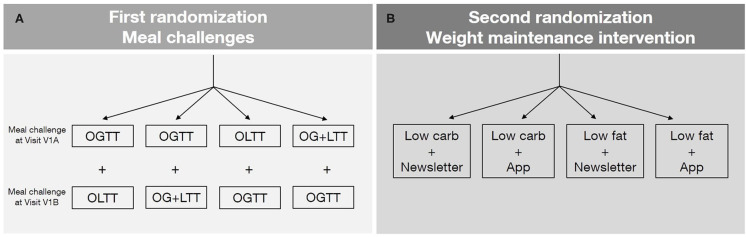
Due to the increasing prevalence of obesity, approaches for a more effective treatment especially in the long-term perspective are needed. However, studies on weight loss and maintenance show heterogeneous results with large inter-individual variations. Therefore, it is of interest to identify factors that contribute to inter-individual differences and predict the success of long-term weight management. The primary outcome of the Lifestyle Intervention (LION) Study is to evaluate the effect of two diets (low carb vs. low fat) and two digital counseling tools (newsletter vs. mobile application) on weight maintenance 12 months after weight loss. The identification of predictive factors (e.g., genetic, epigenetic, physiological, psychological) for the success of weight loss and maintenance is a secondary outcome. Men and women with a body mass index (BMI) between 30.0 and 39.9 kg/m, aged 18-65 years, and without severe diseases are considered eligible. After phenotyping (e.g., anthropometry, resting metabolic rate, meal challenges, blood parameters) participants will follow a formula-based, low-calorie diet (LCD) for 8 weeks. In addition, the intake of 200 g raw or cooked non-starchy vegetables are allowed per day. Subsequently, 252 participants will be randomized into one of the four intervention groups (low carb/app, low carb/newsletter, low fat/app, low fat/newsletter) for the 12-month weight maintenance step. The study will be concluded after another 12 months of follow-up. Results should provide indications for successful weight management and give insights into the personalized treatment of obesity. This study has been granted ethical approval by the local Ethics Review Committee of the School of Medicine, Technical University of Munich (vote: 69/19 S). This study has been registered within ClinicalTrials.gov (NCT04023942) and the German Clinical Trials Register (DRKS00017819).
由于肥胖的患病率不断上升,需要采取更有效的治疗方法,尤其是从长期角度来看。然而,关于减肥和体重维持的研究结果参差不齐,个体间差异很大。因此,确定导致个体差异并预测长期体重管理成功的因素很有意义。生活方式干预(LION)研究的主要结果是评估两种饮食(低碳水化合物饮食与低脂饮食)和两种数字咨询工具(时事通讯与移动应用程序)对减肥后12个月体重维持的影响。确定减肥和体重维持成功的预测因素(如遗传、表观遗传、生理、心理因素)是次要结果。体重指数(BMI)在30.0至39.9 kg/m之间、年龄在18 - 65岁且无严重疾病的男性和女性被认为符合条件。在进行表型分析(如人体测量、静息代谢率、进餐挑战、血液参数)后,参与者将遵循基于公式的低热量饮食(LCD)8周。此外,每天允许摄入200克生的或煮熟的非淀粉类蔬菜。随后,252名参与者将被随机分为四个干预组之一(低碳水化合物/应用程序组、低碳水化合物/时事通讯组、低脂/应用程序组、低脂/时事通讯组)进行为期12个月的体重维持阶段。在另外12个月的随访后,该研究将结束。研究结果应能为成功的体重管理提供依据,并深入了解肥胖的个性化治疗。本研究已获得慕尼黑工业大学医学院当地伦理审查委员会的伦理批准(投票号:69/19 S)。本研究已在ClinicalTrials.gov(NCT04023942)和德国临床试验注册中心(DRKS00017819)注册。