Department of Otorhinolaryngology, Careggi University Hospital, Largo Brambilla, 3, 50134, Florence, Italy.
Department of Experimental and Clinical Medicine, University of Florence, Florence, Italy.
Mucosal Immunol. 2021 Mar;14(2):305-316. doi: 10.1038/s41385-020-00359-2. Epub 2020 Nov 26.
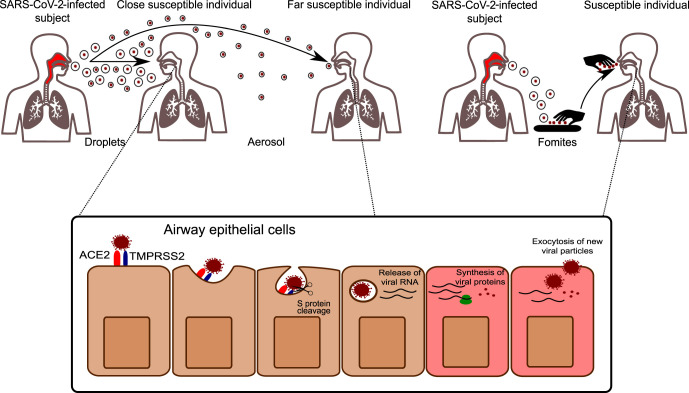
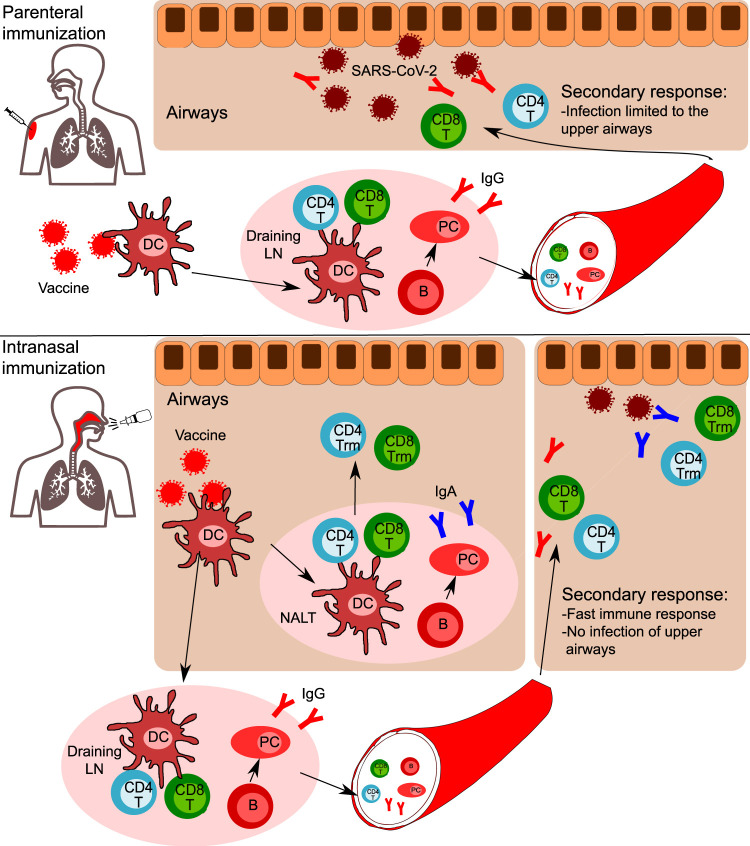
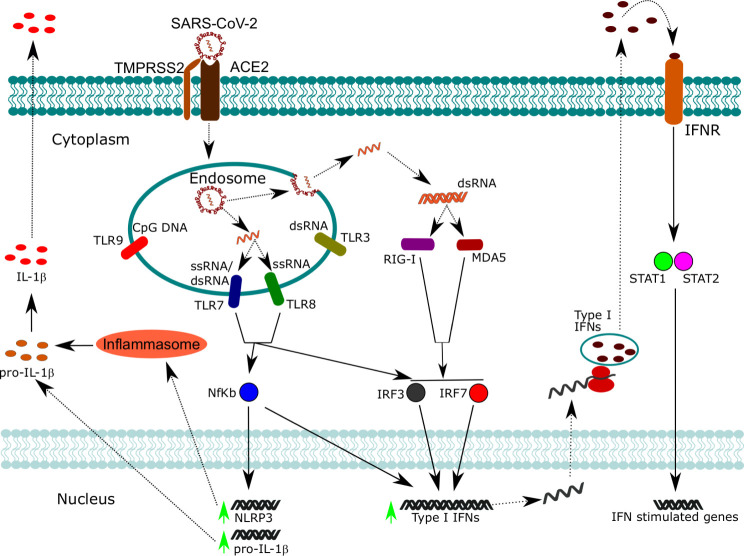
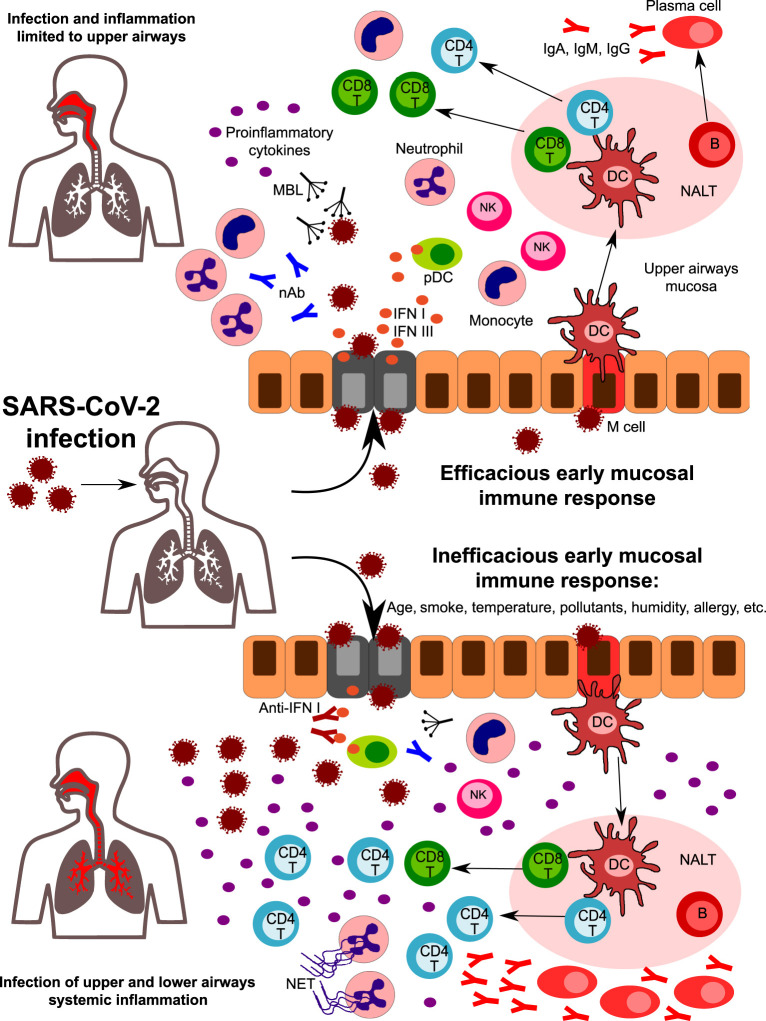
The novel coronavirus SARS-CoV-2 enters into the human body mainly through the ACE2 + TMPRSS2+ nasal epithelial cells. The initial host response to this pathogen occurs in a peculiar immune microenvironment that, starting from the Nasopharynx-Associated Lymphoid Tissue (NALT) system, is the product of a long evolutionary process that is aimed to first recognize exogenous airborne agents. In the present work, we want to critically review the latest molecular and cellular findings on the mucosal response to SARS-CoV-2 in the nasal cavity and in NALT, and to analyze its impact in the subsequent course of COVID-19. Finally, we want to explore the possibility that the regulation of the systemic inflammatory network against the virus can be modulated starting from the initial phases of the nasal and nasopharyngeal response and this may have several clinical and epidemiological implications starting from a mucosal vaccine development.
新型冠状病毒 SARS-CoV-2 主要通过 ACE2+TMPRSS2+鼻上皮细胞进入人体。人体对这种病原体的初始宿主反应发生在一个特殊的免疫微环境中,这个微环境起始于咽相关淋巴组织(NALT)系统,是一个长期进化过程的产物,旨在首先识别外来的空气传播剂。在本工作中,我们希望批判性地回顾鼻腔和 NALT 中粘膜对 SARS-CoV-2 反应的最新分子和细胞发现,并分析其对 COVID-19 后续病程的影响。最后,我们希望探索从鼻和鼻咽反应的初始阶段开始调节针对病毒的全身炎症网络调节的可能性,这可能从粘膜疫苗开发开始具有多种临床和流行病学意义。