Khodadoost Mahmoud, Niknam Zahra, Farahani Masoumeh, Razzaghi Mohammadreza, Norouzinia Mohsen
Department of Traditional Medicine, School of Traditional Medicine, Shahid Beheshti University of Medical Sciences, Tehran, Iran.
Proteomics Research Center, Shahid Beheshti University of Medical Sciences, Tehran, Iran.
Gastroenterol Hepatol Bed Bench. 2020 Fall;13(4):374-387.
The present study aimed to identify human protein-host protein interactions of SARS-CoV-2 infection in the small intestine to discern the potential mechanisms and gain insights into the associated biomarkers and treatment strategies.
Deciphering the tissue and organ interactions of the SARS-CoV-2 infection can be important to discern the potential underlying mechanisms. In the present study, we investigated the human protein-host protein interactions in the small intestine.
Public databases and published works were used to collect data related to small intestine tissue and SARS-CoV-2 infection. We constructed a human protein-protein interaction (PPI) network and showed interactions of host proteins in the small intestine. Associated modules, biological processes, functional pathways, regulatory transcription factors, disease ontology categories, and possible drug candidates for therapeutic targets were identified.
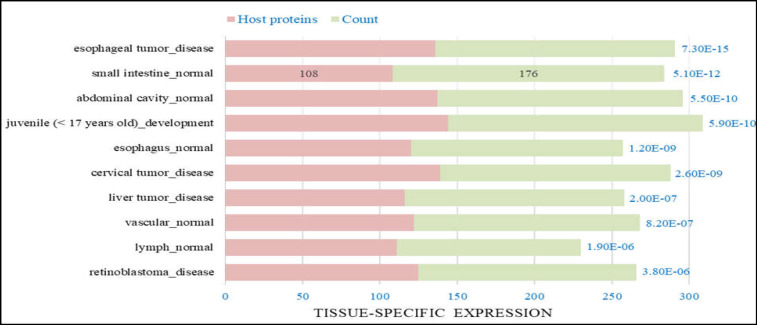
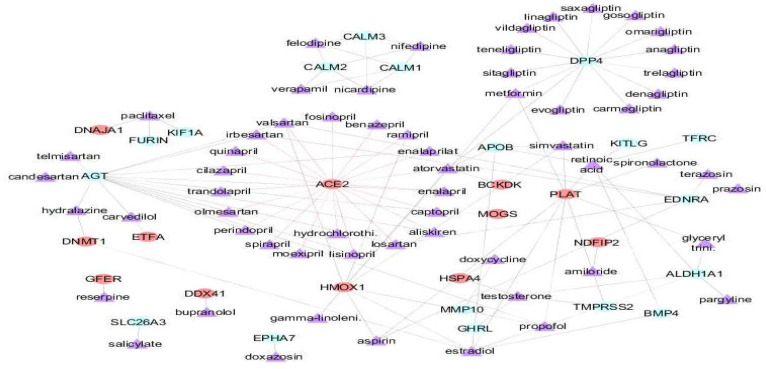
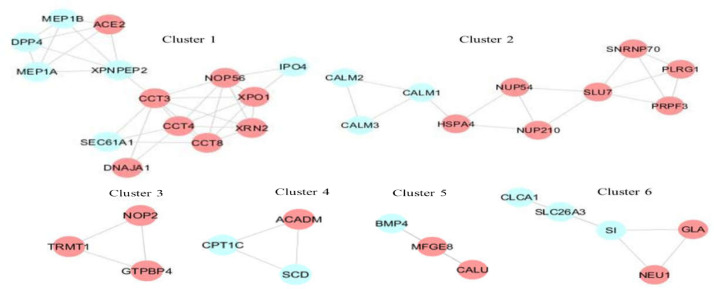
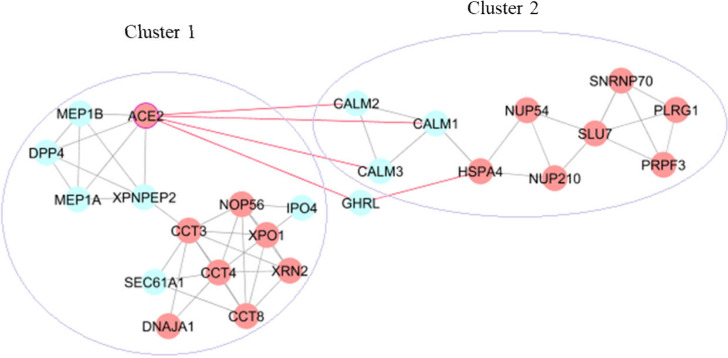
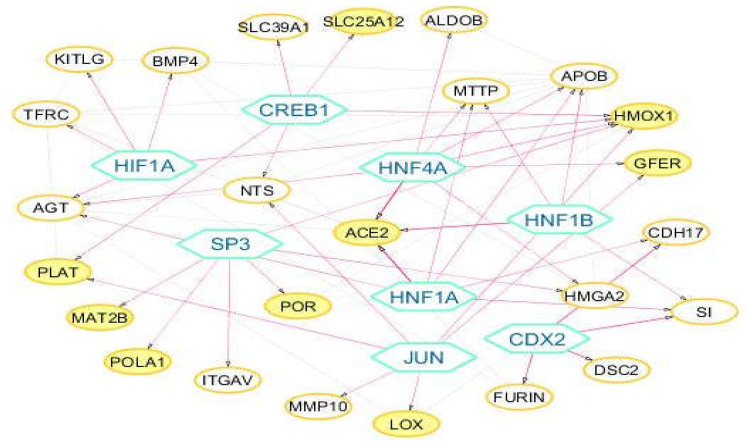
Thirteen primary protein neighbors were found for the SARS-CoV-2 receptor ACE2. ACE2 and its four partners were observed in a highly clustered module; moreover, 8 host proteins belonged to this module. The protein digestion and absorption as a significant pathway was highlighted with enriched genes of ACE2, MEP1A, MEP1B, DPP4, and XPNPEP2. The HNF4A, HNF1A, and HNF1B transcription factors were found to be regulating the expression of ACE2. A significant association with 12 diseases was deciphered and 116 drug-target interactions were identified.
The protein-host protein interactome revealed the important elements and interactions for SARS-CoV-2 infection in the small intestine, which can be useful in clarifying the mechanisms of gastrointestinal symptoms and inflammation. The results suggest that antiviral targeting of these interactions may improve the condition of COVID-19 patients.
本研究旨在确定严重急性呼吸综合征冠状病毒2(SARS-CoV-2)感染在小肠中的人蛋白-宿主蛋白相互作用,以识别潜在机制,并深入了解相关生物标志物和治疗策略。
解读SARS-CoV-2感染的组织和器官相互作用对于识别潜在的潜在机制可能很重要。在本研究中,我们调查了小肠中的人蛋白-宿主蛋白相互作用。
利用公共数据库和已发表的研究收集与小肠组织和SARS-CoV-2感染相关的数据。我们构建了一个人蛋白-蛋白相互作用(PPI)网络,并展示了小肠中宿主蛋白的相互作用。识别了相关模块、生物学过程、功能途径、调控转录因子、疾病本体类别以及治疗靶点的可能候选药物。
发现SARS-CoV-2受体血管紧张素转换酶2(ACE2)有13个主要蛋白邻居。在一个高度聚集的模块中观察到ACE2及其四个伙伴;此外,该模块中有8个宿主蛋白。蛋白消化和吸收作为一条重要途径,通过ACE2、金属内肽酶1A(MEP1A)、金属内肽酶1B(MEP1B)、二肽基肽酶4(DPP4)和X-脯氨酰氨肽酶2(XPNPEP2)的富集基因得到突出显示。发现肝细胞核因子4α(HNF4A)、肝细胞核因子1α(HNF1A)和肝细胞核因子1β(HNF1B)转录因子调节ACE2的表达。解读了与12种疾病的显著关联,并识别了116种药物-靶点相互作用。
蛋白-宿主蛋白相互作用组揭示了SARS-CoV-2感染在小肠中的重要元素和相互作用,这有助于阐明胃肠道症状和炎症的机制。结果表明,针对这些相互作用的抗病毒治疗可能改善2019冠状病毒病(COVID-19)患者的病情。