Center for Neurosciences, The Feinstein Institutes for Medical Research, Manhasset, NY 11030, USA.
Center for Neurosciences, The Feinstein Institutes for Medical Research, Manhasset, NY 11030, USA.
Neuroimage. 2021 Feb 1;226:117568. doi: 10.1016/j.neuroimage.2020.117568. Epub 2020 Nov 25.
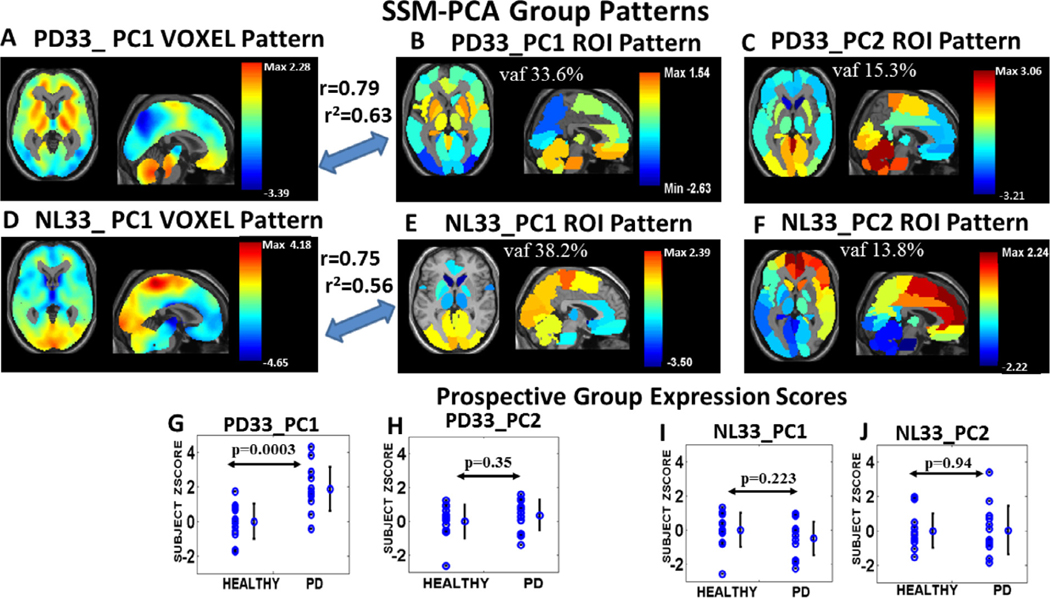
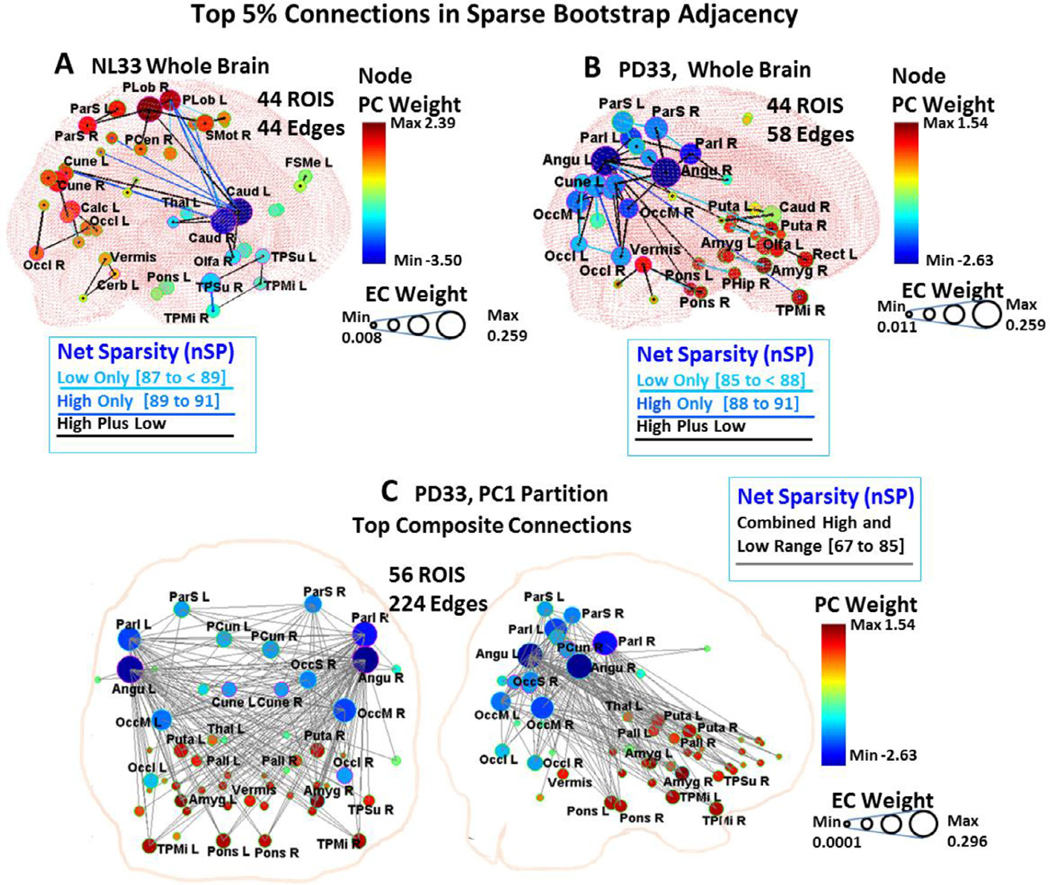
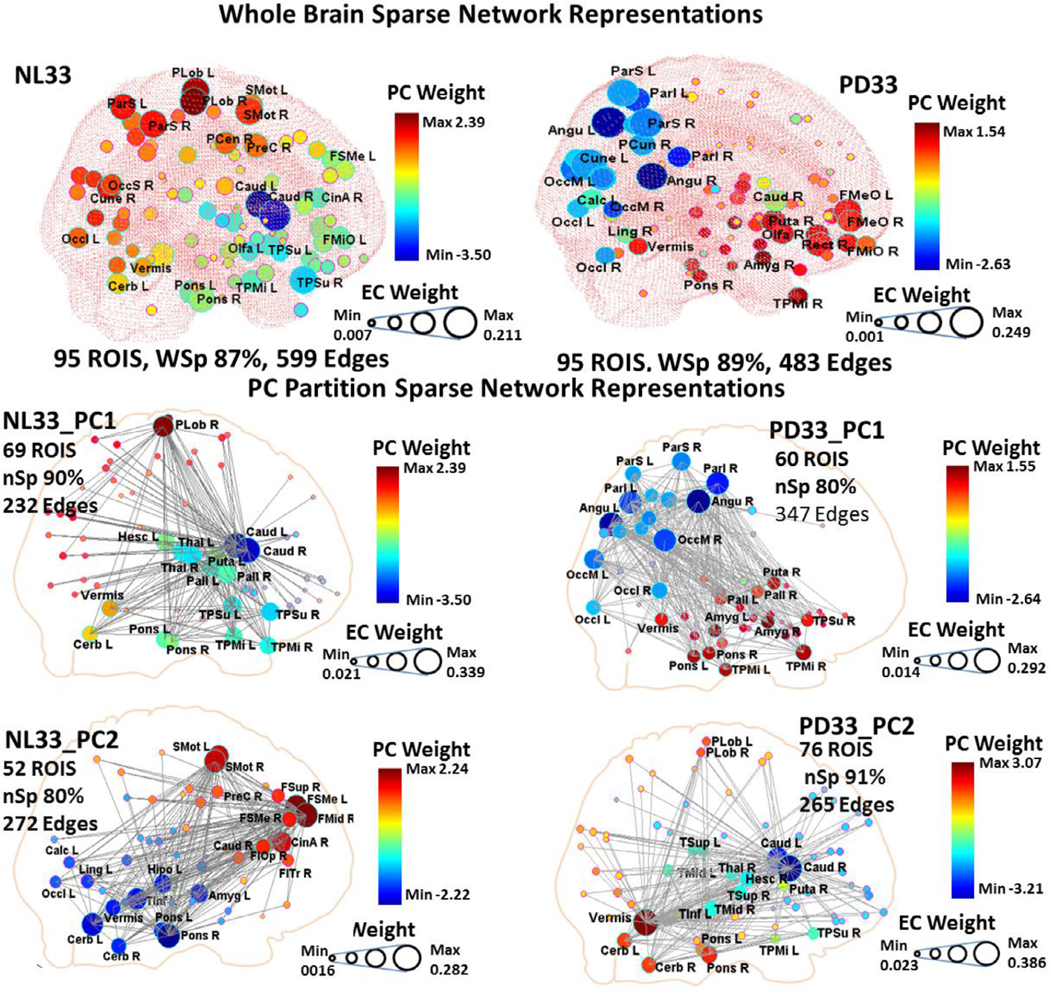
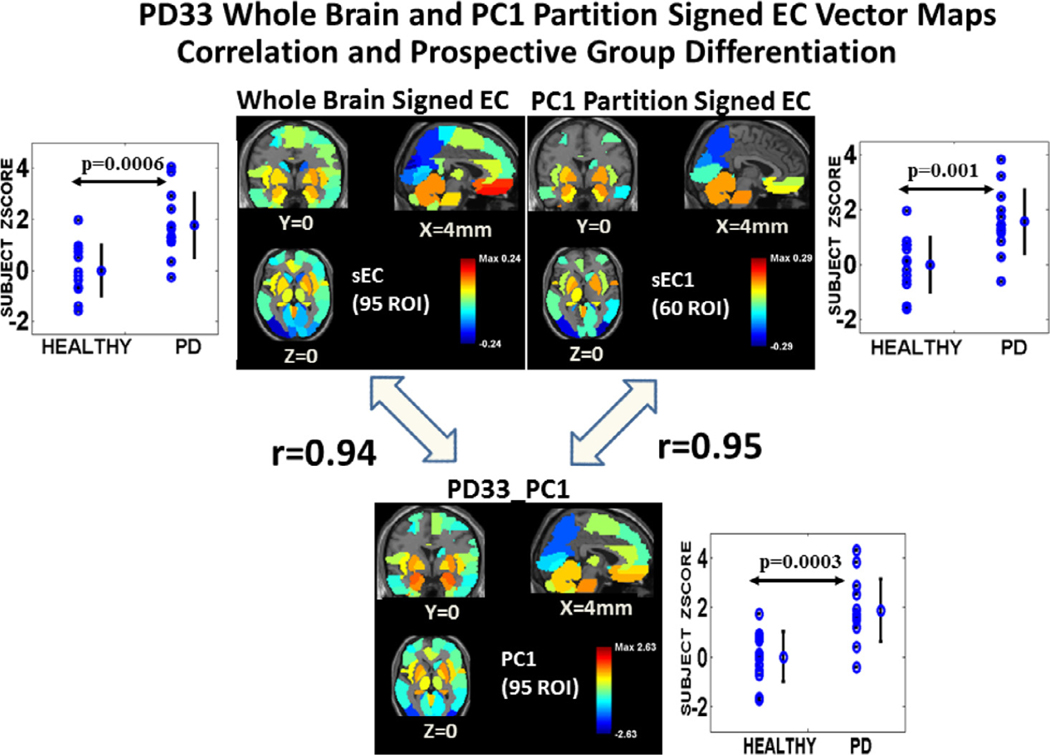
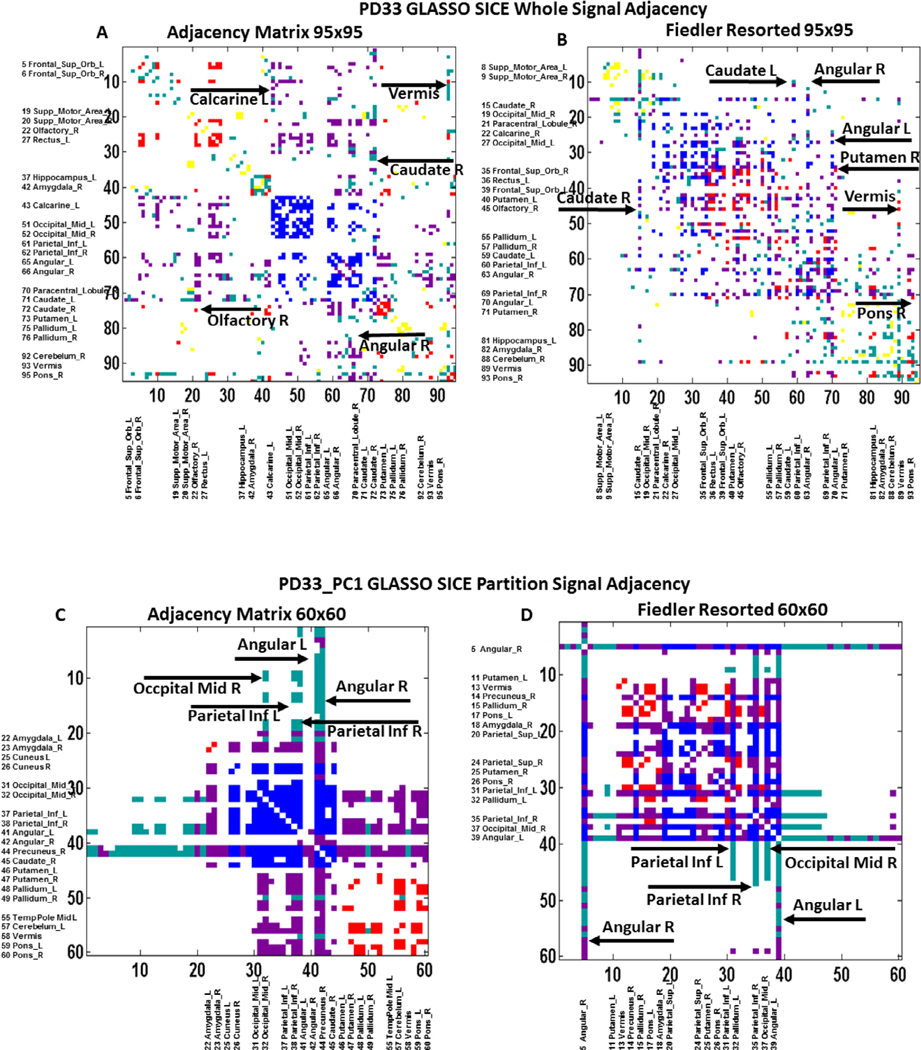
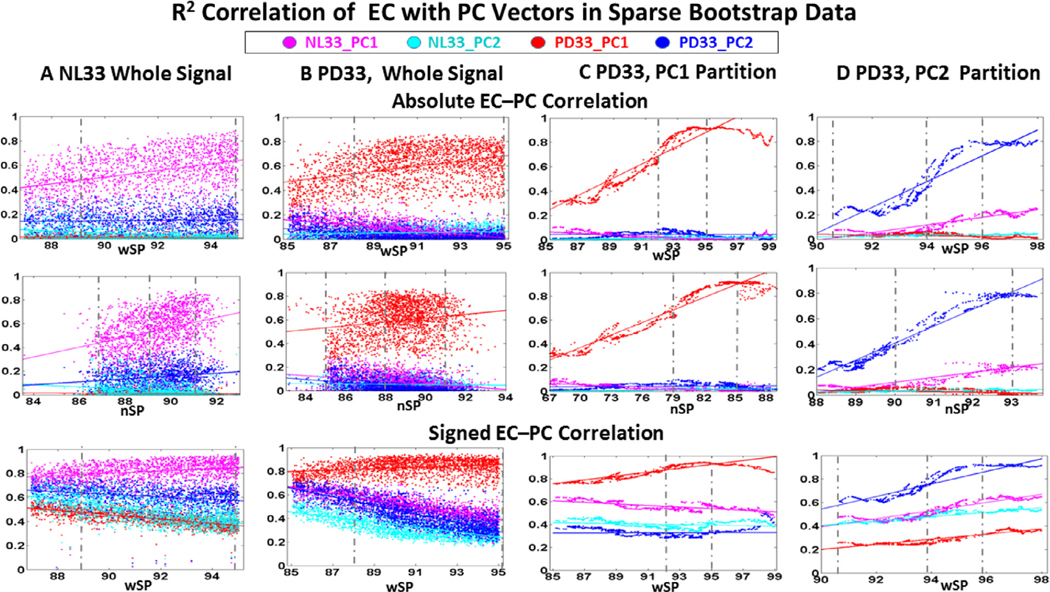
In neurodegenerative disorders, a clearer understanding of the underlying aberrant networks facilitates the search for effective therapeutic targets and potential cures. [F]-fluorodeoxyglucose (FDG) positron emission tomography (PET) imaging data of brain metabolism reflects the distribution of glucose consumption known to be directly related to neural activity. In FDG PET resting-state metabolic data, characteristic disease-related patterns have been identified in group analysis of various neurodegenerative conditions using principal component analysis of multivariate spatial covariance. Notably, among several parkinsonian syndromes, the identified Parkinson's disease-related pattern (PDRP) has been repeatedly validated as an imaging biomarker of PD in independent groups worldwide. Although the primary nodal associations of this network are known, its connectivity is not fully understood. Here, we describe a novel approach to elucidate functional principal component (PC) network connections by performing graph theoretical sparse network derivation directly within the disease relevant PC partition layer of the whole brain data rather than by searching for associations retrospectively in whole brain sparse representations. Using sparse inverse covariance estimation of each overlapping PC partition layer separately, a single coherent network is detected for each layer in contrast to more spatially modular segmentation in whole brain data analysis. Using this approach, the major nodal hubs of the PD disease network are identified and their characteristic functional pathways are clearly distinguished within the basal ganglia, midbrain and parietal areas. Network associations are further clarified using Laplacian spectral analysis of the adjacency matrices. In addition, the innate discriminative capacity of the eigenvector centrality of the graph derived networks in differentiating PD versus healthy external data provides evidence of their validity.
在神经退行性疾病中,更清楚地了解潜在的异常网络有助于寻找有效的治疗靶点和潜在的治疗方法。[F]-氟脱氧葡萄糖(FDG)正电子发射断层扫描(PET)脑代谢成像数据反映了葡萄糖消耗的分布,已知葡萄糖消耗与神经活动直接相关。在 FDG PET 静息状态代谢数据中,使用多元空间协方差的主成分分析对各种神经退行性疾病进行组分析,已经确定了与疾病相关的特征模式。值得注意的是,在几种帕金森综合征中,所确定的帕金森病相关模式(PDRP)已被全球多个独立小组反复验证为 PD 的影像学生物标志物。尽管该网络的主要节点关联已知,但它的连接性尚未完全理解。在这里,我们描述了一种通过在整个大脑数据中与疾病相关的主成分(PC)分区层内直接执行图论稀疏网络推导来阐明功能主成分网络连接的新方法,而不是通过在整个大脑稀疏表示中进行回溯搜索来寻找关联。使用每个重叠 PC 分区层的稀疏协方差估计分别进行,与全脑数据分析中的更空间模块化分割相比,每个层都检测到一个单独的连贯网络。使用这种方法,确定了 PD 疾病网络的主要节点枢纽,并在基底神经节、中脑和顶叶区域内清楚地区分了它们的特征功能途径。通过邻接矩阵的拉普拉斯谱分析进一步澄清了网络关联。此外,图推导网络的特征向量中心性的固有判别能力在区分 PD 与健康外部数据方面提供了其有效性的证据。