
运动障碍中的非侵入性经颅电刺激
Non-invasive Transcranial Electrical Stimulation in Movement Disorders.
作者信息
Ganguly Jacky, Murgai Aditya, Sharma Soumya, Aur Dorian, Jog Mandar
机构信息
Movement Disorder Centre, London Health Sciences Centre, The University of Western Ontario, London, ON, Canada.
出版信息
Front Neurosci. 2020 Jun 5;14:522. doi: 10.3389/fnins.2020.00522. eCollection 2020.
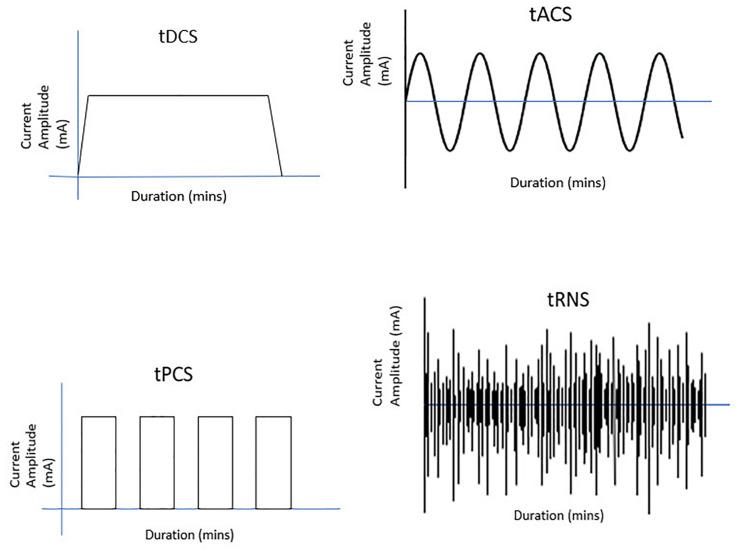
Dysfunction within large-scale brain networks as the basis for movement disorders is an accepted hypothesis. The treatment options for restoring network function are limited. Non-invasive brain stimulation techniques such as repetitive transcranial magnetic stimulation are now being studied to modify the network. Transcranial electrical stimulation (tES) is also a portable, cost-effective, and non-invasive way of network modulation. Transcranial direct current stimulation and transcranial alternating current stimulation have been studied in Parkinson's disease, dystonia, tremor, and ataxia. Transcranial pulsed current stimulation and transcranial random noise stimulation are not yet studied enough. The literature in the use of these techniques is intriguing, yet many unanswered questions remain. In this review, we highlight the studies using these four potential tES techniques and their electrophysiological basis and consider the therapeutic implication in the field of movement disorders. The objectives are to consolidate the current literature, demonstrate that these methods are feasible, and encourage the application of such techniques in the near future.
大脑大规模网络功能障碍作为运动障碍的基础是一个被广泛接受的假说。恢复网络功能的治疗选择有限。目前正在研究诸如重复经颅磁刺激等非侵入性脑刺激技术来调节网络。经颅电刺激(tES)也是一种便携式、经济高效且非侵入性的网络调节方式。经颅直流电刺激和经颅交流电刺激已在帕金森病、肌张力障碍、震颤和共济失调中得到研究。经颅脉冲电流刺激和经颅随机噪声刺激的研究还不够充分。使用这些技术的文献很有趣,但仍有许多未解决的问题。在这篇综述中,我们重点介绍了使用这四种潜在tES技术的研究及其电生理基础,并考虑其在运动障碍领域的治疗意义。目的是整合当前文献,证明这些方法是可行的,并鼓励在不久的将来应用此类技术。
 Zotero 插件