Instituto de Biología y Genética Molecular (IBGM-CSIC/UVa), Valladolid, Spain.
Dairy Research Institute of Asturias, Spanish National Research Council (IPLA-CSIC), Paseo Río Linares s/n, Villaviciosa, Asturias, Spain.
J Neuroinflammation. 2020 Nov 27;17(1):363. doi: 10.1186/s12974-020-02042-6.
Multiple sclerosis (MS) is a chronic demyelinating autoimmune disease affecting the CNS. Recent studies have indicated that intestinal alterations play key pathogenic roles in the development of autoimmune diseases, including MS. The triterpene oleanolic acid (OA), due to its anti-inflammatory properties, has shown to beneficially influence the severity of the experimental autoimmune encephalomyelitis (EAE), a preclinical model of MS. We herein investigate EAE-associated gut intestinal dysfunction and the effect of OA treatment.
Mice with MOG-induced EAE were treated with OA or vehicle from immunization day and were daily analyzed for clinical deficit. We performed molecular and histological analysis in serum and intestinal tissues to measure oxidative and inflammatory responses. We used Caco-2 and HT29-MTX-E12 cells to elucidate OA in vitro effects.
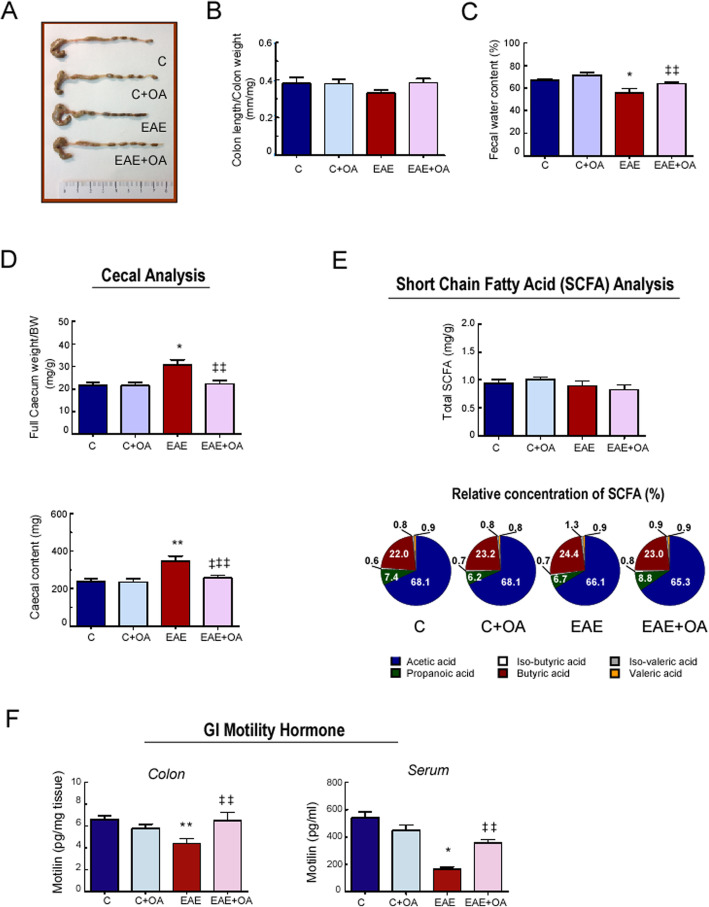
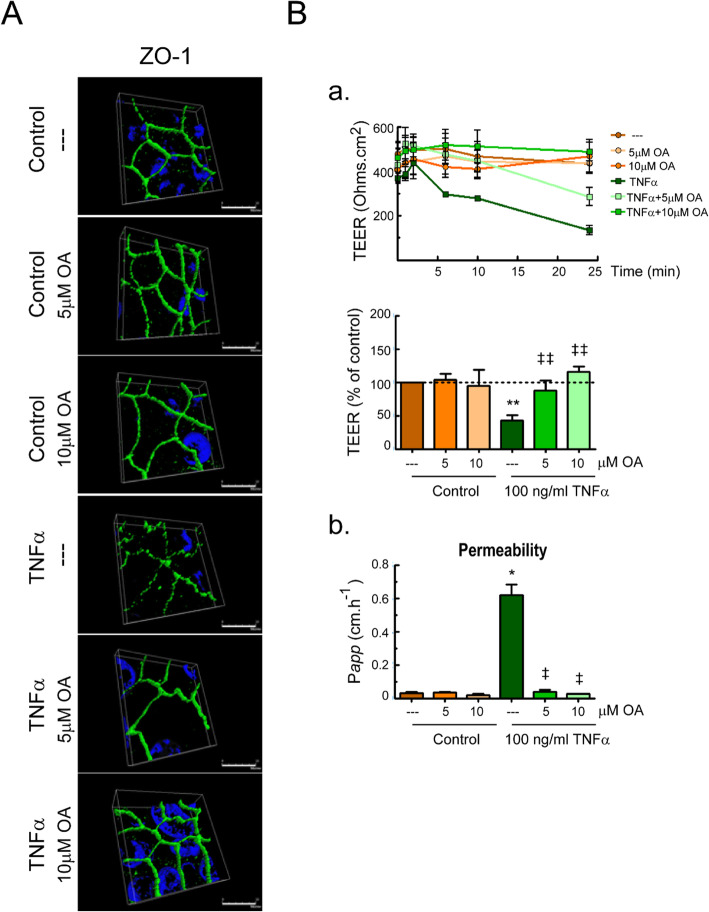
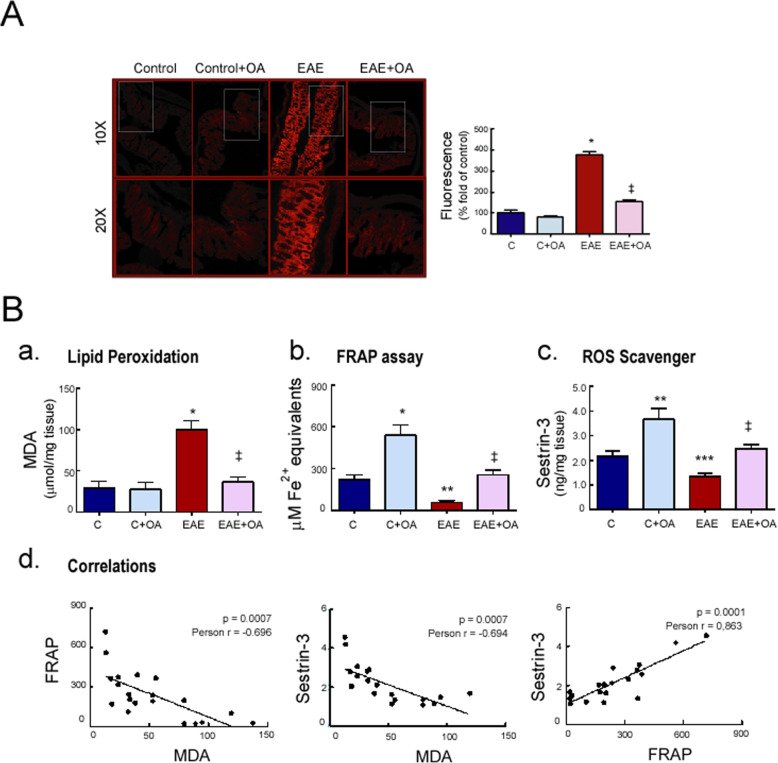
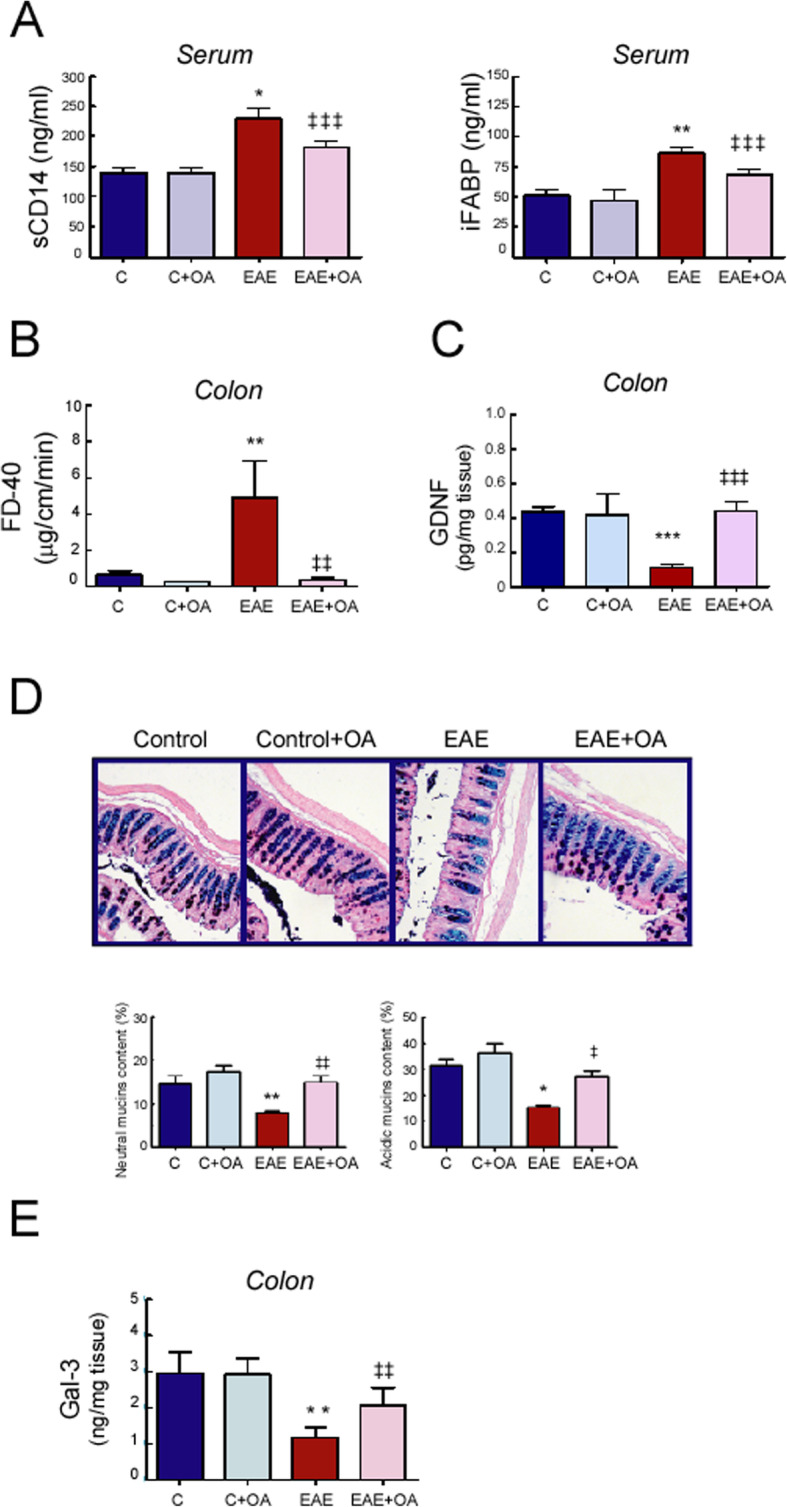
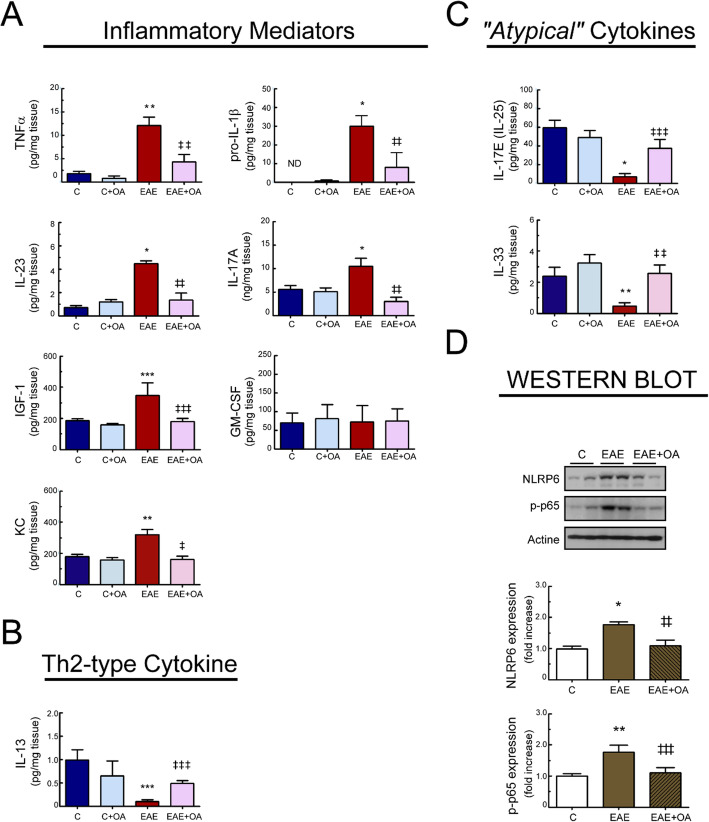
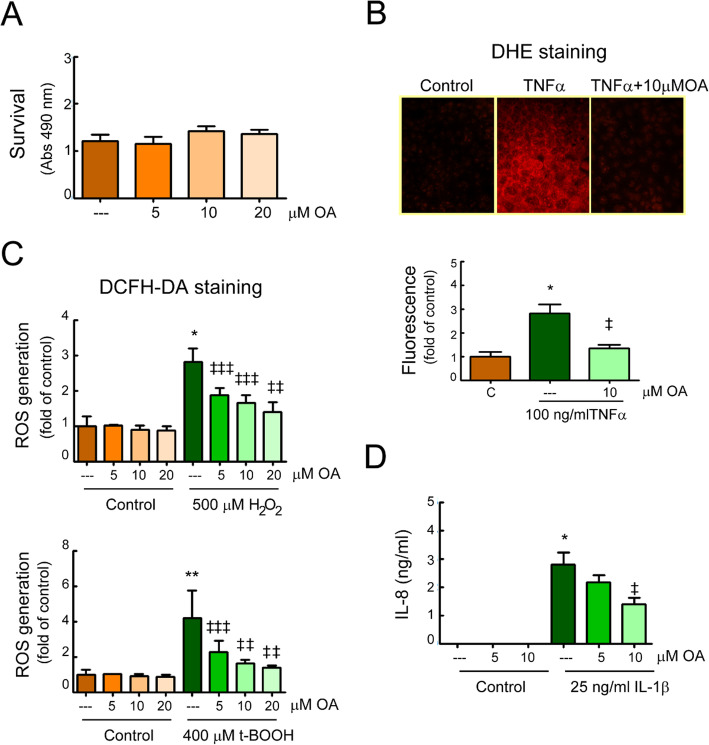
We found that OA protected from EAE-induced changes in intestinal permeability and preserved the mucin-containing goblet cells along the intestinal tract. Serum levels of the markers for intestinal barrier damage iFABP and monocyte activation sCD14 were consistently and significantly reduced in OA-treated EAE mice. Beneficial OA effects also included a decrease of pro-inflammatory mediators both in serum and colonic tissue of treated-EAE mice. Moreover, the levels of some immunoregulatory cytokines, the neurotrophic factor GDNF, and the gastrointestinal hormone motilin were preserved in OA-treated EAE mice. Regarding oxidative stress, OA treatment prevented lipid peroxidation and superoxide anion accumulation in intestinal tissue, while inducing the expression of the ROS scavenger Sestrin-3. Furthermore, short-chain fatty acids (SCFA) quantification in the cecal content showed that OA reduced the high iso-valeric acid concentrations detected in EAE-mice. Lastly, using in vitro cell models which mimic the intestinal epithelium, we verified that OA protected against intestinal barrier dysfunction induced by injurious agents produced in both EAE and MS.
These findings reveal that OA ameliorates the gut dysfunction found in EAE mice. OA normalizes the levels of gut mucosal dysfunction markers, as well as the pro- and anti-inflammatory immune bias during EAE, thus reinforcing the idea that OA is a beneficial compound for treating EAE and suggesting that OA may be an interesting candidate to be explored for the treatment of human MS.
多发性硬化症(MS)是一种影响中枢神经系统的慢性脱髓鞘自身免疫性疾病。最近的研究表明,肠道改变在自身免疫性疾病的发展中发挥着关键的致病作用,包括 MS。由于其抗炎特性,三萜oleanolic 酸(OA)已被证明对实验性自身免疫性脑脊髓炎(EAE)的严重程度有益,EAE 是 MS 的临床前模型。在此,我们研究了与 EAE 相关的肠道功能障碍以及 OA 治疗的效果。
用 MOG 诱导 EAE 的小鼠从免疫日开始用 OA 或载体治疗,并每天分析临床缺陷。我们对血清和肠道组织进行分子和组织学分析,以测量氧化和炎症反应。我们使用 Caco-2 和 HT29-MTX-E12 细胞来阐明 OA 的体外作用。
我们发现 OA 可防止 EAE 引起的肠道通透性改变,并沿肠道保留含粘蛋白的杯状细胞。血清中肠屏障损伤标志物 iFABP 和单核细胞激活标志物 sCD14 的水平在 OA 治疗的 EAE 小鼠中均持续且显著降低。OA 的有益作用还包括降低血清和结肠组织中促炎介质的水平。此外,OA 治疗的 EAE 小鼠中一些免疫调节细胞因子、神经营养因子 GDNF 和胃肠激素胃动素的水平也得到了保留。关于氧化应激,OA 治疗可防止肠道组织中的脂质过氧化和超氧阴离子积累,同时诱导 ROS 清除剂 Sestrin-3 的表达。此外,回肠内容物中短链脂肪酸(SCFA)的定量分析表明,OA 降低了在 EAE 小鼠中检测到的高异戊酸浓度。最后,使用模拟肠道上皮的体外细胞模型,我们验证了 OA 可防止 EAE 和 MS 中产生的损伤性物质引起的肠道屏障功能障碍。
这些发现表明 OA 可改善 EAE 小鼠的肠道功能障碍。OA 可使肠道黏膜功能障碍标志物的水平正常化,以及 EAE 期间的促炎和抗炎免疫偏向正常化,从而强化了 OA 是治疗 EAE 的有益化合物的观点,并表明 OA 可能是治疗人类 MS 的一个有前途的候选药物。