Guangdong Provincial Key Laboratory of Plant Resources, State Key Laboratory for Biocontrol, School of Life Science, Sun Yat-Sen University, Guangzhou, 510275, P. R. China.
Guangdong Laboratory of Lingnan Modern Agriculture, Guangzhou, 510642, China.
Nat Commun. 2020 Nov 27;11(1):6031. doi: 10.1038/s41467-020-19922-3.
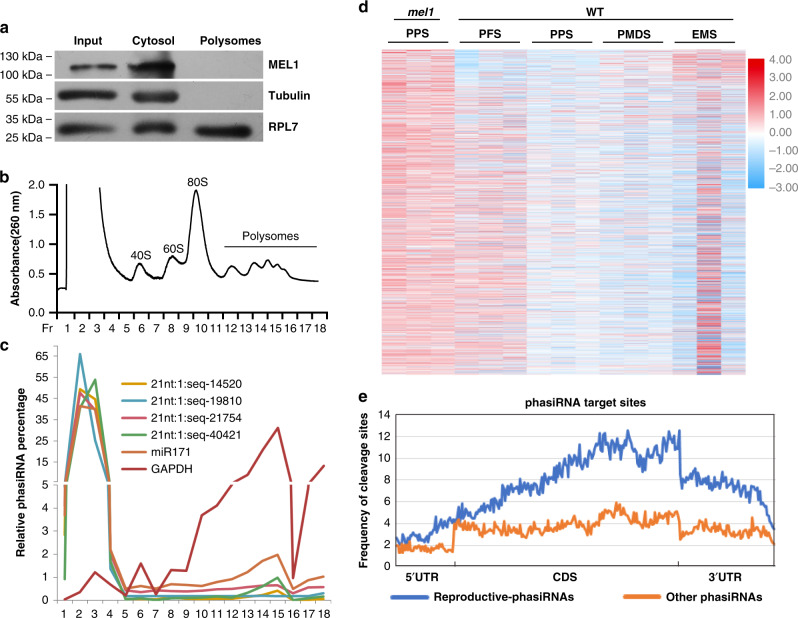
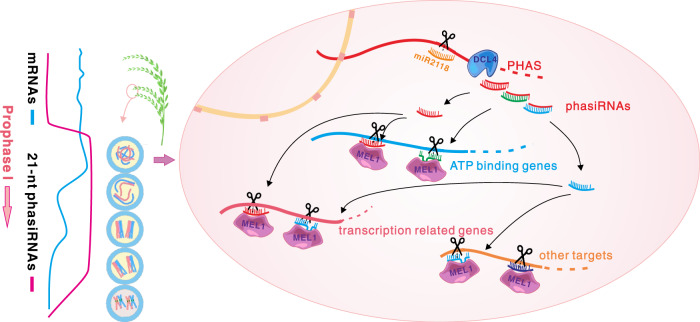
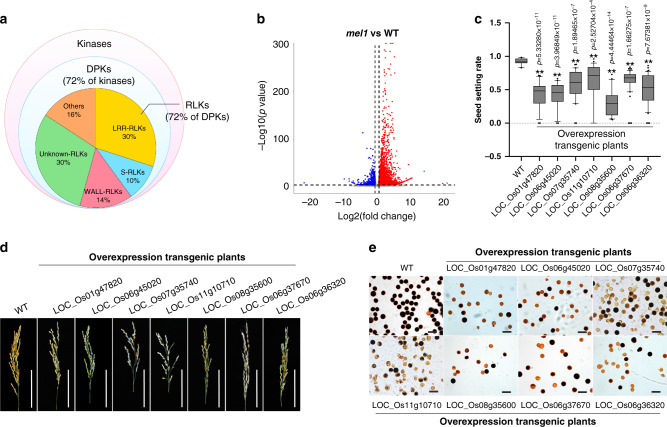
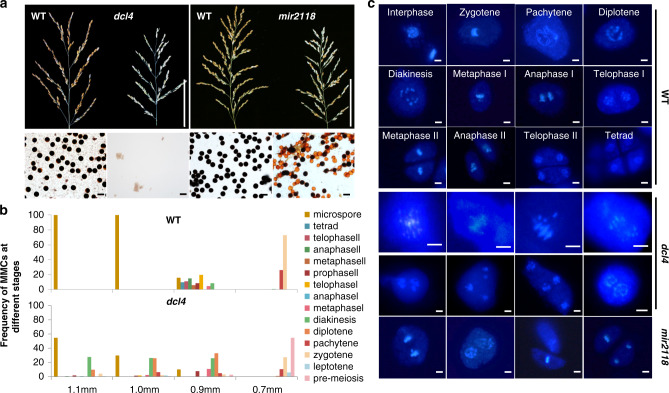
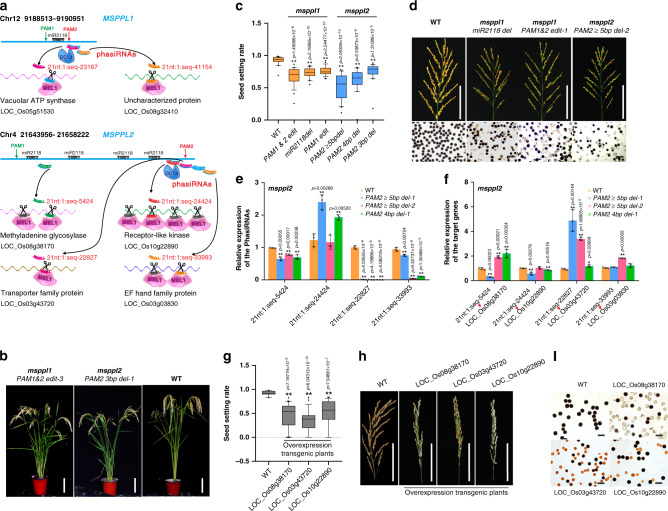
Plant spermatogenesis is a complex process that directly affects crop breeding. A rapid change in gene abundance occurs at early meiosis prophase, when gene regulation is selective. However, how these genes are regulated remains unknown. Here, we show that rice reproductive phasiRNAs are essential for the elimination of a specific set of RNAs during meiotic prophase I. These phasiRNAs cleave target mRNAs in a regulatory manner such that one phasiRNA can target more than one gene, and/or a single gene can be targeted by more than one phasiRNA to efficiently silence target genes. Our investigation of phasiRNA-knockdown and PHAS-edited transgenic plants demonstrates that phasiRNAs and their nucleotide variations are required for meiosis progression and fertility. This study highlights the importance of reproductive phasiRNAs for the reprogramming of gene expression during meiotic progression and establishes a basis for future studies on the roles of phasiRNAs with a goal of crop improvement.
植物精子发生是一个复杂的过程,直接影响作物的育种。在早期减数分裂前期,基因丰度会发生快速变化,此时基因调控具有选择性。然而,这些基因是如何被调控的仍然未知。在这里,我们表明水稻生殖小 RNA 对于减数分裂前期 I 中特定一组 RNA 的消除是必不可少的。这些小 RNA 以调节方式切割靶 mRNA,使得一个小 RNA 可以靶向多个基因,并且/或者一个基因可以被多个小 RNA 靶向,从而有效地沉默靶基因。我们对小 RNA 敲低和 PHAS 编辑转基因植物的研究表明,小 RNA 及其核苷酸变异是减数分裂进展和育性所必需的。这项研究强调了生殖小 RNA 在减数分裂过程中基因表达重编程中的重要性,并为未来研究小 RNA 的作用奠定了基础,以期实现作物改良。