McMaster Brain-Body Institute, The Research Institute of St. Joseph's Hamilton, Hamilton, ON L8N 4A6, Canada.
Firestone Institute for Respiratory Health, St. Joseph's Healthcare and Department of Medicine, McMaster University, Hamilton, ON L8N 4A6, Canada.
Int J Mol Sci. 2020 Nov 24;21(23):8899. doi: 10.3390/ijms21238899.
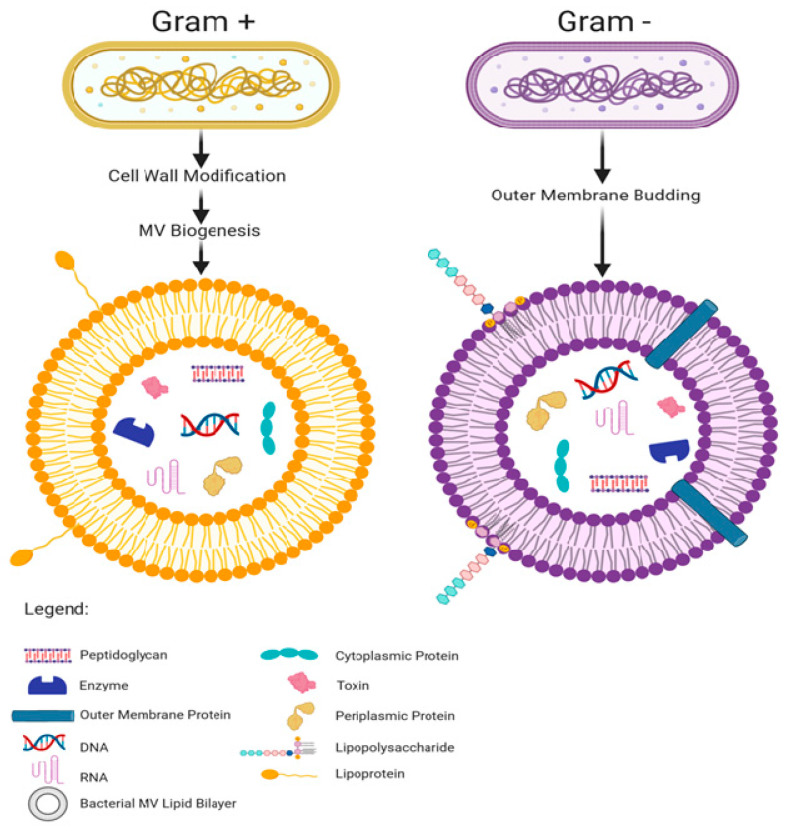
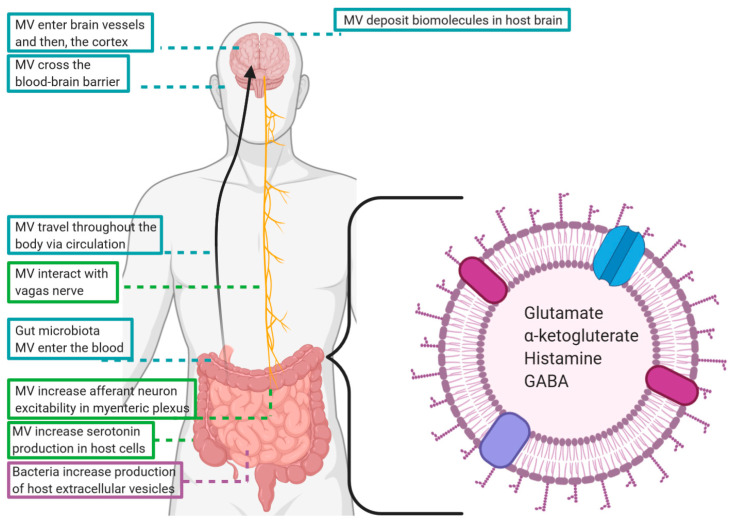
The discovery of the microbiota-gut-brain axis has revolutionized our understanding of systemic influences on brain function and may lead to novel therapeutic approaches to neurodevelopmental and mood disorders. A parallel revolution has occurred in the field of intercellular communication, with the realization that endosomes, and other extracellular vesicles, rival the endocrine system as regulators of distant tissues. These two paradigms shifting developments come together in recent observations that bacterial membrane vesicles contribute to inter-kingdom signaling and may be an integral component of gut microbe communication with the brain. In this short review we address the current understanding of the biogenesis of bacterial membrane vesicles and the roles they play in the survival of microbes and in intra and inter-kingdom communication. We identify recent observations indicating that bacterial membrane vesicles, particularly those derived from probiotic organisms, regulate brain function. We discuss mechanisms by which bacterial membrane vesicles may influence the brain including interaction with the peripheral nervous system, and modulation of immune activity. We also review evidence suggesting that, unlike the parent organism, gut bacteria derived membrane vesicles are able to deliver cargo, including neurotransmitters, directly to the central nervous system and may thus constitute key components of the microbiota-gut-brain axis.
微生物群-肠道-大脑轴的发现彻底改变了我们对系统影响大脑功能的认识,并可能为神经发育和情绪障碍的新型治疗方法提供依据。细胞间通讯领域也发生了一场平行的革命,人们认识到内体和其他细胞外囊泡与内分泌系统一样,是调节远距离组织的调节剂。这两个范式的转变发展在最近的观察结果中汇聚在一起,这些观察结果表明细菌膜泡有助于种间信号传递,并且可能是肠道微生物与大脑进行通讯的一个组成部分。在这篇简短的综述中,我们讨论了细菌膜泡的生物发生及其在微生物存活以及种内和种间通讯中所起作用的当前认识。我们确定了最近的观察结果,表明细菌膜泡,特别是那些来自益生菌的膜泡,能够调节大脑功能。我们讨论了细菌膜泡可能影响大脑的机制,包括与外周神经系统的相互作用以及对免疫活性的调节。我们还回顾了一些证据,表明与母体生物体不同,源自肠道细菌的膜泡能够将包括神经递质在内的货物直接递送到中枢神经系统,因此可能是微生物群-肠道-大脑轴的关键组成部分。