Uddin Md Jalal, Dawan Jirapat, Jeon Gibeom, Yu Tao, He Xinlong, Ahn Juhee
Department of Medical Biomaterials Engineering, College of Biomedical Science, Kangwon National University, Chuncheon, Gangwon 24341, Korea.
Shandong Institute of Parasitic Diseases, Shandong First Medical University & Shandong Academy of Medical Sciences, Jining 272033, China.
Microorganisms. 2020 May 5;8(5):670. doi: 10.3390/microorganisms8050670.
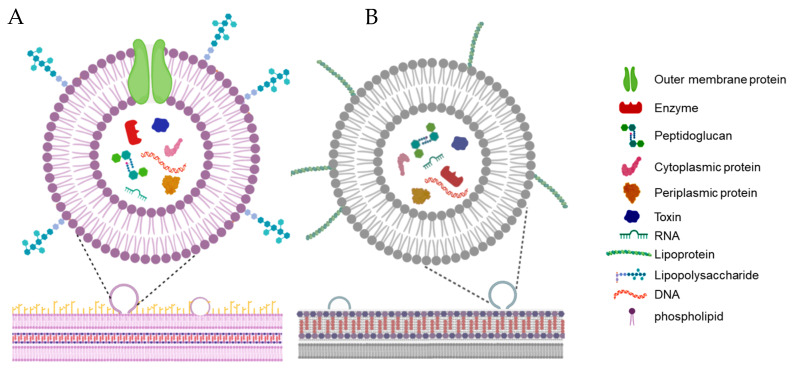
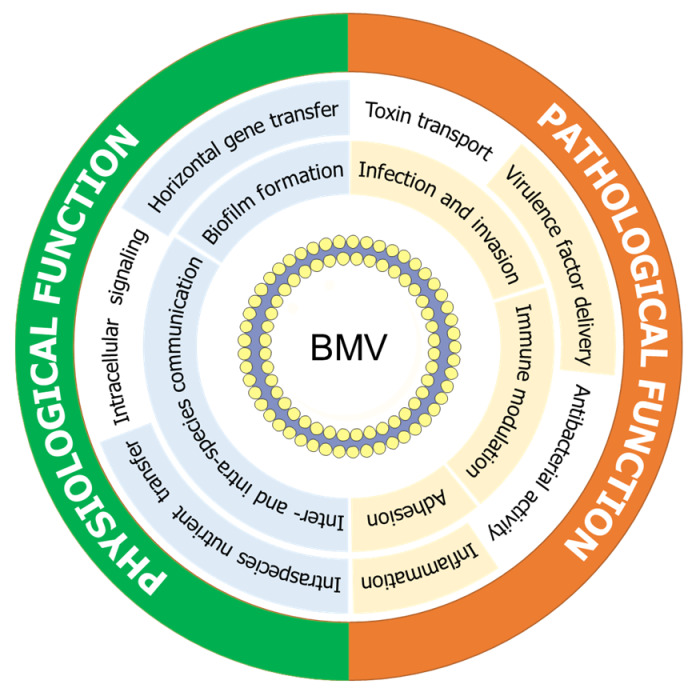
The rapid emergence and spread of antibiotic-resistant bacteria continues to be an issue difficult to deal with, especially in the clinical, animal husbandry, and food fields. The occurrence of multidrug-resistant bacteria renders treatment with antibiotics ineffective. Therefore, the development of new therapeutic methods is a worthwhile research endeavor in treating infections caused by antibiotic-resistant bacteria. Recently, bacterial membrane vesicles (BMVs) have been investigated as a possible approach to drug delivery and vaccine development. The BMVs are released by both pathogenic and non-pathogenic Gram-positive and Gram-negative bacteria, containing various components originating from the cytoplasm and the cell envelope. The BMVs are able to transform bacteria with genes that encode enzymes such as proteases, glycosidases, and peptidases, resulting in the enhanced antibiotic resistance in bacteria. The BMVs can increase the resistance of bacteria to antibiotics. However, the biogenesis and functions of BMVs are not fully understood in association with the bacterial pathogenesis. Therefore, this review aims to discuss BMV-associated antibiotic resistance and BMV-based therapeutic interventions.
抗生素耐药菌的迅速出现和传播仍然是一个难以应对的问题,尤其是在临床、畜牧和食品领域。多重耐药菌的出现使抗生素治疗无效。因此,开发新的治疗方法是治疗抗生素耐药菌引起的感染的一项有价值的研究工作。最近,细菌膜囊泡(BMVs)已被研究作为一种可能的药物递送和疫苗开发方法。BMVs由致病性和非致病性革兰氏阳性菌和革兰氏阴性菌释放,包含源自细胞质和细胞膜的各种成分。BMVs能够用编码蛋白酶、糖苷酶和肽酶等酶的基因转化细菌,导致细菌对抗生素的耐药性增强。BMVs可以增加细菌对抗生素的耐药性。然而,BMVs的生物发生和功能与细菌发病机制的关系尚未完全了解。因此,本综述旨在讨论与BMVs相关的抗生素耐药性以及基于BMVs的治疗干预措施。