Katopodis Periklis, Dong Qiduo, Halai Heerni, Fratila Cristian I, Polychronis Andreas, Anikin Vladimir, Sisu Cristina, Karteris Emmanouil
Biosciences, College of Health, Medicine and Life Sciences, Brunel University London, Uxbridge UB8 3PH, UK.
Division of Thoracic Surgery, The Royal Brompton & Harefield NHS Foundation Trust, Harefield Hospital, London UB9 6JH, UK.
Cancers (Basel). 2020 Nov 24;12(12):3499. doi: 10.3390/cancers12123499.
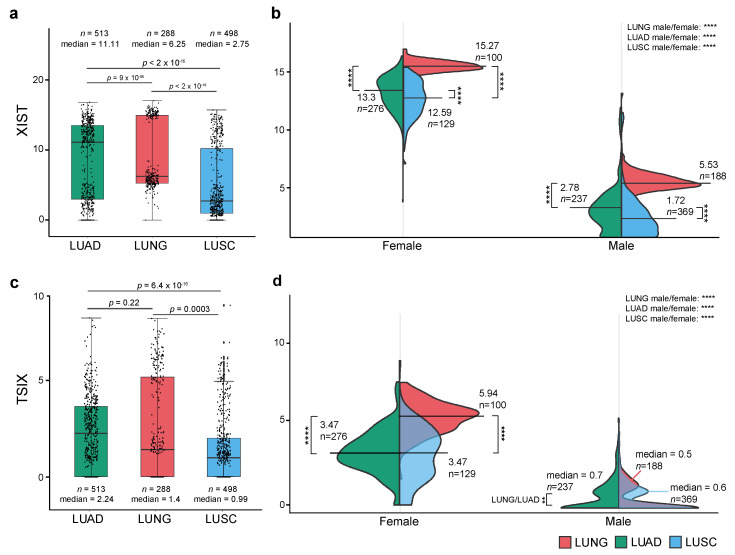
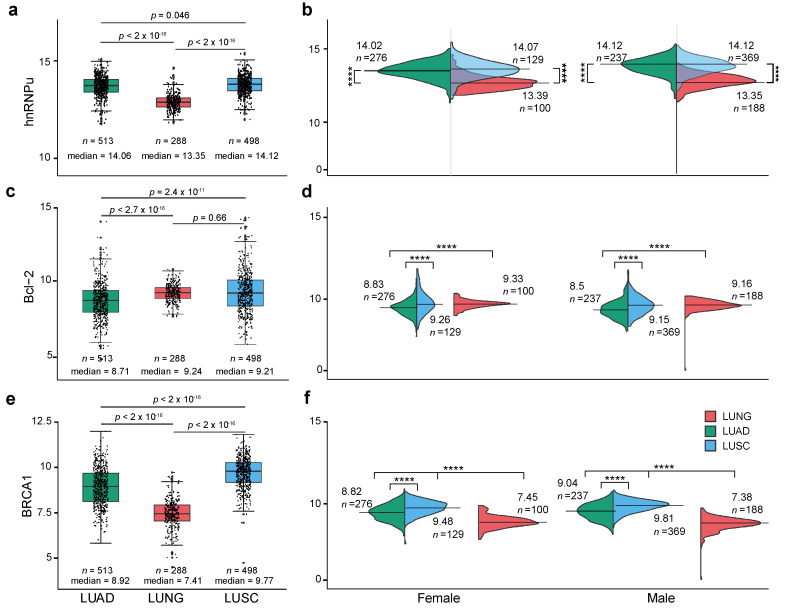
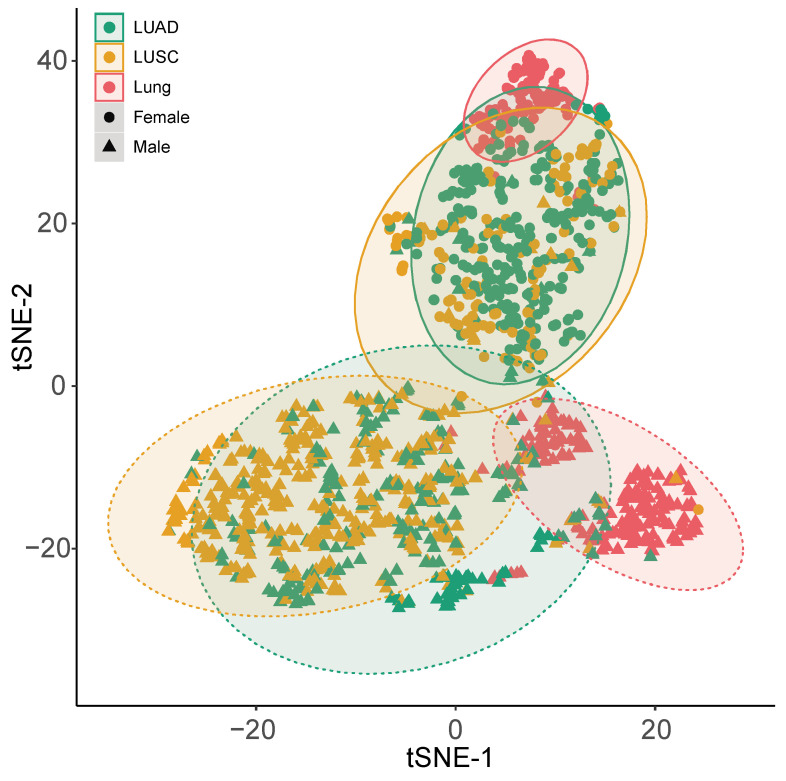
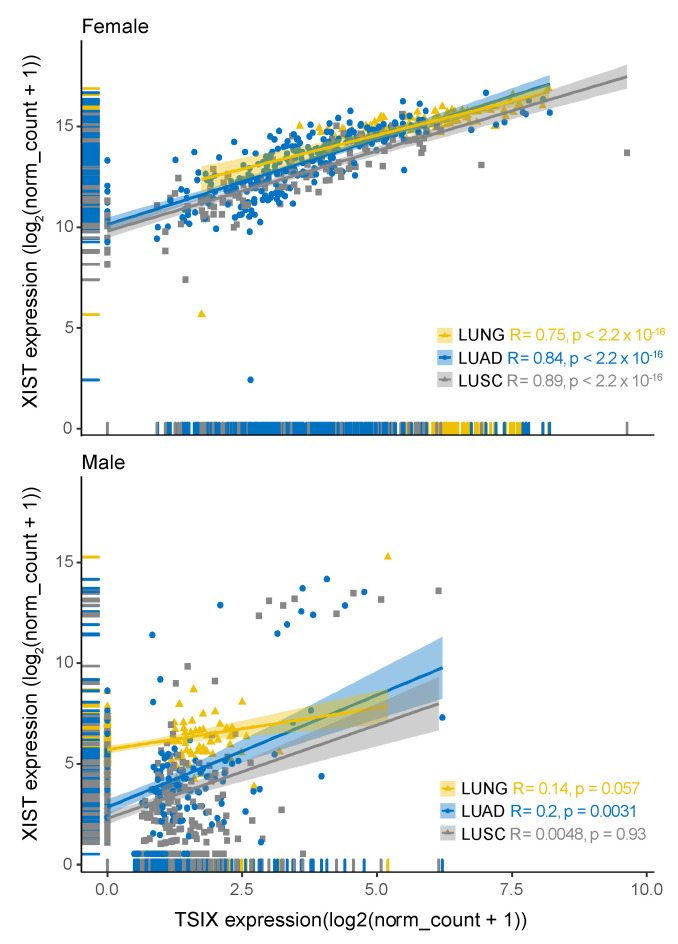
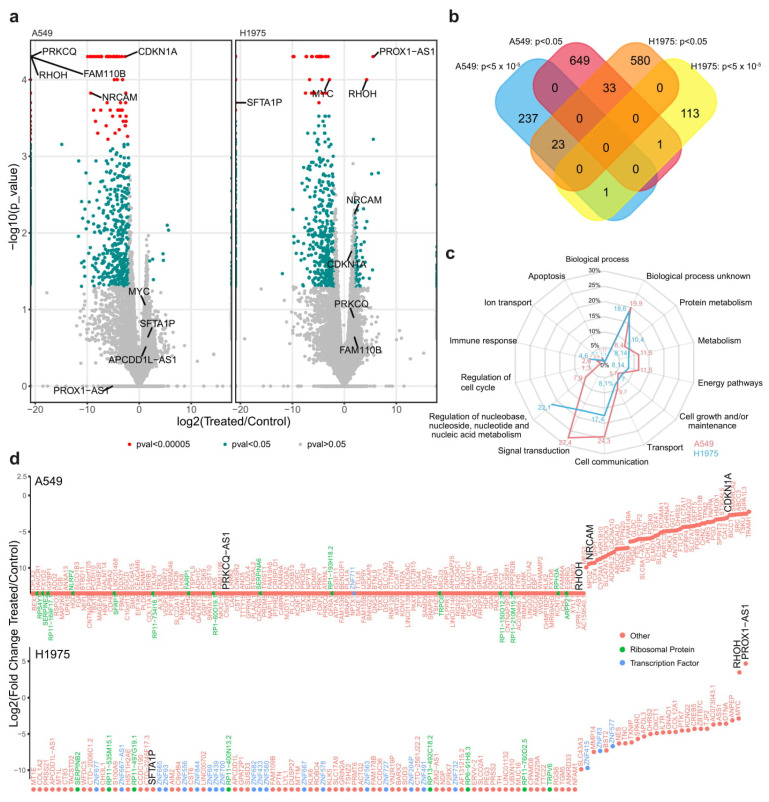
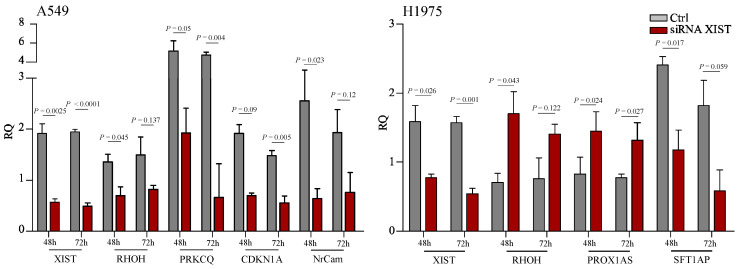
Long non-coding RNAs (lncRNAs) perform a wide functional repertoire of roles in cell biology, ranging from RNA editing to gene regulation, as well as tumour genesis and tumour progression. The lncRNA X-inactive specific transcript (XIST) is involved in the aetiopathogenesis of non-small cell lung cancer (NSCLC). However, its role at the molecular level is not fully elucidated. The expression of XIST and co-regulated genes TSIX, hnRNPu, Bcl-2, and BRCA1 analyses in lung cancer (LC) and controls were performed in silico. Differentially expressed genes (DEGs) were determined using RNA-seq in H1975 and A549 NSCLC cell lines following siRNA for XIST. XIST exhibited sexual dimorphism, being up-regulated in females compared to males in both control and LC patient cohorts. RNA-seq revealed 944 and 751 DEGs for A549 and H1975 cell lines, respectively. These DEGs are involved in signal transduction, cell communication, energy pathways, and nucleic acid metabolism. XIST expression associated with TSIX, hnRNPu, Bcl-2, and BRCA1 provided a strong collective feature to discriminate between controls and LC, implying a diagnostic potential. There is a much more complex role for XIST in lung cancer. Further studies should concentrate on sex-specific changes and investigate the signalling pathways of the DEGs following silencing of this lncRNA.
长链非编码RNA(lncRNAs)在细胞生物学中发挥着广泛的功能,从RNA编辑到基因调控,以及肿瘤发生和肿瘤进展。长链非编码RNA X染色体失活特异性转录本(XIST)参与非小细胞肺癌(NSCLC)的发病机制。然而,其在分子水平上的作用尚未完全阐明。在计算机上对肺癌(LC)患者和对照组中XIST以及共调控基因TSIX、hnRNPu、Bcl-2和BRCA1的表达进行了分析。在针对XIST的小干扰RNA(siRNA)处理后的H1975和A549非小细胞肺癌细胞系中,使用RNA测序确定差异表达基因(DEGs)。XIST表现出性别二态性,在对照组和LC患者队列中,女性的表达均高于男性。RNA测序分别揭示了A549和H1975细胞系中的944个和751个DEGs。这些DEGs参与信号转导、细胞通讯、能量途径和核酸代谢。XIST与TSIX、hnRNPu、Bcl-2和BRCA1的表达关联为区分对照组和LC提供了一个强大的共同特征,暗示了其诊断潜力。XIST在肺癌中发挥着更为复杂的作用。进一步的研究应集中在性别特异性变化上,并研究该lncRNA沉默后DEGs的信号通路。