Breast Cancer Research Unit, Department of Molecular Oncology, King Faisal Specialist Hospital and Research Centre, Riyadh 11211, Saudi Arabia.
Department of Biochemistry and Molecular Medicine, School of Medicine and Health Sciences (SMHS), George Washington University, Washington, DC 20073, USA.
Int J Mol Sci. 2020 Nov 24;21(23):8905. doi: 10.3390/ijms21238905.
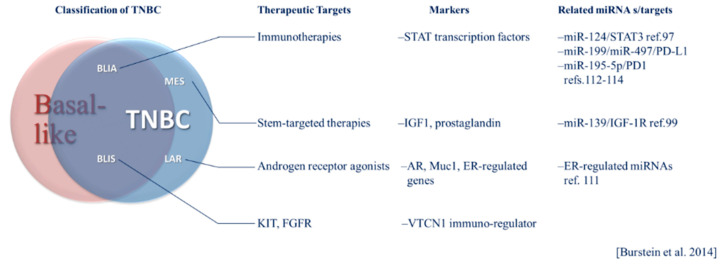
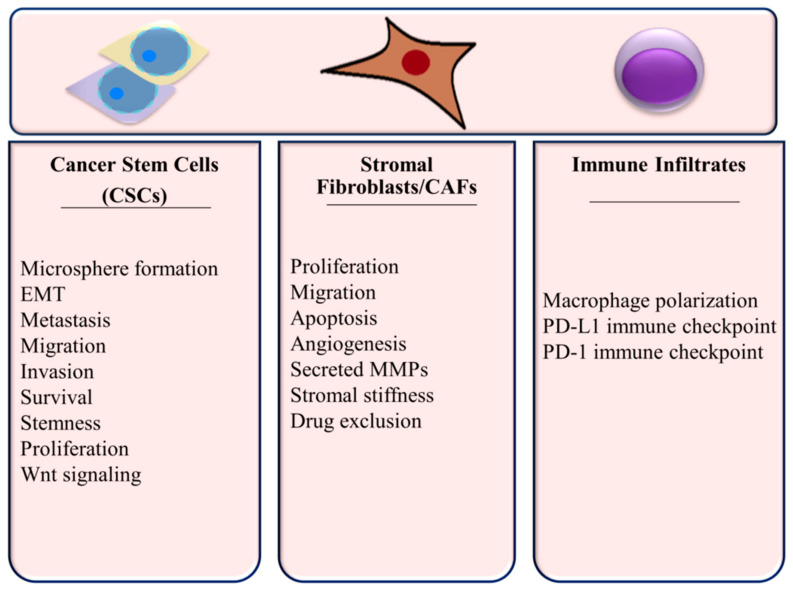
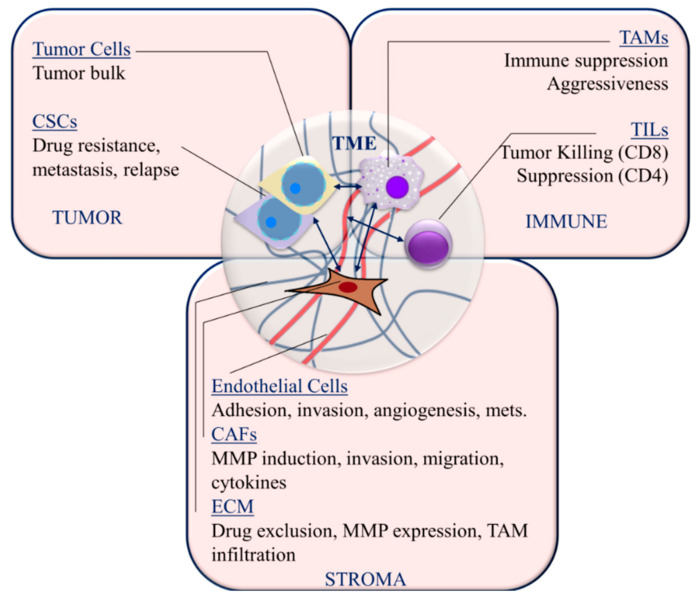
Treatment of triple-negative breast cancer (TNBC) remains challenging because of the heterogeneity of the disease and lack of single targetable driving mutations. TNBC does not rely on estrogen, progesterone or epidermal growth factor receptors and is associated with aggressive disease progression and poor prognosis. TNBC is also characterized by resistance to chemotherapeutics, and response to immunotherapies is limited despite promising results in a subset of TNBC patients. MicroRNAs (miRNAs) have emerged as significant drivers of tumorigenesis and tumor progression in triple-negative breast cancer (TNBC) and present unique opportunities to target various components of the TNBC microenvironment for improved efficacy against this difficult to treat cancer. Effects of miRNAs on multiple targets may improve response rates in the context of this genetically and biologically heterogeneous disease. In this review, we offer a comprehensive view of miRNA regulation in TNBC, treatment challenges presented by TNBC in the context of the tumor microenvironment and stem cell subpopulations, and current and emerging miRNA-based therapeutic strategies targeting various components of the TNBC microenvironment. In addition, we offer insight into novel targets that have potential for treating TNBC through multiple mechanisms in the tumor microenvironment simultaneously and those that may be synergistic with standard chemotherapies.
三阴性乳腺癌(TNBC)的治疗仍然具有挑战性,因为该病具有异质性,并且缺乏单一的可靶向驱动突变。TNBC 不依赖于雌激素、孕激素或表皮生长因子受体,与侵袭性疾病进展和预后不良相关。TNBC 还表现出对化疗药物的耐药性,尽管在一部分 TNBC 患者中取得了有希望的结果,但对免疫疗法的反应有限。微小 RNA(miRNA)已成为三阴性乳腺癌(TNBC)发生和肿瘤进展的重要驱动因素,并为针对 TNBC 微环境的各种成分提供了独特的靶向机会,以提高对这种难以治疗的癌症的疗效。miRNA 对多个靶标的作用可能会提高在这种遗传和生物学上具有异质性的疾病背景下的反应率。在这篇综述中,我们全面探讨了 miRNA 在 TNBC 中的调控作用、TNBC 在肿瘤微环境和干细胞亚群背景下所面临的治疗挑战,以及当前和新兴的基于 miRNA 的治疗策略,这些策略针对 TNBC 微环境的各种成分。此外,我们还深入探讨了通过同时作用于肿瘤微环境中的多个机制以及与标准化疗药物协同作用,具有治疗 TNBC 潜力的新靶点。