Department of Hepatobiliary Surgery, Clinical Medical College, Yangzhou University , Yangzhou, Jiangsu, P.R. China.
The First Clinical Medical College, Dalian Medical University , Dalian, Liaoning, P.R. China.
Bioengineered. 2021 Dec;12(1):30-43. doi: 10.1080/21655979.2020.1855914.
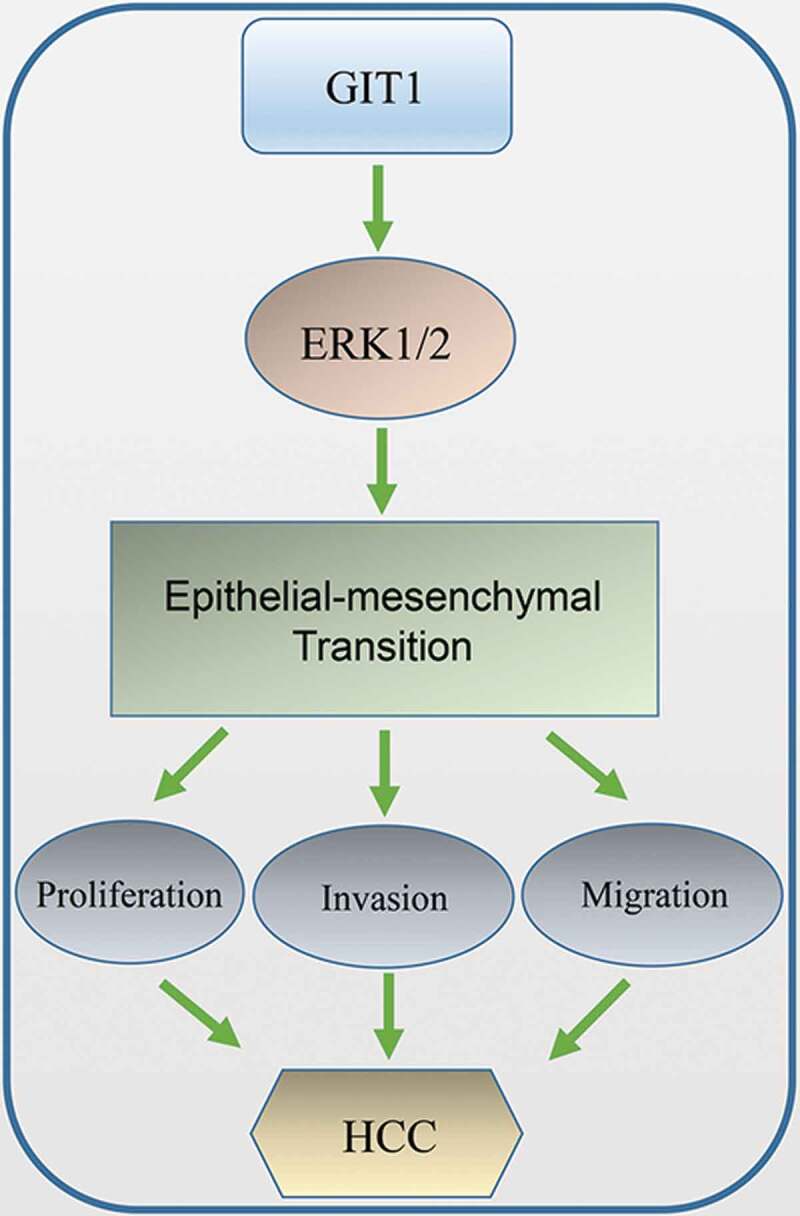
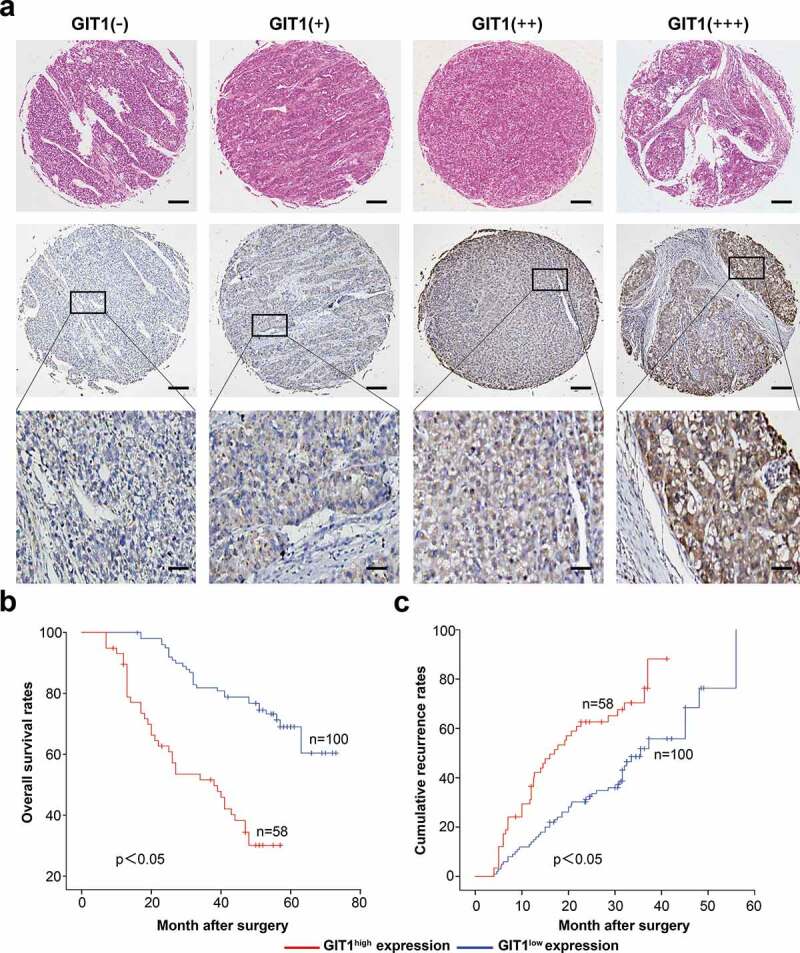
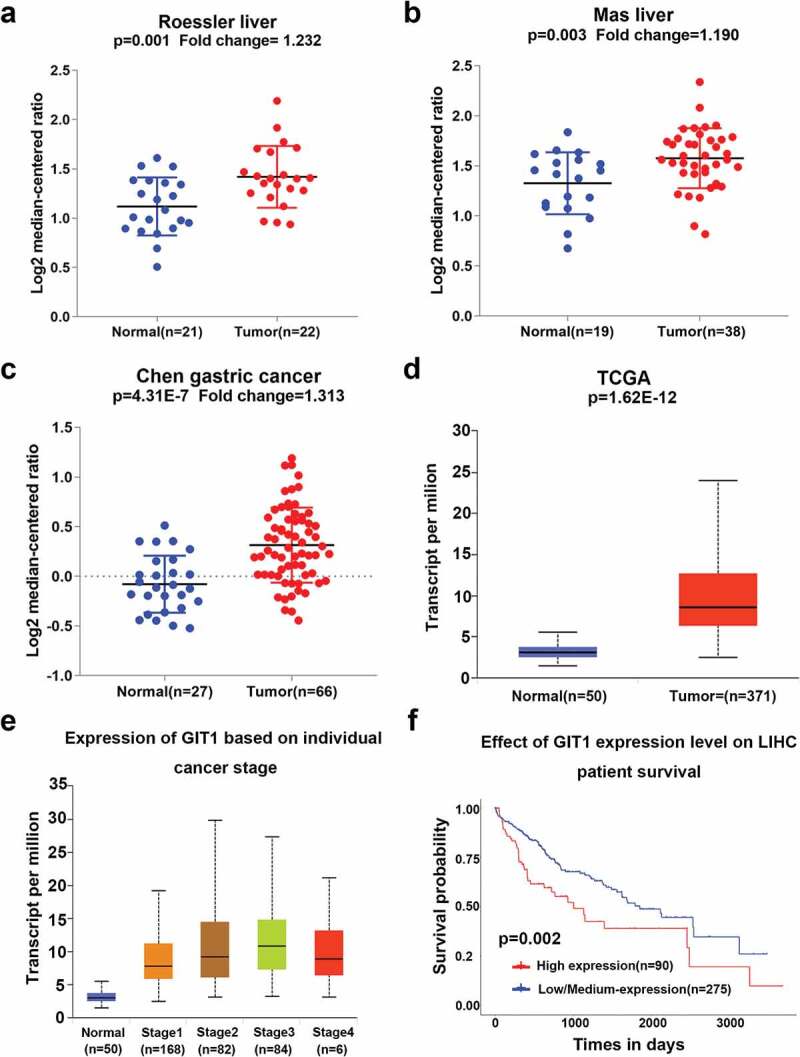
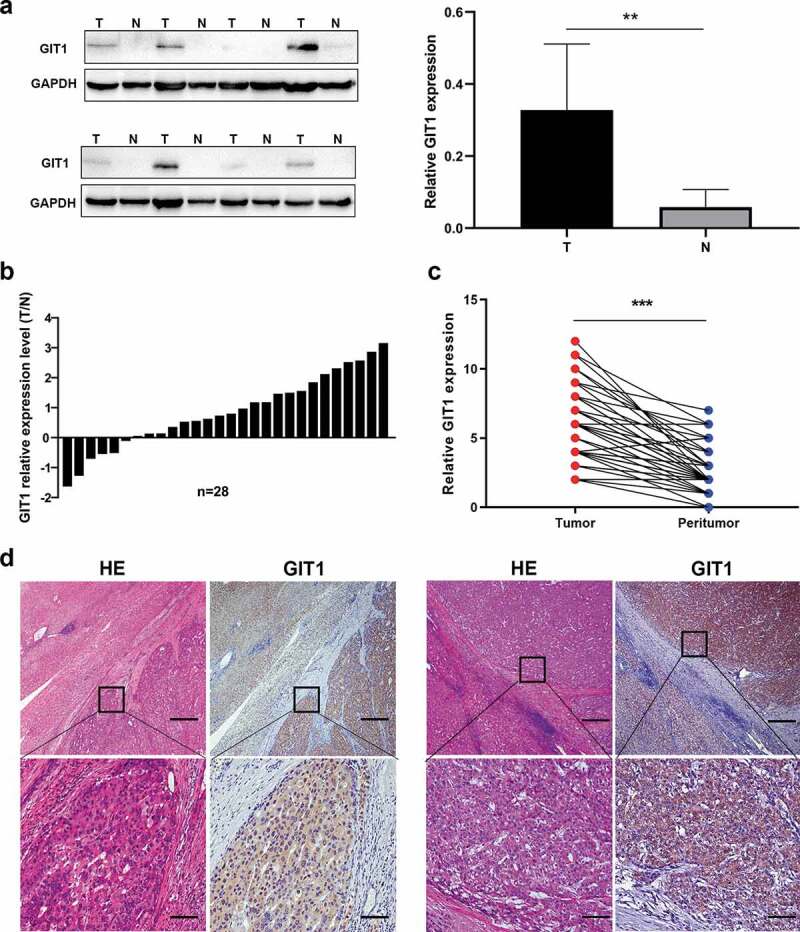
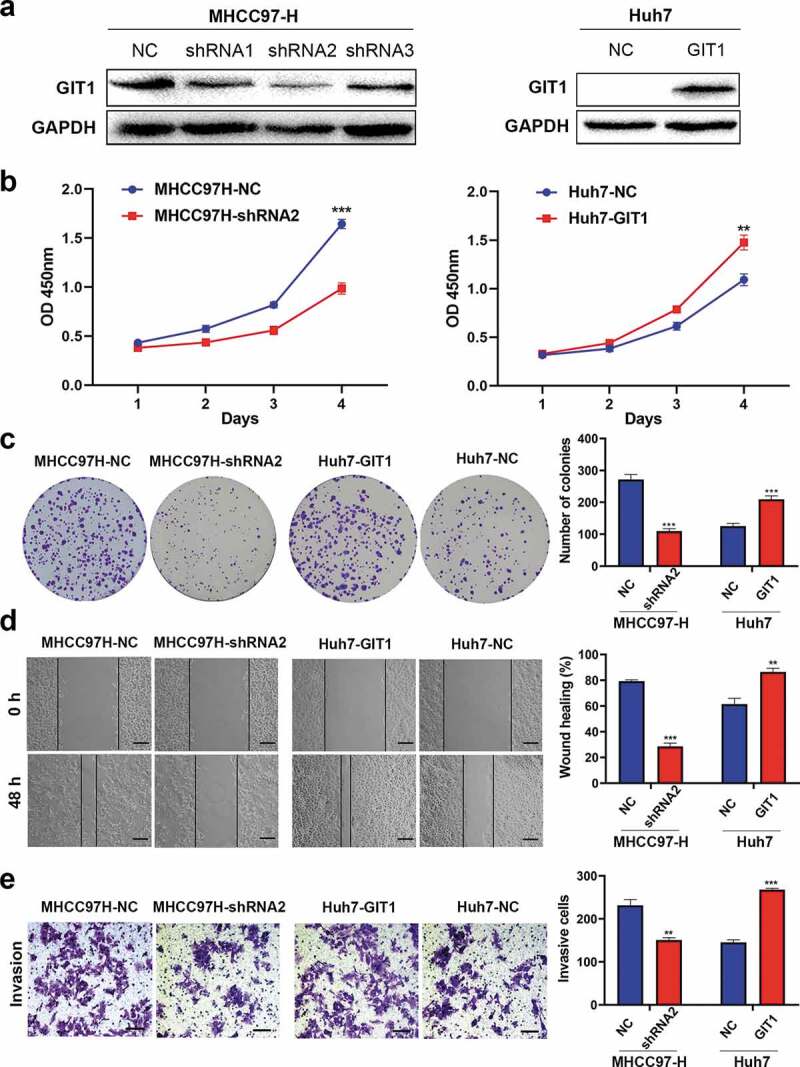
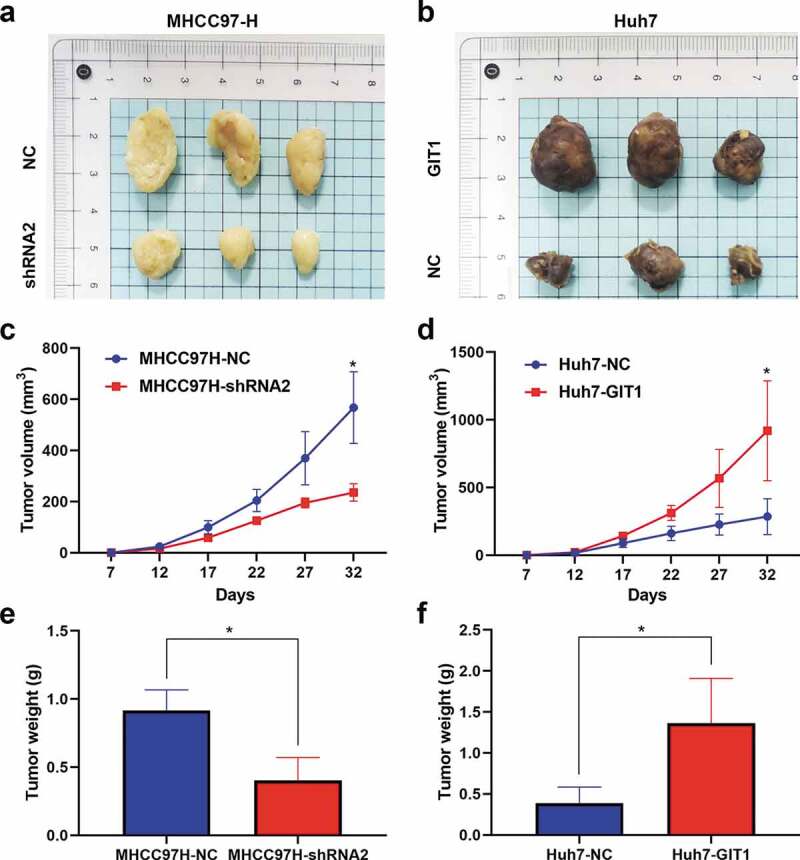
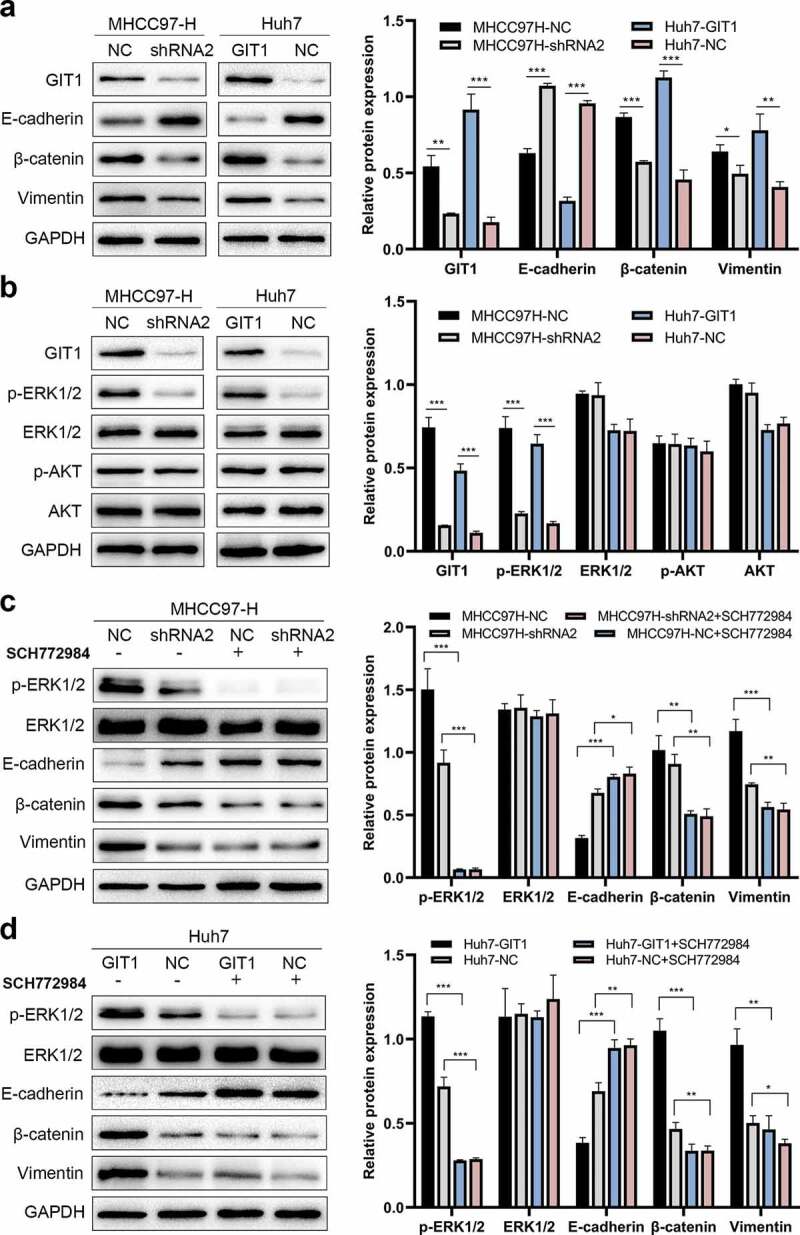
Globally, hepatocellular carcinoma (HCC) is one of the most common causes of cancer-associated mortalities. It has a high rate of metastasis and recurrence, which predict a poor prognosis. G-protein-coupled receptor (GPCR)-kinase interacting protein-1 (GIT1) is a multifunctional scaffold protein that mediates the progression of various tumors. Studies have correlated GIT1 with HCC, however, these correlations have not been fully elucidated. Therefore, we aimed at evaluating the expression of GIT1 in HCC tissues and cells, and to investigate its role and potential mechanisms in HCC progression. The expression levels of GIT1 in HCC tissues and other cancers was determined by using the Oncomine and TCGA databases. Functional analysis of GIT1 in HCC was evaluated through and experiments, whereby, HCC cells were transfected with synthetically overexpressed and short hairpin RNA (shRNA) lentivirus-mediated plasmids. Kaplan-Meier and Cox regression methods were used to establish the associations between GIT1 and clinical outcomes of 158 HCC patients. GIT1 was found to be elevated in HCC tissues where it promoted the invasion, migration, and proliferation of HCC cells. Moreover, the overexpression of GIT1 prompted epithelial-mesenchymal transition (EMT) by activating extracellular regulated kinase 1/2 (ERK1/2) pathway, which was shown to be reversed by SCH772984, a specific ERK1/2 inhibitor. GIT1 was also found to be associated with malignant features of HCC, leading to a poorer prognosis. In conclusion, GIT1 promotes HCC progression by inducing EMT and may reflect the course of HCC patients.
全球范围内,肝细胞癌 (HCC) 是癌症相关死亡率的最常见原因之一。它具有高转移和复发率,预示着预后不良。G 蛋白偶联受体 (GPCR)-激酶相互作用蛋白-1 (GIT1) 是一种多功能支架蛋白,介导各种肿瘤的进展。研究已经将 GIT1 与 HCC 相关联,但是,这些关联尚未完全阐明。因此,我们旨在评估 GIT1 在 HCC 组织和细胞中的表达,并研究其在 HCC 进展中的作用和潜在机制。使用 Oncomine 和 TCGA 数据库确定 HCC 组织和其他癌症中 GIT1 的表达水平。通过 和 实验评估 GIT1 在 HCC 中的功能,其中,通过合成过表达和短发夹 RNA (shRNA) 慢病毒介导的质粒转染 HCC 细胞。Kaplan-Meier 和 Cox 回归方法用于建立 158 名 HCC 患者的 GIT1 与临床结局之间的关联。发现 GIT1 在 HCC 组织中升高,促进了 HCC 细胞的侵袭、迁移和增殖。此外,通过激活细胞外调节激酶 1/2 (ERK1/2) 途径,过表达 GIT1 促使上皮-间充质转化 (EMT),这可以通过特定的 ERK1/2 抑制剂 SCH772984 逆转。GIT1 还与 HCC 的恶性特征相关,导致预后较差。总之,GIT1 通过诱导 EMT 促进 HCC 进展,可能反映 HCC 患者的病程。