Pormohammad Ali, Turner Raymond J
Department of Biological Sciences, Faculty of Science, University of Calgary, Calgary, AB T2N 1N4, Canada.
Antibiotics (Basel). 2020 Nov 28;9(12):853. doi: 10.3390/antibiotics9120853.
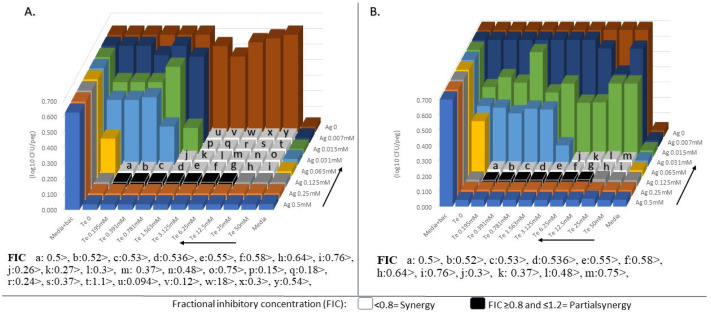
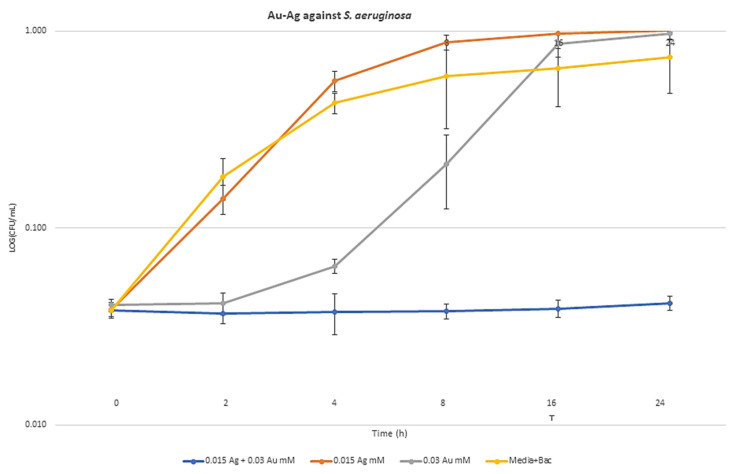
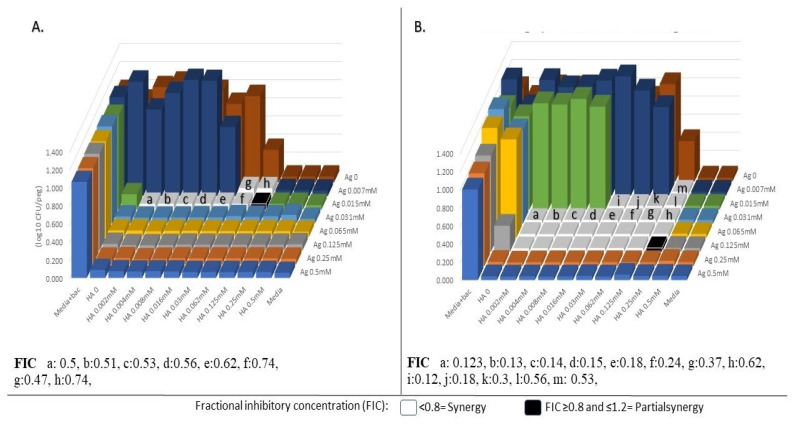
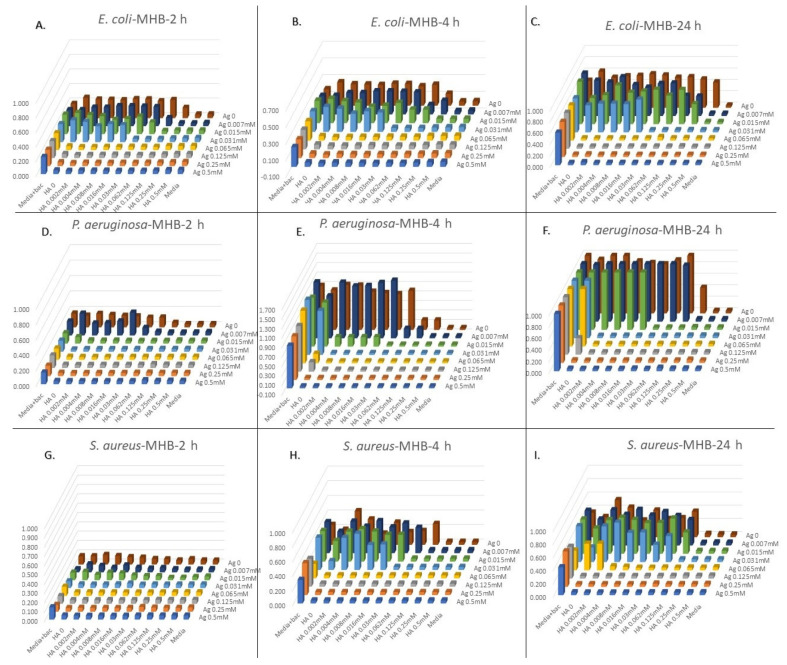
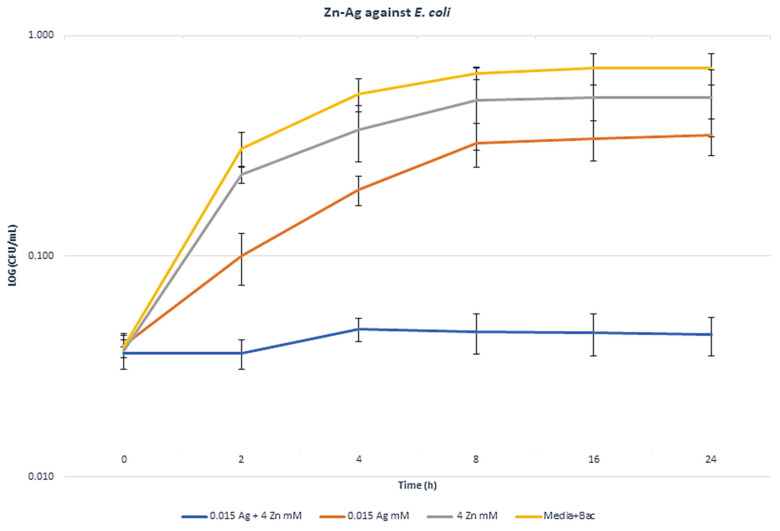
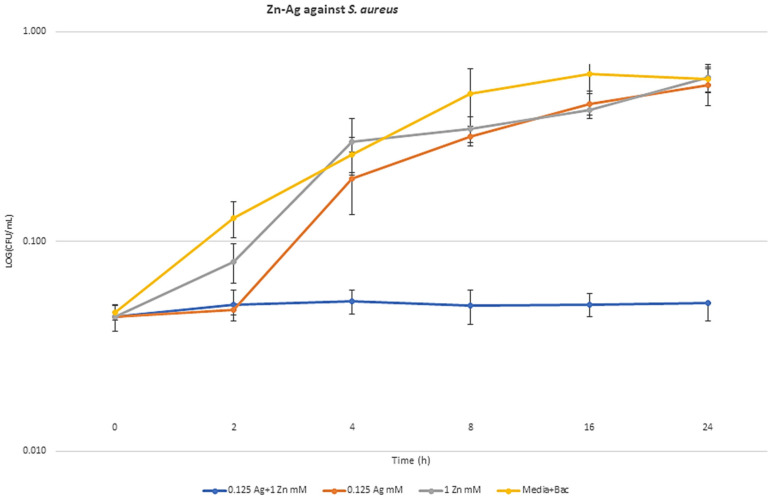
The present study surveys potential antibacterial synergism effects of silver nitrate with eight other metal or metalloid-based antimicrobials (MBAs), including silver nitrate, copper (II) sulfate, gallium (III) nitrate, nickel sulfate, hydrogen tetrachloroaurate (III) trihydrate (gold), aluminum sulfate, sodium selenite, potassium tellurite, and zinc sulfate. Bacteriostatic and bactericidal susceptibility testing explored antibacterial synergism potency of 5760 combinations of MBAs against three bacteria (, , ) in three different media. Silver nitrate in combination with potassium tellurite, zinc sulfate, and tetrachloroaurate trihydrate had remarkable bactericidal and bacteriostatic synergism effects. Synergism properties of MBAs decreased effective antibacterial concentrations remarkably and bacterial cell count decreased by 8.72 log10 colony-forming units (CFU)/mL in , 9.8 log10 CFU/mL in , and 12.3 log10 CFU/mL in , compared to each MBA alone. Furthermore, most of the MBA combinations inhibited the recovery of bacteria; for instance, the combination of silver nitrate-tetrachloroaurate against inhibited the recovery of bacteria, while three-fold higher concentration of silver nitrate and two-fold higher concentration of tetrachloroaurate were required for inhibition of recovery when used individually. Overall, higher synergism was typically obtained in simulated wound fluid (SWF) rather than laboratory media. Unexpectedly, the combination of A silver nitrate-potassium tellurite had antagonistic bacteriostatic effects in Luria broth (LB) media for all three strains, while the combination of silver nitrate-potassium tellurite had the highest bacteriostatic and bactericidal synergism in SWF. Here, we identify the most effective antibacterial MBAs formulated against each of the Gram-positive and Gram-negative pathogen indicator strains.
本研究调查了硝酸银与其他八种金属或类金属基抗菌剂(MBA)的潜在抗菌协同效应,这些抗菌剂包括硝酸银、硫酸铜(II)、硝酸镓(III)、硫酸镍、三水合四氯金酸(III)(金)、硫酸铝、亚硒酸钠、亚碲酸钾和硫酸锌。抑菌和杀菌药敏试验探索了5760种MBA组合对三种细菌( 、 、 )在三种不同培养基中的抗菌协同效力。硝酸银与亚碲酸钾、硫酸锌和三水合四氯金酸组合具有显著的杀菌和抑菌协同效应。与单独使用每种MBA相比,MBA的协同特性显著降低了有效抗菌浓度,细菌细胞计数在 中减少了8.72 log10菌落形成单位(CFU)/mL,在 中减少了9.8 log10 CFU/mL,在 中减少了12.3 log10 CFU/mL。此外,大多数MBA组合抑制了细菌的恢复;例如,硝酸银 - 四氯金酸组合对 的细菌恢复有抑制作用,而单独使用时,抑制恢复所需的硝酸银浓度要高三倍,四氯金酸浓度要高二倍。总体而言,在模拟伤口液(SWF)中通常比在实验室培养基中获得更高的协同效应。出乎意料的是,硝酸银 - 亚碲酸钾组合在Luria肉汤(LB)培养基中对所有三种菌株都有拮抗抑菌作用,而在SWF中,硝酸银 - 亚碲酸钾组合具有最高的抑菌和杀菌协同效应。在这里,我们确定了针对每种革兰氏阳性和革兰氏阴性病原体指示菌株配制的最有效的抗菌MBA。