Life Science Research Centre, Faculty of Science, University of Ostrava, Chittussiho 10, 710 00, Ostrava, Czechia.
Zoological Institute of the Russian Academy of Sciences, St. Petersburg, 199034, Russia.
BMC Biol. 2020 Dec 2;18(1):187. doi: 10.1186/s12915-020-00916-y.
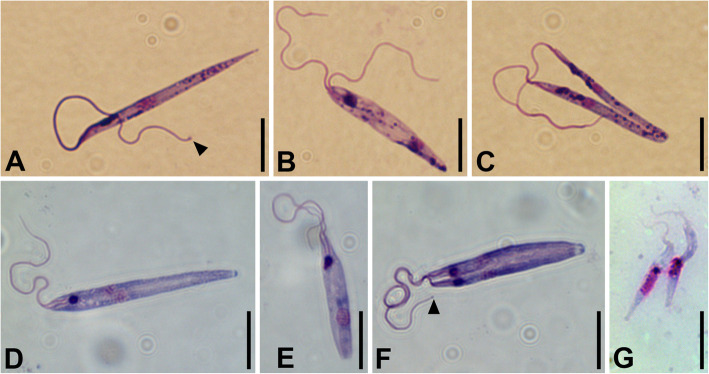
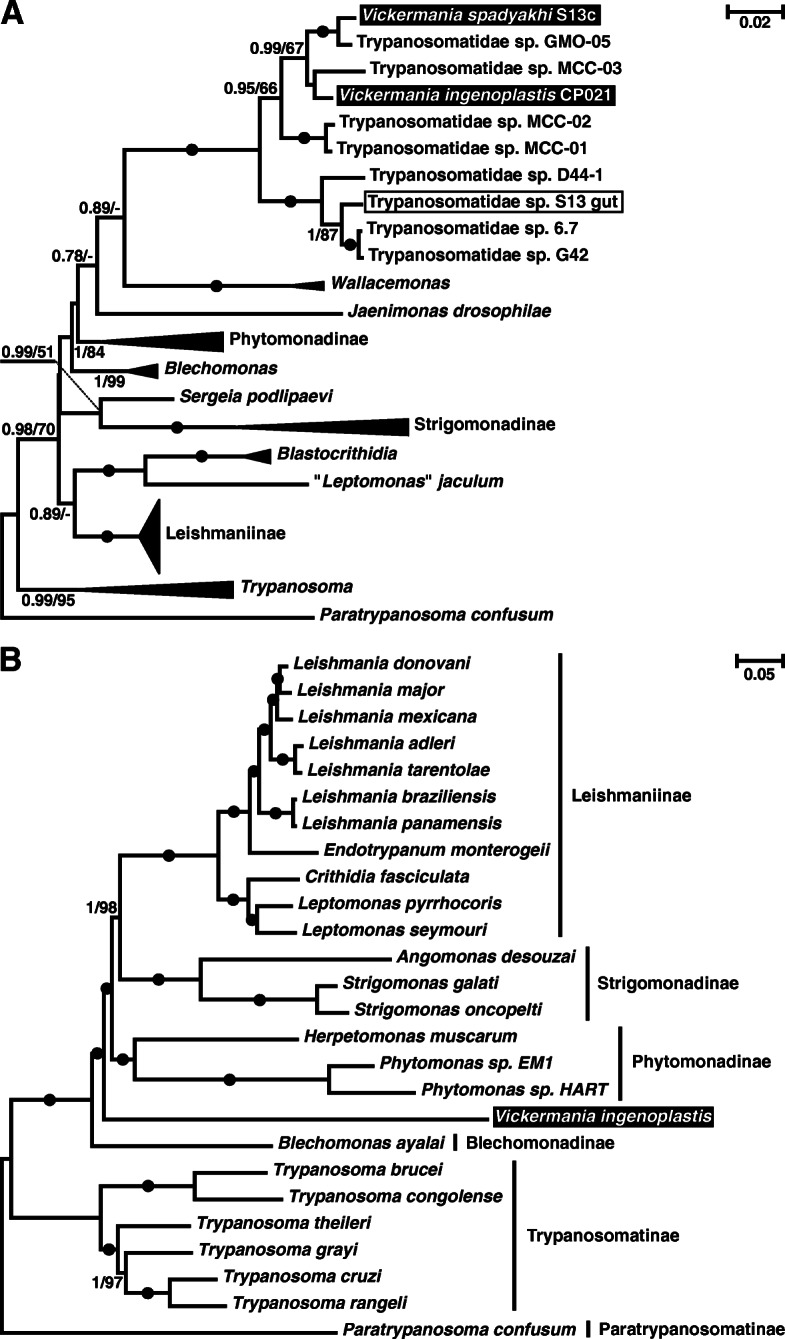
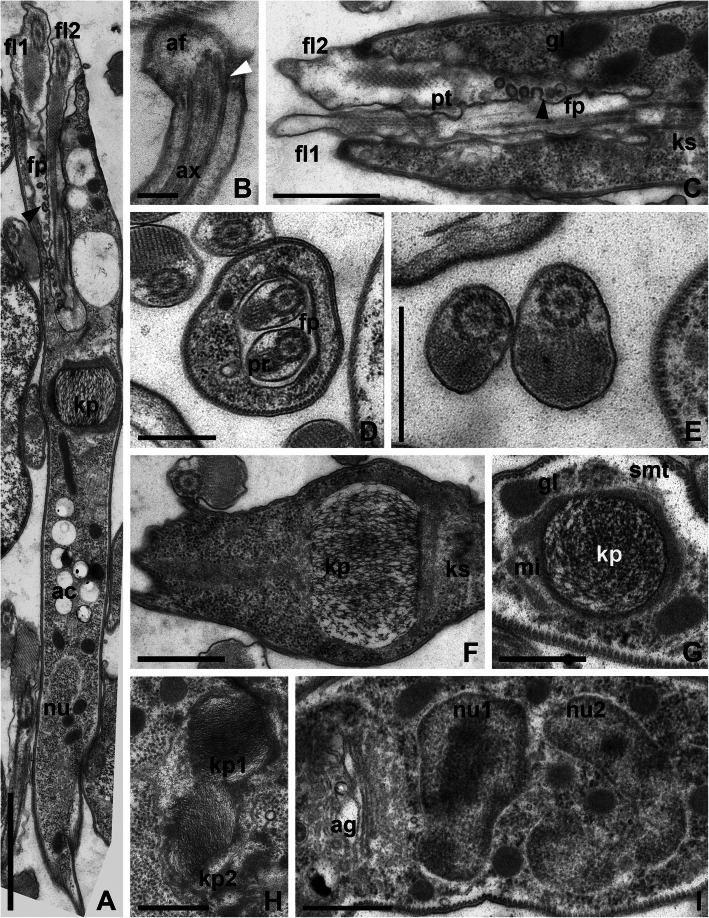
The family Trypanosomatidae encompasses parasitic flagellates, some of which cause serious vector-transmitted diseases of humans and domestic animals. However, insect-restricted parasites represent the ancestral and most diverse group within the family. They display a range of unusual features and their study can provide insights into the biology of human pathogens. Here we describe Vickermania, a new genus of fly midgut-dwelling parasites that bear two flagella in contrast to other trypanosomatids, which are unambiguously uniflagellate.
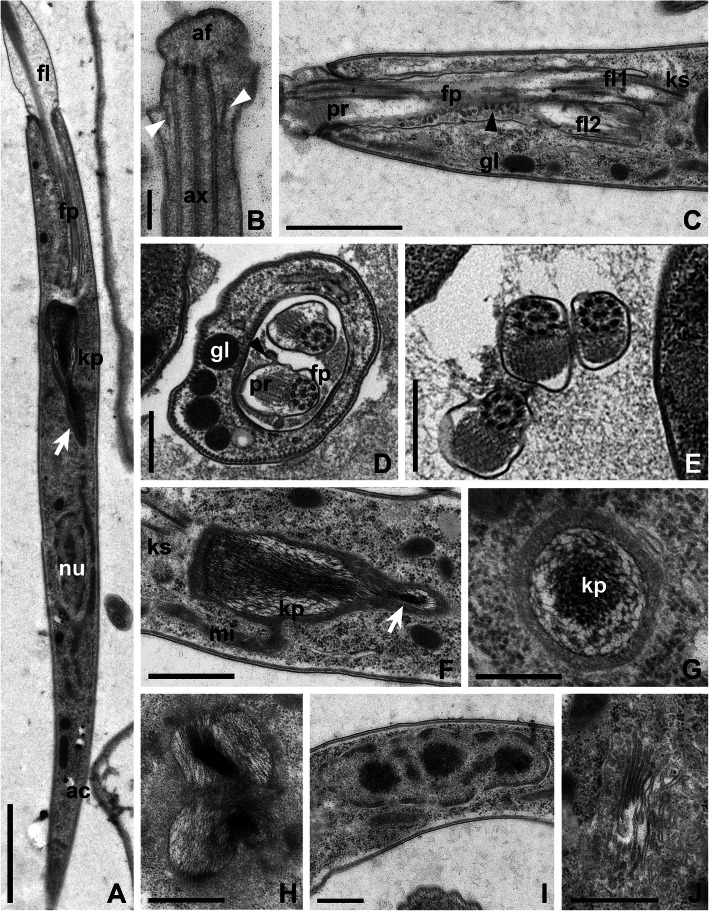
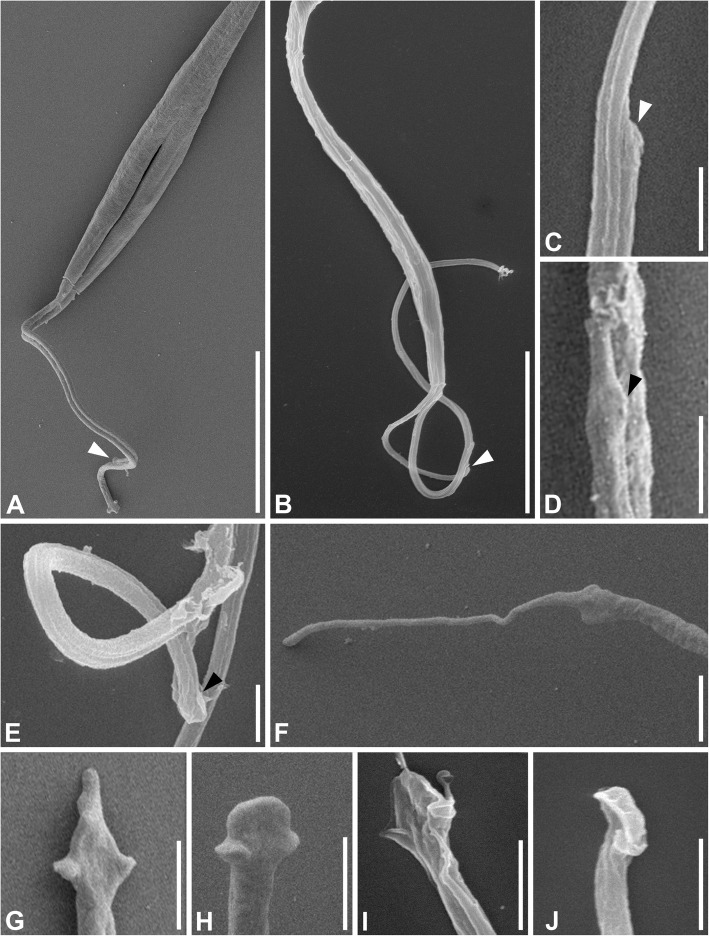
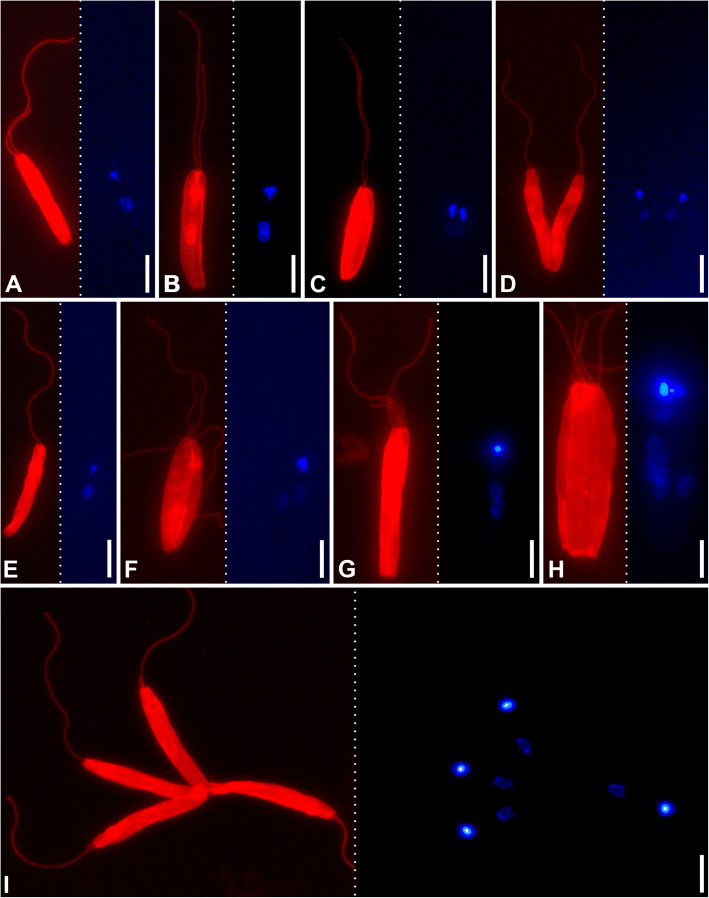
Vickermania has an odd cell cycle, in which shortly after the division the uniflagellate cell starts growing a new flagellum attached to the old one and preserves their contact until the late cytokinesis. The flagella connect to each other throughout their whole length and carry a peculiar seizing structure with a paddle-like apex and two lateral extensions at their tip. In contrast to typical trypanosomatids, which attach to the insect host's intestinal wall, Vickermania is separated from it by a continuous peritrophic membrane and resides freely in the fly midgut lumen.
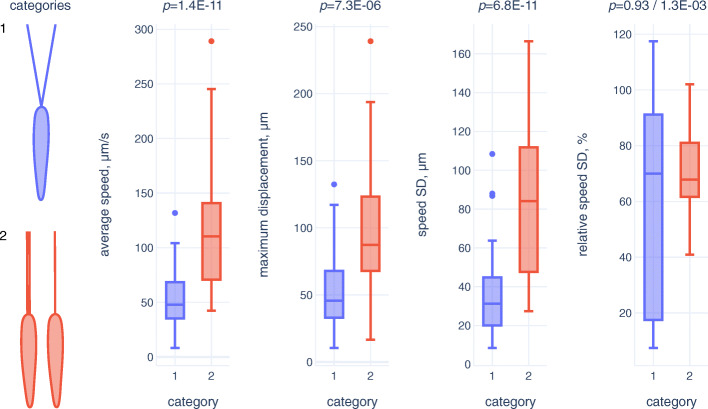
We propose that Vickermania developed a survival strategy that relies on constant movement preventing discharge from the host gut due to intestinal peristalsis. Since these parasites cannot attach to the midgut wall, they were forced to shorten the period of impaired motility when two separate flagella in dividing cells interfere with each other. The connection between the flagella ensures their coordinate movement until the separation of the daughter cells. We propose that Trypanosoma brucei, a severe human pathogen, during its development in the tsetse fly midgut faces the same conditions and follows the same strategy as Vickermania by employing an analogous adaptation, the flagellar connector.
锥虫科包含寄生鞭毛虫,其中一些会导致人和家畜的严重媒介传播疾病。然而,昆虫限制寄生虫代表了该科最古老和最多样化的群体。它们表现出一系列不寻常的特征,它们的研究可以为人类病原体的生物学提供见解。在这里,我们描述了一种新的蝇类中肠寄生虫属——Vickermania,它有两条鞭毛,而其他锥虫是明确的单鞭毛生物。
Vickermania 具有一种奇怪的细胞周期,在这个周期中,单鞭毛细胞在分裂后不久就开始生长一条新的鞭毛,与旧鞭毛相连,并保持它们的接触,直到晚期胞质分裂。鞭毛在整个长度上相互连接,并携带一种特殊的抓取结构,其顶端呈桨状,尖端有两个侧向延伸。与典型的锥虫不同,后者附着在昆虫宿主的肠壁上,Vickermania 与它被连续的肠围膜隔开,自由存在于蝇类的中肠腔中。
我们提出,Vickermania 发展了一种生存策略,依赖于持续的运动,以防止由于肠道蠕动而从宿主肠道中排出。由于这些寄生虫不能附着在中肠壁上,当分裂细胞中的两个独立鞭毛相互干扰时,它们被迫缩短运动能力受损的时间。鞭毛之间的连接确保了它们的协调运动,直到子细胞分离。我们提出,严重的人类病原体——布氏锥虫在采采蝇的中肠中发育时,面临着相同的条件,并采取了与 Vickermania 类似的适应策略,即鞭毛连接器。