Gao Huijie, Ma Jincheng, Cheng Yanhui, Zheng Peiming
Department of Oncology, The First Affiliated Hospital of Henan University, Kaifeng, Henan 475000, People's Republic of China.
Department of Clinical Laboratory, Henan Provincial People's Hospital, People's Hospital of Zhengzhou University, People's Hospital of Henan University, Zhengzhou, Henan 450003, People's Republic of China.
Onco Targets Ther. 2020 Nov 25;13:12169-12179. doi: 10.2147/OTT.S283542. eCollection 2020.
Macrophages are a major component of the tumour microenvironment and play an important role in chemoresistance of cancer. However, how exosomal microRNAs (miRNAs) derived from macrophages contribute to the development of doxorubicin resistance in gastric cancer (GC) are not clearly defined. The aim of this study was to investigate whether macrophage-derived exosomes mediate doxorubicin resistance in GC.
Exosomes isolated from macrophage culture medium were characterized and co-cultured with GC cells and the miR-223 level was detected using real-time quantitative PCR (RT-qPCR). The internalization of exosomes and transfer of miR-223 were observed via immunofluorescence. Macrophages were transfected with an miR-223 inhibitor or negative control. Cell Counting Kit-8 and flow cytometry were employed to explore the effect of macrophage-derived exosomes on the doxorubicin resistance of GC cells. Western blot and RT-qPCR assay were also performed to explore the regulation of GC chemotherapy resistance by exosomal miR-223.
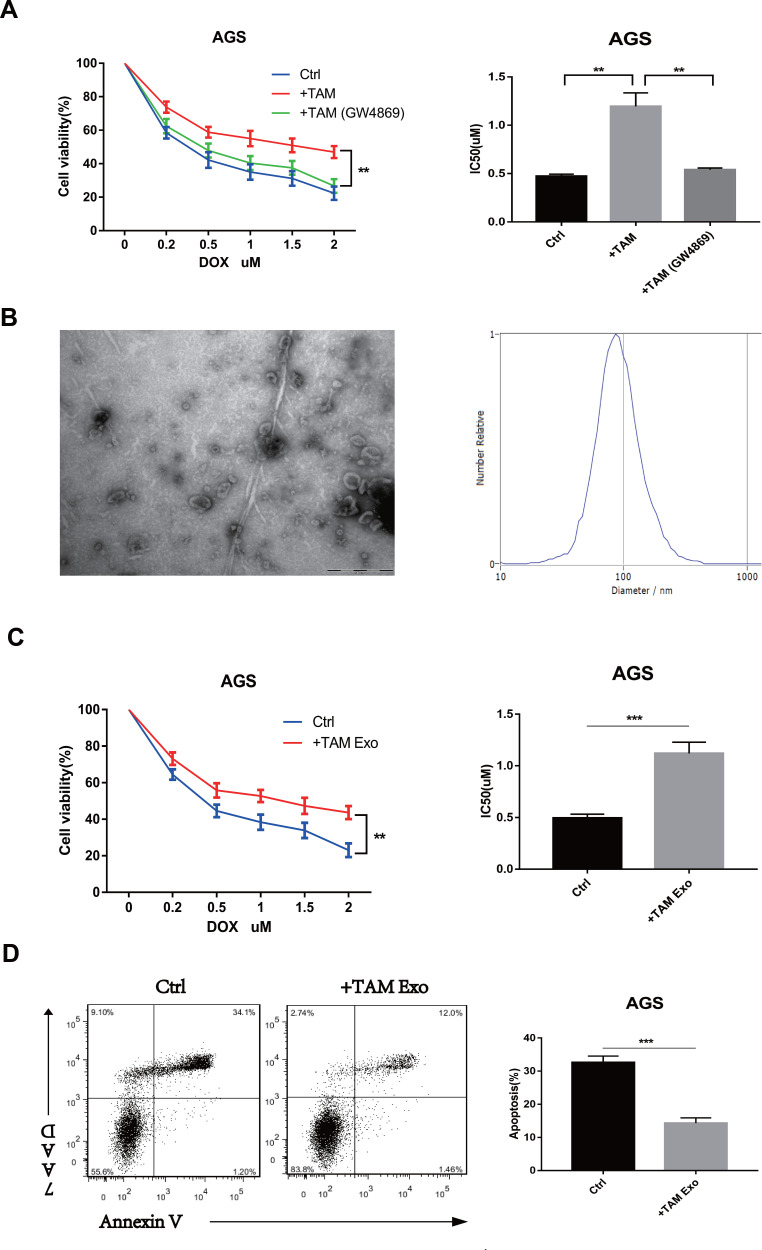
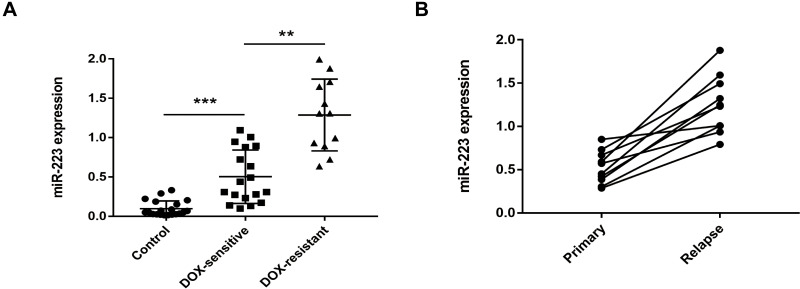
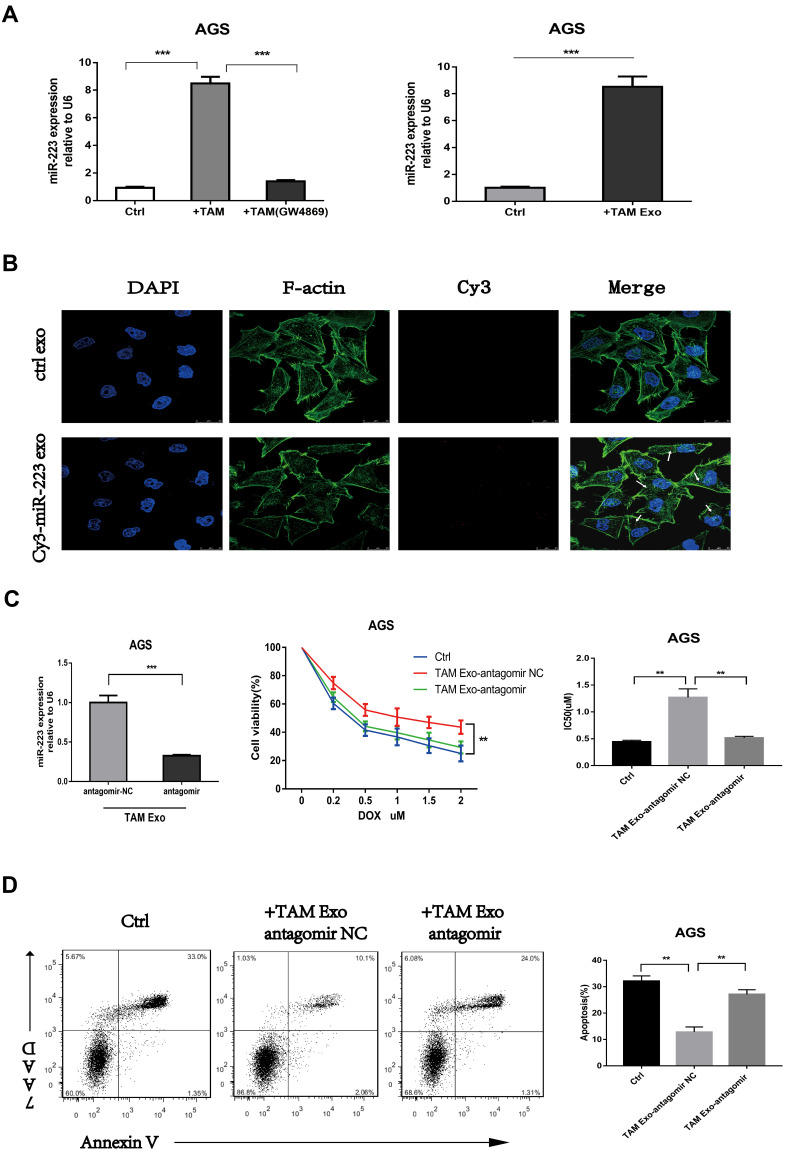
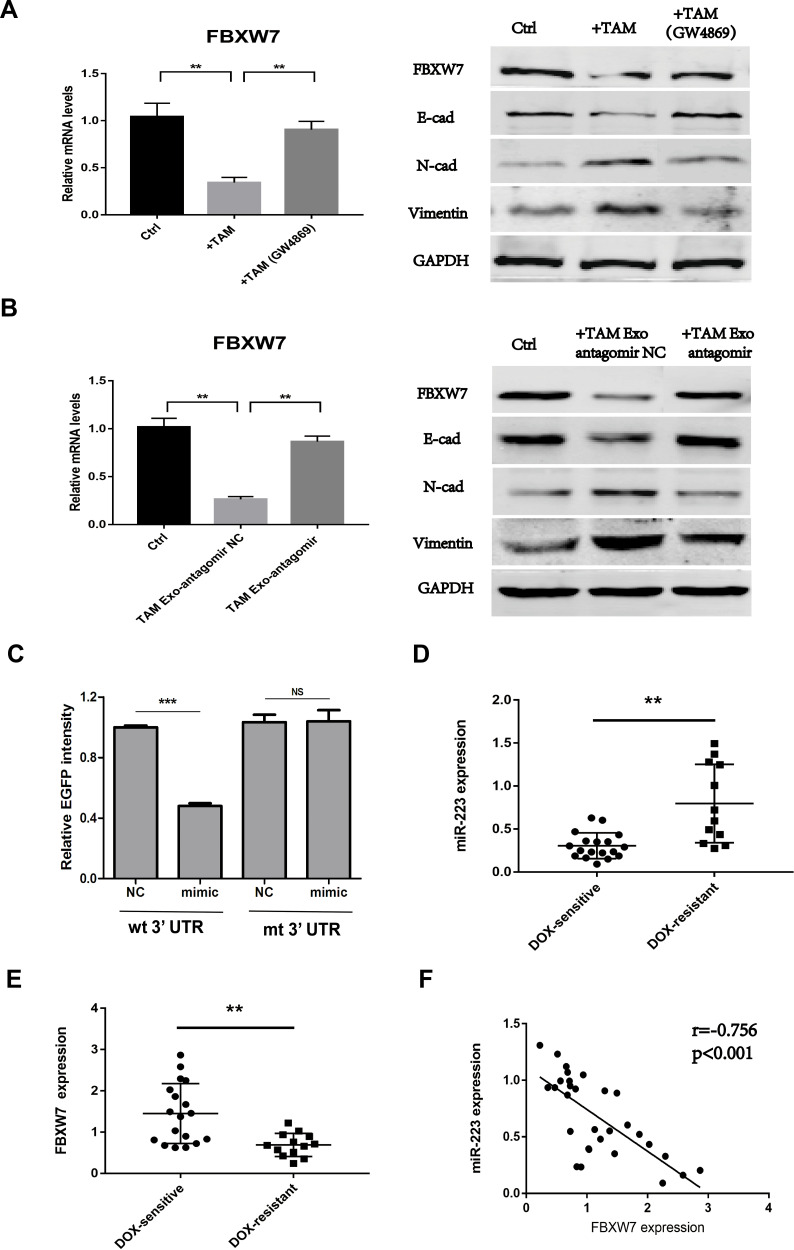
Here, the macrophages and macrophage-derived exosomes promoted doxorubicin resistance in GC cells. MiR-223 was enriched in macrophage-derived exosomes and they could be transferred to co-cultivated GC cells. The miR-223 knockdown in macrophages could reduce the effects of exosomes on GC cells. Functional studies revealed that exosomal miR-223 derived from macrophages promoted doxorubicin resistance in GC cells by inhibiting F-box and WD repeat domain-containing 7 (). Clinically, the expression of miR-223 significantly increased in GC tissues and high expression of plasma exosomal miR-223 was highly linked with doxorubicin resistance in GC patients.
The exosomal transfer of macrophage-derived miR-223 conferred doxorubicin resistance in GC and targeting exosome communication may be a promising new therapeutic strategy for GC patients.
巨噬细胞是肿瘤微环境的主要组成部分,在癌症化疗耐药中起重要作用。然而,源自巨噬细胞的外泌体微小RNA(miRNA)如何促进胃癌(GC)多柔比星耐药的发生尚不清楚。本研究旨在探讨巨噬细胞来源的外泌体是否介导GC的多柔比星耐药。
对从巨噬细胞培养基中分离出的外泌体进行表征,并与GC细胞共培养,使用实时定量聚合酶链反应(RT-qPCR)检测miR-223水平。通过免疫荧光观察外泌体的内化和miR-223的转移。用miR-223抑制剂或阴性对照转染巨噬细胞。采用细胞计数试剂盒-8和流式细胞术探讨巨噬细胞来源的外泌体对GC细胞多柔比星耐药性的影响。还进行了蛋白质免疫印迹和RT-qPCR分析,以探讨外泌体miR-223对GC化疗耐药性的调控。
在此,巨噬细胞和巨噬细胞来源的外泌体促进了GC细胞的多柔比星耐药。MiR-223在巨噬细胞来源的外泌体中富集,并且可以转移到共培养的GC细胞中。巨噬细胞中miR-223的敲低可降低外泌体对GC细胞的影响。功能研究表明,源自巨噬细胞的外泌体miR-223通过抑制含F盒和WD重复结构域7(Fbxw7)促进GC细胞的多柔比星耐药。临床上,miR-223在GC组织中的表达显著增加,血浆外泌体miR-223的高表达与GC患者的多柔比星耐药高度相关。
巨噬细胞来源的miR-223的外泌体转移赋予了GC多柔比星耐药性,靶向外泌体通讯可能是GC患者一种有前景的新治疗策略。