Center for Precision Health, School of Biomedical Informatics, The University of Texas Health Science Center at Houston, Houston, Texas 77030, USA.
Human Genetics Center, School of Public Health, The University of Texas Health Science Center at Houston, Houston, Texas 77030, USA.
Genome Res. 2021 Jan;31(1):146-158. doi: 10.1101/gr.265769.120. Epub 2020 Dec 3.
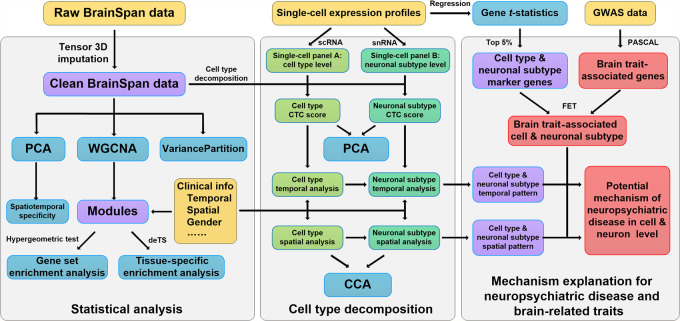
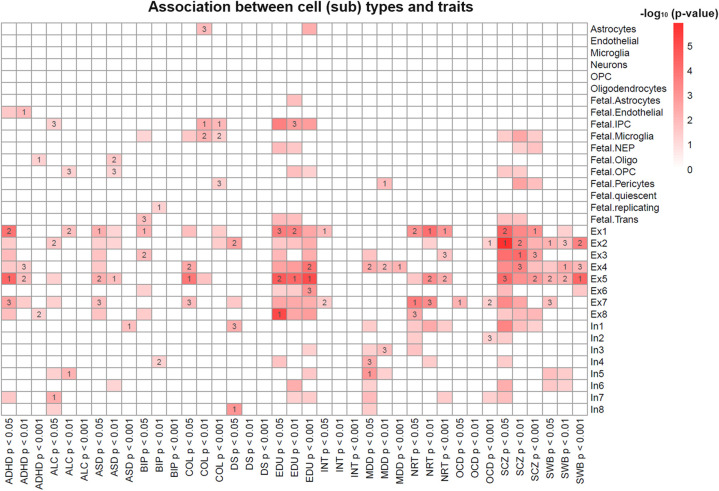
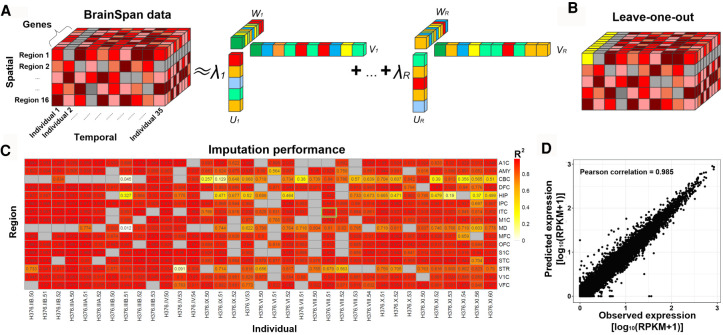
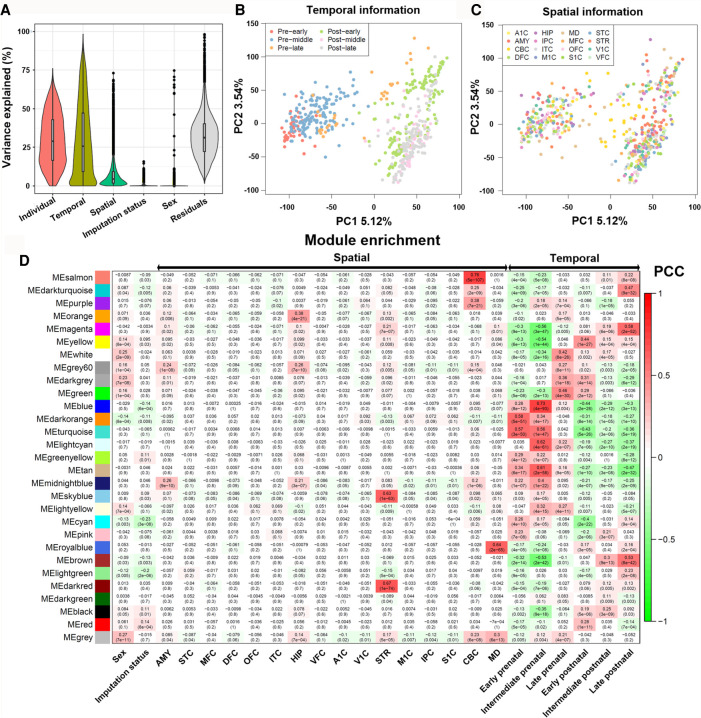
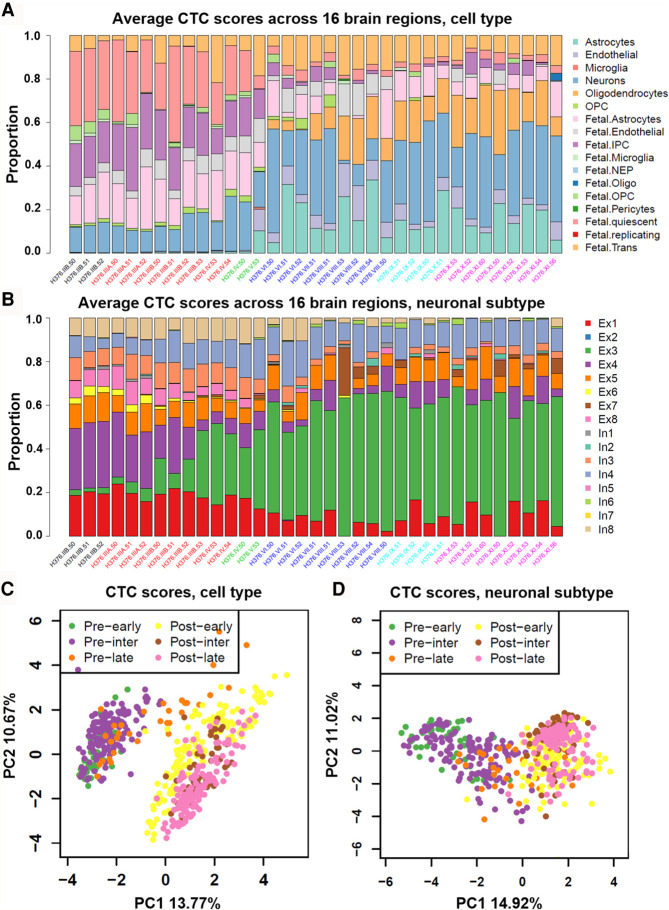
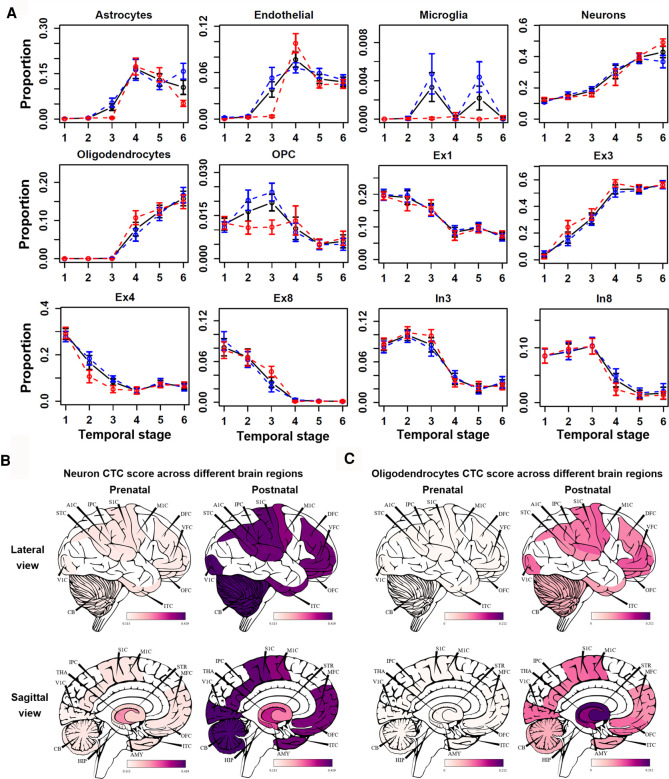
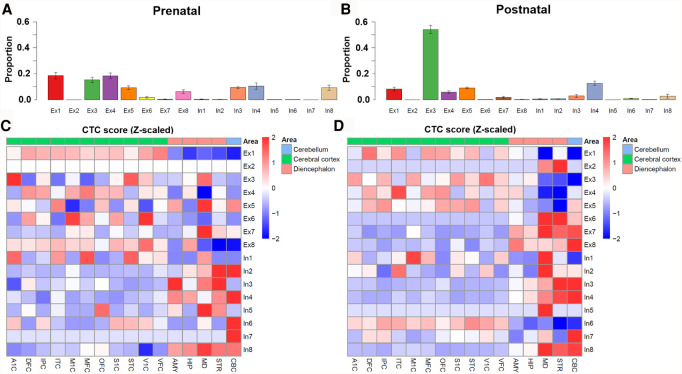
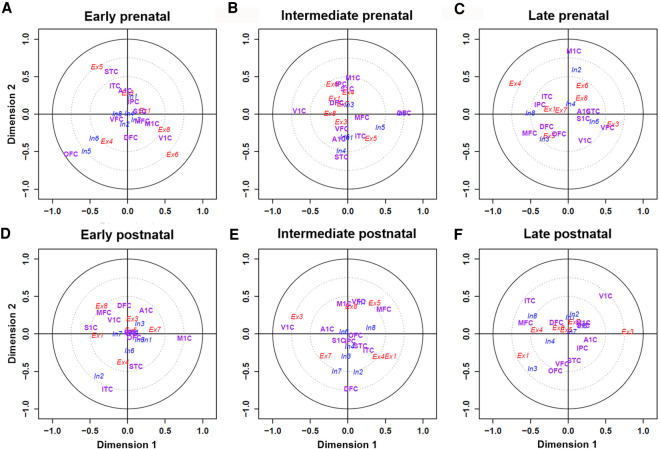
As the most complex organ of the human body, the brain is composed of diverse regions, each consisting of distinct cell types and their respective cellular interactions. Human brain development involves a finely tuned cascade of interactive events. These include spatiotemporal gene expression changes and dynamic alterations in cell-type composition. However, our understanding of this process is still largely incomplete owing to the difficulty of brain spatiotemporal transcriptome collection. In this study, we developed a tensor-based approach to impute gene expression on a transcriptome-wide level. After rigorous computational benchmarking, we applied our approach to infer missing data points in the widely used BrainSpan resource and completed the entire grid of spatiotemporal transcriptomics. Next, we conducted deconvolutional analyses to comprehensively characterize major cell-type dynamics across the entire BrainSpan resource to estimate the cellular temporal changes and distinct neocortical areas across development. Moreover, integration of these results with GWAS summary statistics for 13 brain-associated traits revealed multiple novel trait-cell-type associations and trait-spatiotemporal relationships. In summary, our imputed BrainSpan transcriptomic data provide a valuable resource for the research community and our findings help further studies of the transcriptional and cellular dynamics of the human brain and related diseases.
作为人体最复杂的器官,大脑由多个不同的区域组成,每个区域又由不同的细胞类型及其相互作用组成。人类大脑的发育涉及一系列精细调控的相互作用事件,包括时空基因表达变化和细胞类型组成的动态变化。然而,由于大脑时空转录组收集的困难,我们对这一过程的理解仍然很不完整。在这项研究中,我们开发了一种基于张量的方法来在全转录组水平上推断基因表达。在经过严格的计算基准测试后,我们将我们的方法应用于广泛使用的 BrainSpan 资源中,以推断缺失的数据点,并完成整个时空转录组学网格。接下来,我们进行去卷积分析,全面描述整个 BrainSpan 资源中的主要细胞类型动态,以估计细胞在整个发育过程中的时间变化和不同的新皮质区域。此外,将这些结果与 13 个与大脑相关的特征的 GWAS 汇总统计数据进行整合,揭示了多个新的特征-细胞类型关联和特征-时空关系。总之,我们推断的 BrainSpan 转录组数据为研究界提供了有价值的资源,我们的发现有助于进一步研究人类大脑的转录和细胞动态以及相关疾病。