Epidemiology and Demography Department, Kenya Medical Research Institute (KEMRI) - Wellcome Trust Research Programme, Kilifi, Kenya.
Nuffield Department of Medicine, University of Oxford, Oxford, UK.
Sci Rep. 2020 Dec 3;10(1):21176. doi: 10.1038/s41598-020-78234-0.
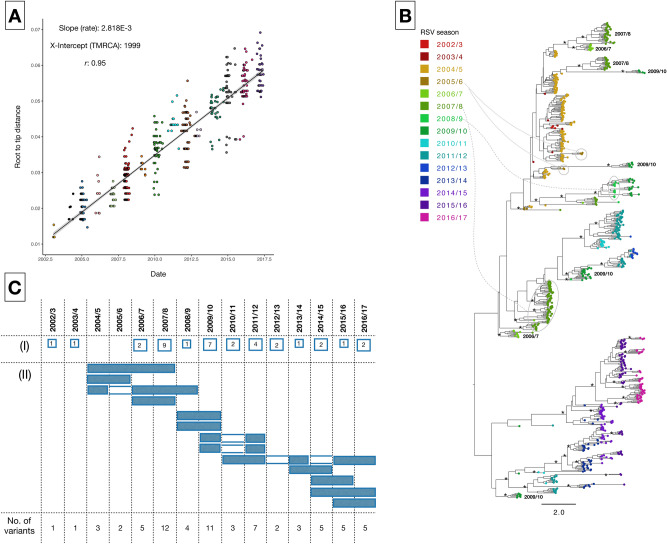
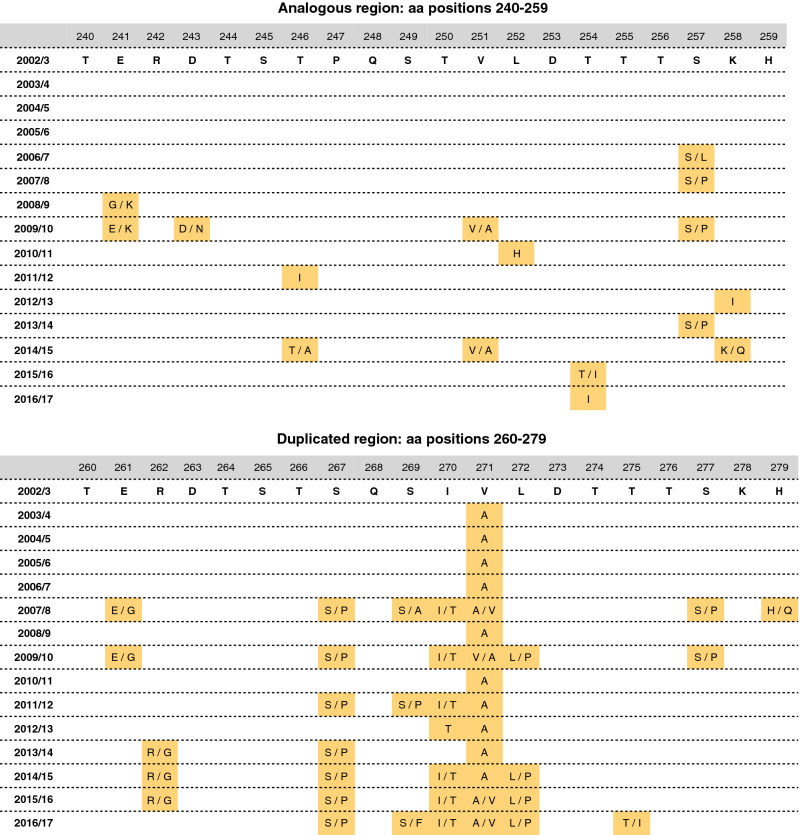
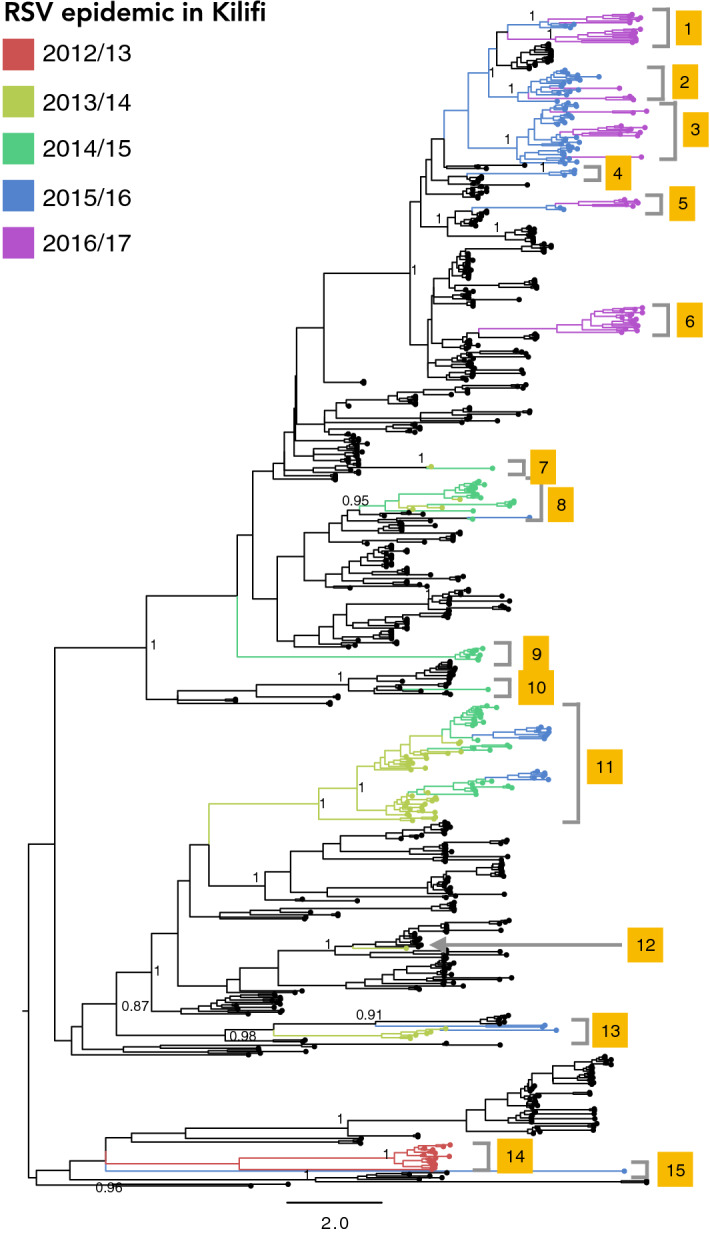
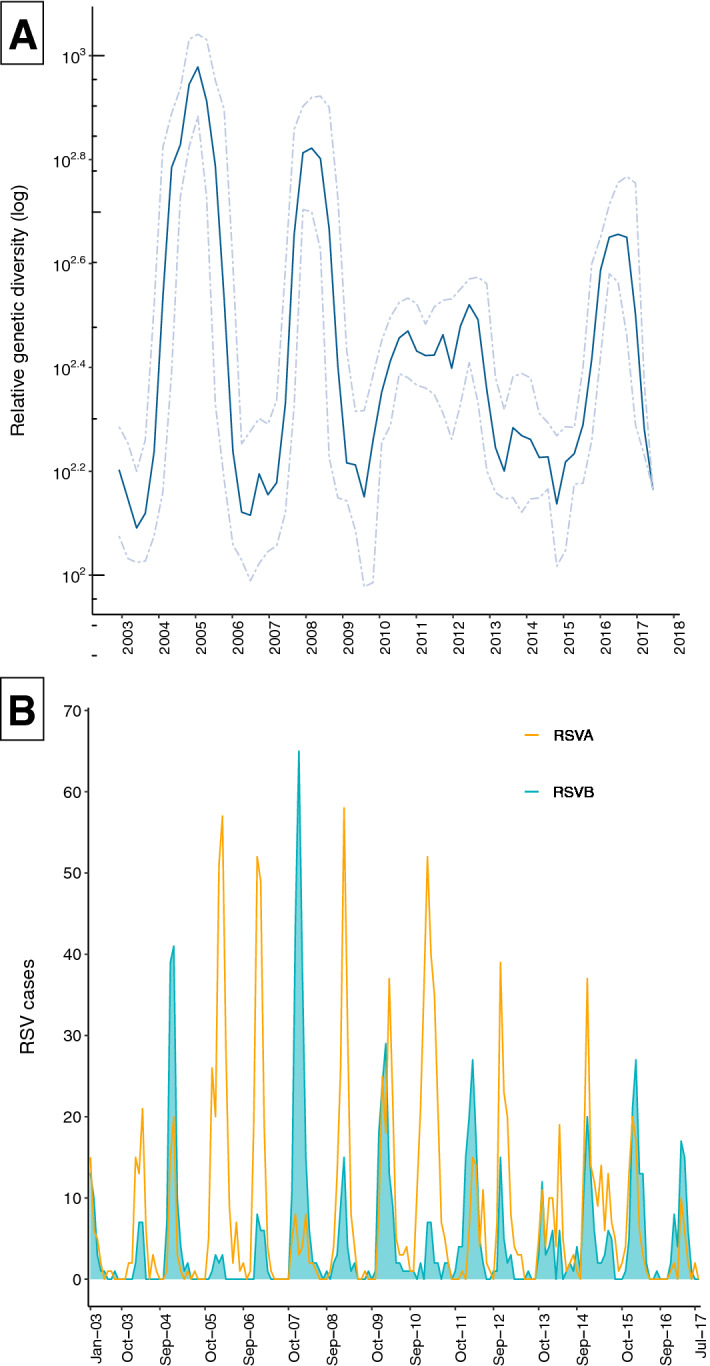
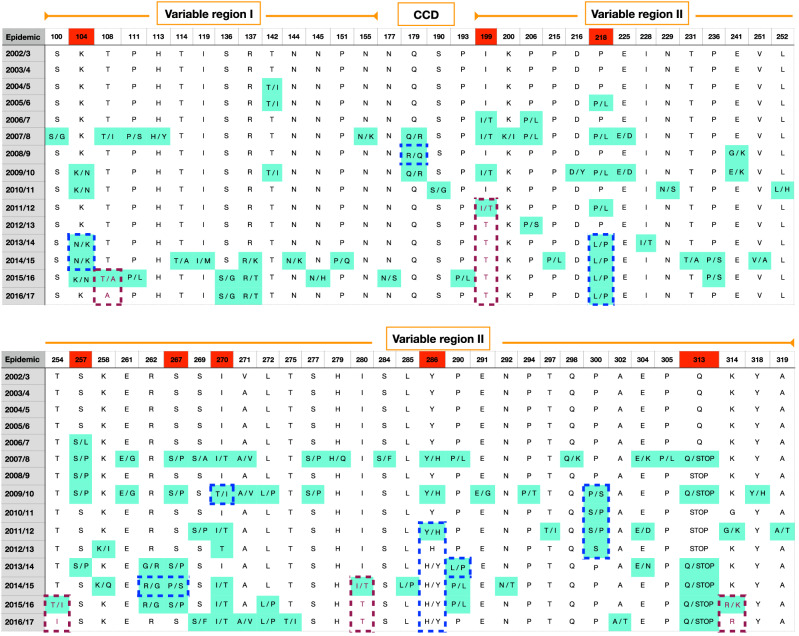
Respiratory syncytial virus (RSV) is recognised as a leading cause of severe acute respiratory disease and deaths among infants and vulnerable adults. Clinical RSV isolates can be divided into several known genotypes. RSV genotype BA, characterised by a 60-nucleotide duplication in the G glycoprotein gene, emerged in 1999 and quickly disseminated globally replacing other RSV group B genotypes. Continual molecular epidemiology is critical to understand the evolutionary processes maintaining the success of the BA viruses. We analysed 735 G gene sequences from samples collected from paediatric patients in Kilifi, Kenya, between 2003 and 2017. The virus population comprised of several genetically distinct variants (n = 56) co-circulating within and between epidemics. In addition, there was consistent seasonal fluctuations in relative genetic diversity. Amino acid changes increasingly accumulated over the surveillance period including two residues (N178S and Q180R) that mapped to monoclonal antibody 2D10 epitopes, as well as addition of putative N-glycosylation sequons. Further, switching and toggling of amino acids within and between epidemics was observed. On a global phylogeny, the BA viruses from different countries form geographically isolated clusters suggesting substantial localized variants. This study offers insights into longitudinal population dynamics of a globally endemic RSV genotype within a discrete location.
呼吸道合胞病毒(RSV)是导致婴儿和脆弱成年人严重急性呼吸道疾病和死亡的主要原因之一。临床 RSV 分离株可分为几种已知的基因型。RSV 基因型 BA,其特征是 G 糖蛋白基因中有 60 个核苷酸重复,于 1999 年出现,并迅速在全球传播,取代了其他 RSV 组 B 基因型。持续的分子流行病学对于了解维持 BA 病毒成功的进化过程至关重要。我们分析了 2003 年至 2017 年间从肯尼亚基利菲的儿科患者样本中采集的 735 个 G 基因序列。病毒种群由在流行期内和流行期之间循环的几个遗传上不同的变体(n=56)组成。此外,相对遗传多样性存在持续的季节性波动。在监测期间,氨基酸变化逐渐积累,包括两个残基(N178S 和 Q180R),它们映射到单克隆抗体 2D10 表位,以及添加假定的 N-糖基化序列。此外,还观察到流行期内和流行期之间的氨基酸转换和切换。在全球系统发育树上,来自不同国家的 BA 病毒形成地理上隔离的聚类,表明存在大量的局部变体。本研究提供了在一个离散地点内对全球流行 RSV 基因型的纵向种群动态的深入了解。