Otieno James R, Kamau Everlyn M, Agoti Charles N, Lewa Clement, Otieno Grieven, Bett Ann, Ngama Mwanajuma, Cane Patricia A, Nokes D James
Emerg Infect Dis. 2017 Feb;23(2):264-271. doi: 10.3201/eid2302.161149.
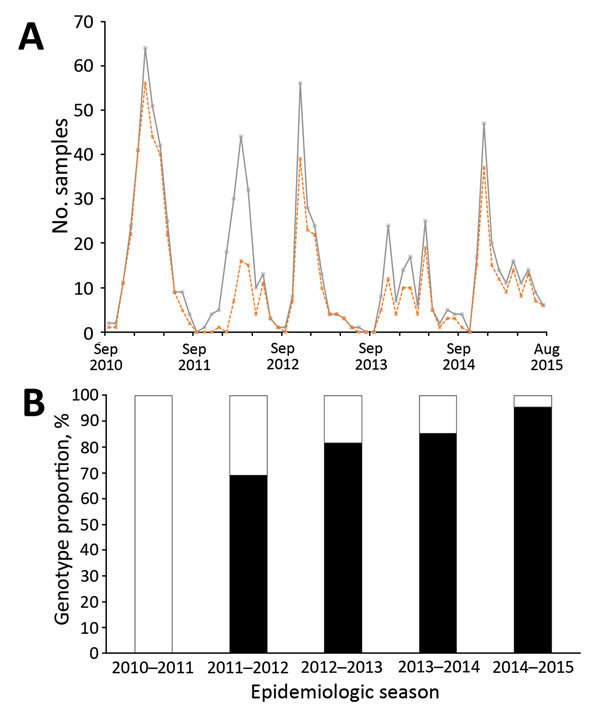
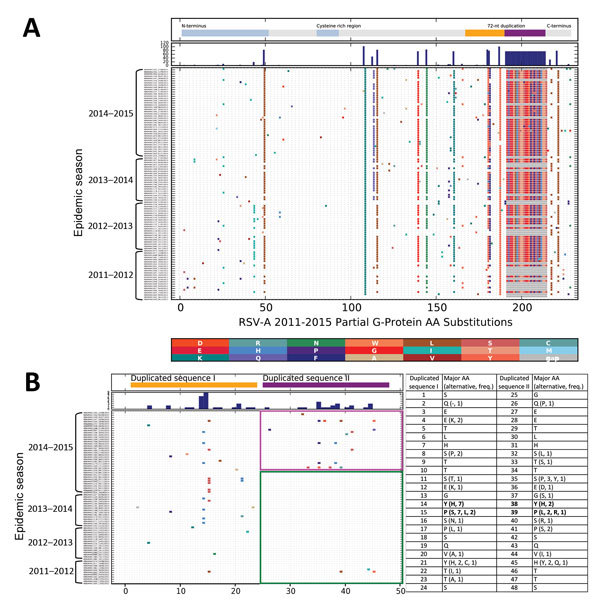
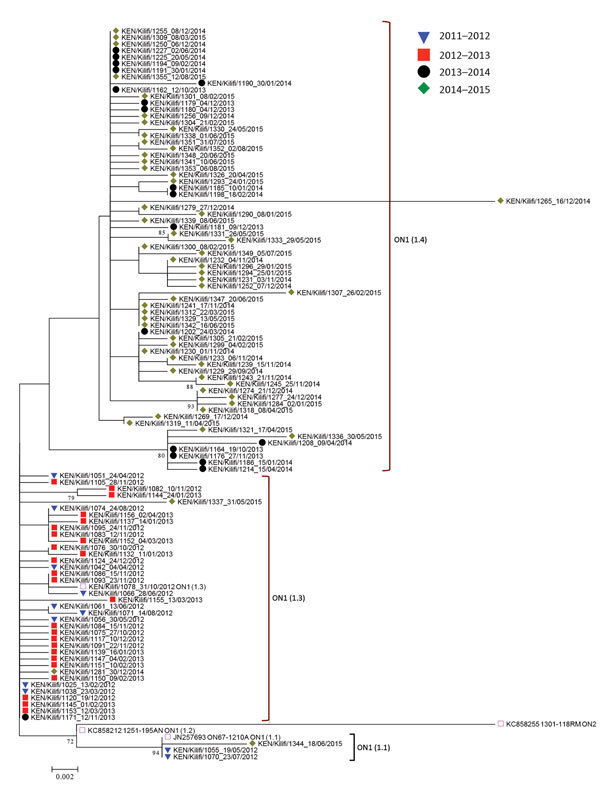
In February 2012, the novel respiratory syncytial virus (RSV) group A, genotype ON1, was detected in Kilifi County, coastal Kenya. ON1 is characterized by a 72-nt duplication within the highly variable G gene (encoding the immunogenic attachment surface protein). Cases were diagnosed through surveillance of pneumonia in children at the county hospital. Analysis of epidemiologic, clinical, and sequence data of RSV-A viruses detected over 5 RSV seasons (2010/2011 to 2014/2015) indicated the following: 1) replacement of previously circulating genotype GA2 ON1, 2) an abrupt expansion in the number of ON1 variants detected in the 2014/2015 epidemic, 3) recently accumulation of amino acid substitutions within the ON1 duplicated sequence, and 4) no clear evidence of altered pathogenicity relative to GA2. The study demonstrates the public health importance of molecular surveillance in defining the spread, clinical effects, and evolution of novel respiratory virus variants.
2012年2月,在肯尼亚沿海的基利菲县检测到新型呼吸道合胞病毒(RSV)A组ON1基因型。ON1的特征是在高度可变的G基因(编码免疫原性附着表面蛋白)内有一个72个核苷酸的重复序列。通过对县医院儿童肺炎的监测诊断病例。对5个RSV季节(2010/2011至2014/2015)检测到的RSV-A病毒的流行病学、临床和序列数据进行分析,结果如下:1)先前流行的GA2 ON1基因型被取代;2)在2014/2015年疫情中检测到的ON1变体数量突然增加;3)最近ON1重复序列内积累了氨基酸替换;4)没有明确证据表明相对于GA2,其致病性发生改变。该研究证明了分子监测在确定新型呼吸道病毒变体的传播、临床影响和进化方面对公共卫生的重要性。