Abate Gashaw T, Dereje Mekdim, Hirvonen Kalle, Minten Bart
Markets, Trade, and Institutions Division of the International Food Policy Research Institute (IFPRI), Ethiopia.
Center for Development Research (ZEF), University of Bonn, Germany.
World Dev. 2020 Dec;136:105133. doi: 10.1016/j.worlddev.2020.105133.
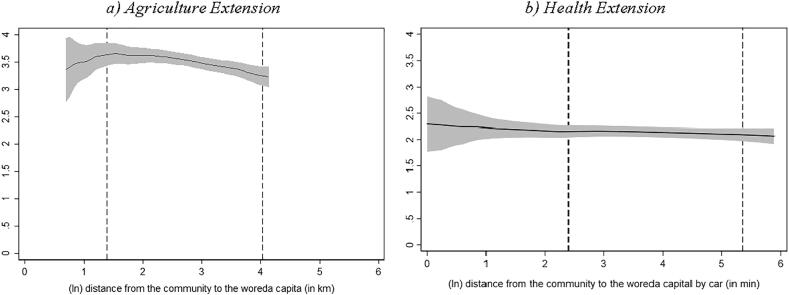
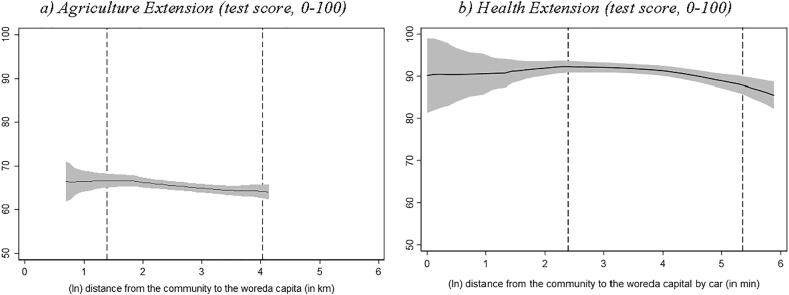
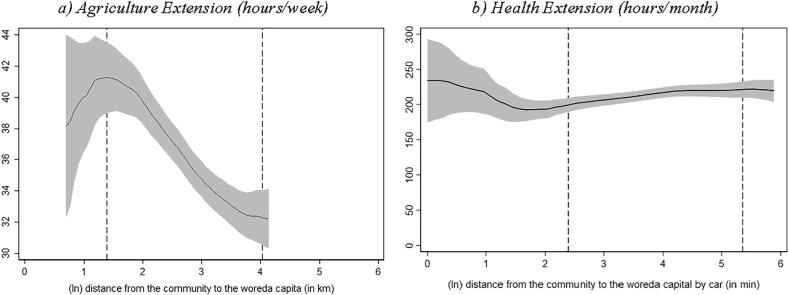
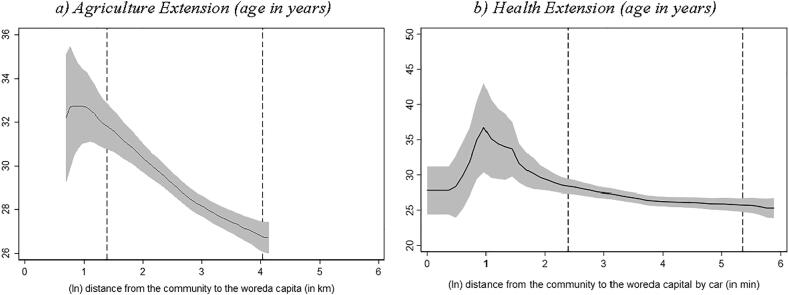
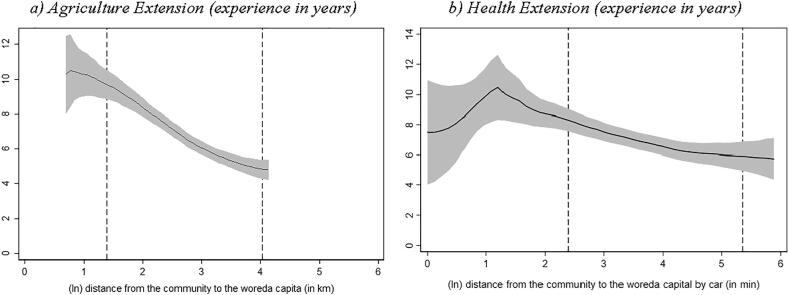
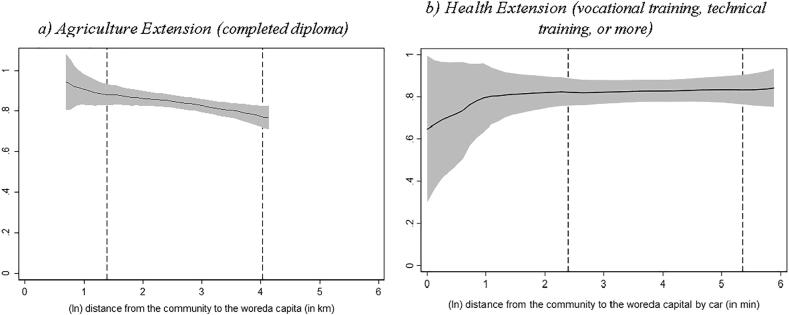
Remote areas are often characterized by lower welfare outcomes due to economic disadvantages and higher transaction costs for trade. But their poorer situation may also be linked to worse public service delivery. Relying on large household surveys in rural Ethiopia, we explore this by assessing the association of two measures of remoteness - (1) the distance of service centers to district capitals and (2) the distance of households to service centers (the last mile) - with public service delivery in agriculture and health sectors. In the agriculture sector, we document statistically significant and economically meaningful associations between exposure to agriculture extension and the two measures of remoteness. For health extension, only the last mile matters. These differences between the two sectors could be due to the fact that more remote villages tend to have fewer agriculture extension workers who also put in fewer hours than their peers in more connected areas. This does not apply in the health sector. These findings provide valuable inputs for policymakers aiming to improve inclusiveness in poor rural areas.
由于经济劣势和更高的贸易交易成本,偏远地区往往具有较低的福利成果。但其较差的状况也可能与更糟糕的公共服务提供有关。依靠埃塞俄比亚农村地区的大型家庭调查,我们通过评估两种偏远程度衡量指标——(1)服务中心到地区首府的距离,以及(2)家庭到服务中心的距离(最后一英里)——与农业和卫生部门公共服务提供之间的关联来探究这一问题。在农业部门,我们记录了农业推广服务的可及性与这两种偏远程度衡量指标之间具有统计学显著性且具有经济意义的关联。对于卫生推广服务而言,只有最后一英里距离起作用。这两个部门之间的这些差异可能是由于这样一个事实,即更偏远的村庄往往农业推广人员较少,而且这些人员的工作时长也比联系更紧密地区的同行少。这在卫生部门并不适用。这些发现为旨在提高贫困农村地区包容性的政策制定者提供了有价值的参考。