Saudi Health Council, Riyadh, Saudi Arabia.
Lancaster University, Lancashire, UK.
Hum Resour Health. 2020 Dec 4;18(1):98. doi: 10.1186/s12960-020-00535-2.
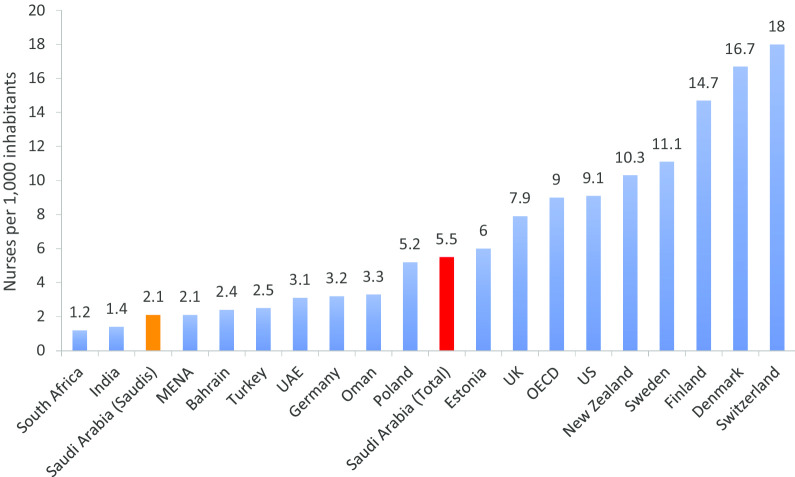
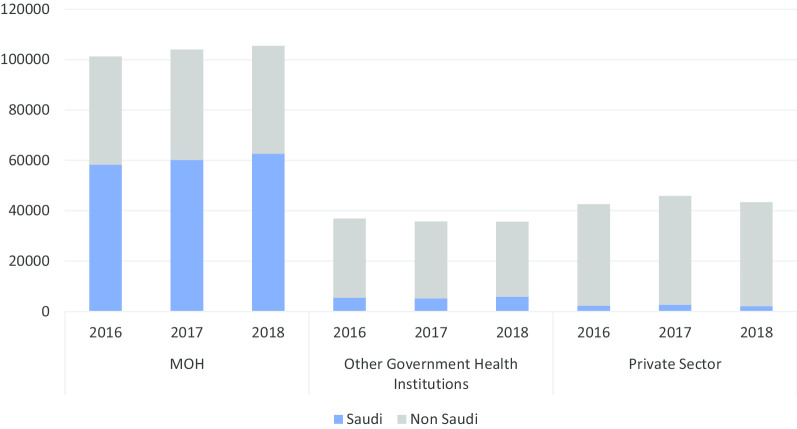
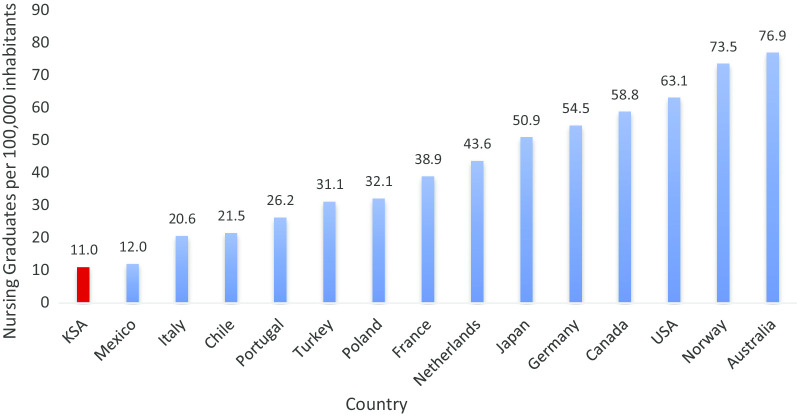
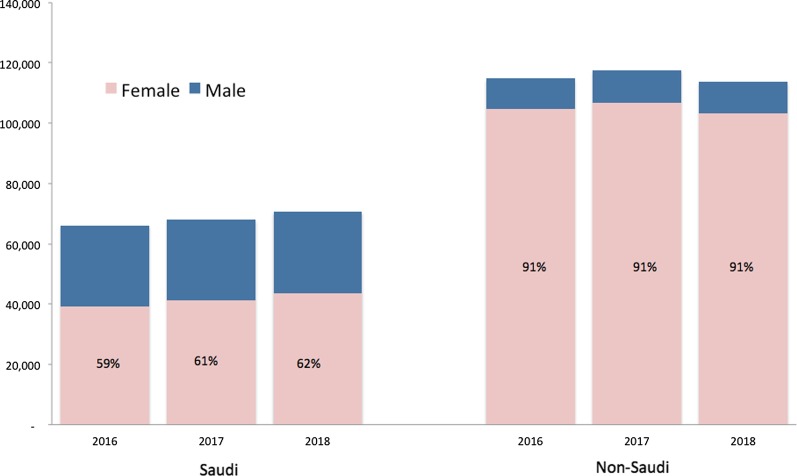
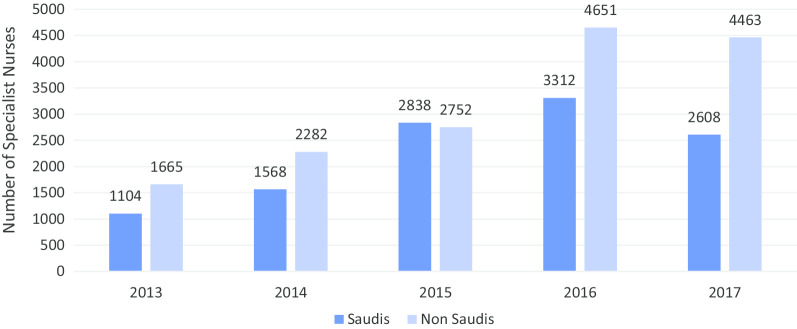
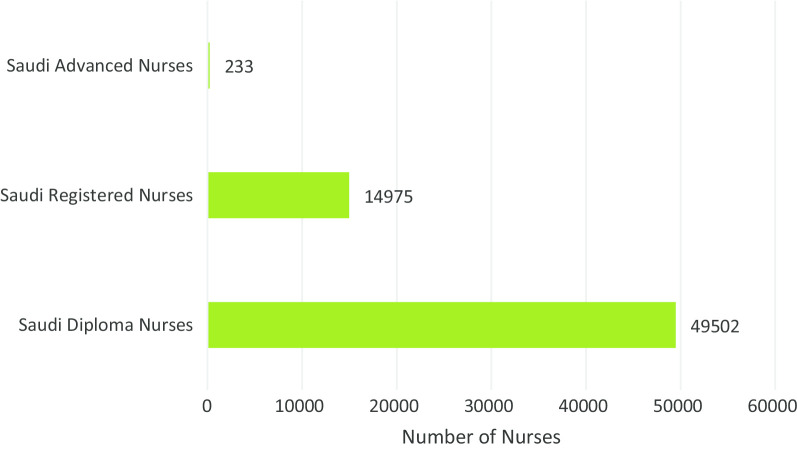
The Kingdom of Saudi Arabia's (KSA) health sector is undergoing rapid reform in line with the National Transformation Program, as part of Saudi's vision for the future, Vision 2030. From a nursing human resources for health (HRH) perspective, there are challenges of low nursing school capacity, high employment of expatriates, labor market fragmentation, shortage of nurses in rural areas, uneven quality, and gender challenges.
This case study summarizes Saudi Ministry of Health (MOH) and Saudi Health Council's (SHCs) evaluation of the current challenges facing the nursing profession in the KSA. We propose policy interventions to support the transformation of nursing into a profession that contributes to efficient, high-quality healthcare for every Saudi citizen. Key to the success of modernizing the Saudi workforce will be an improved pipeline of nurses that leads from middle and high school to nursing school; followed by a diverse career path that includes postgraduate education. To retain nurses in the profession, there are opportunities to make nursing practice more attractive and family friendly. Interventions include reducing shift length, redesigning the nursing team to add more allied health workers, and introducing locum tenens staffing to balance work-load. There are opportunities to modernize existing nurse postgraduate education, open new postgraduate programs in nursing, and create new positions and career paths for nurses such as telenursing, informatics, and quality. Rural pipelines should be created, with incentives and increased compensation packages for underserved areas.
Critical to these proposed reforms is the collaboration of the MOH with partners across the healthcare system, particularly the private sector. Human resources planning should be sector-wide and nursing leadership should be strengthened at all levels.
沙特阿拉伯王国(KSA)的卫生部门正在根据国家转型计划进行快速改革,这是沙特未来愿景“2030 愿景”的一部分。从护理人力资源(HRH)的角度来看,存在护理学校能力低、外国劳动力雇佣率高、劳动力市场分散、农村地区护士短缺、质量不均和性别挑战等挑战。
本案例研究总结了沙特卫生部(MOH)和沙特健康理事会(SHC)对沙特护理专业目前面临的挑战的评估。我们提出政策干预措施,以支持将护理转变为一种有助于为每个沙特公民提供高效、高质量医疗保健的专业。实现沙特劳动力现代化的关键是改善从中等和高等学校到护理学校的护士管道;其次是包括研究生教育在内的多样化职业道路。为了留住护理专业的护士,有机会使护理实践更具吸引力和家庭友好性。干预措施包括减少轮班时间、重新设计护理团队以增加更多的辅助卫生工作者,并引入临时工人员来平衡工作量。有机会实现现有护士研究生教育的现代化,开设新的护理研究生课程,并为护士创造新的职位和职业道路,如远程护理、信息学和质量。应创建农村管道,为服务不足地区提供激励和增加薪酬套餐。
这些拟议改革的关键是卫生部与医疗保健系统各合作伙伴,特别是私营部门的合作。人力资源规划应在整个部门进行,各级护理领导应得到加强。