Department of Urology, The First Affiliated Hospital of Soochow University, Suzhou, China.
Clinical Immunology Laboratory, The First Affiliated Hospital of Soochow University, Suzhou, China.
Technol Cancer Res Treat. 2020 Jan-Dec;19:1533033820971649. doi: 10.1177/1533033820971649.
B7-H3 is an important immunomodulatory molecule, and clinical studies have confirmed that its expression level is closely correlated with prostate cancer prognosis. However, the mechanism of its biological action is unclear.
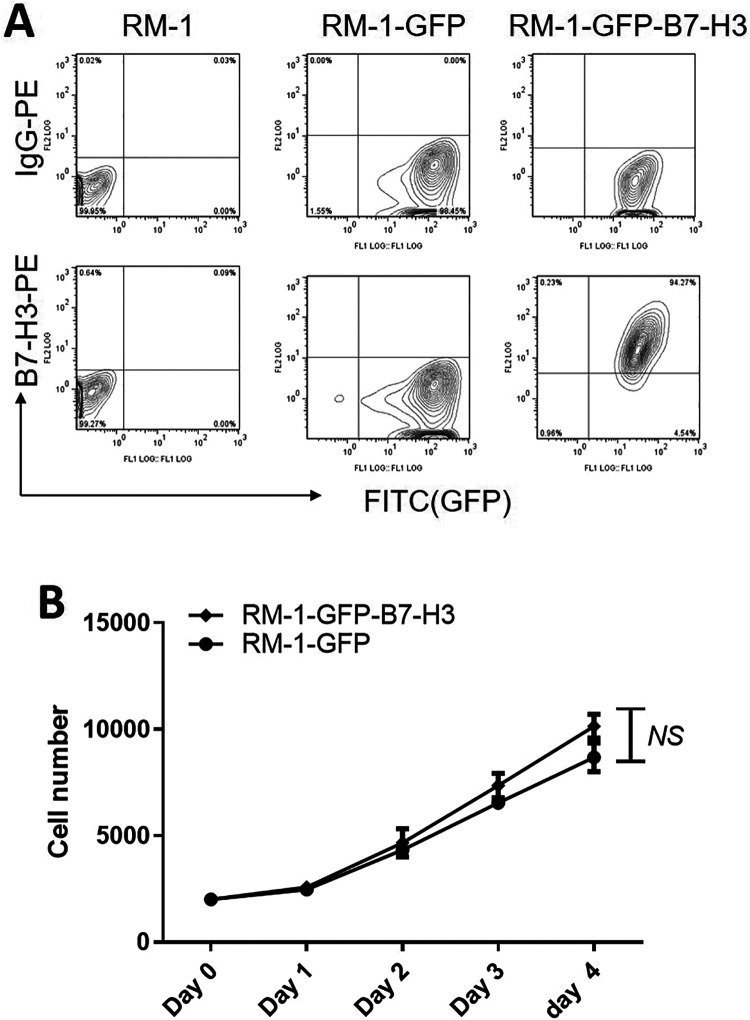
An engineered cell line overexpressing B7-H3 was constructed. Cell apoptosis, growth and proliferation assays and an animal model were performed to analyze the role and possible mechanism of B7-H3 in promoting prostate cancer progression.
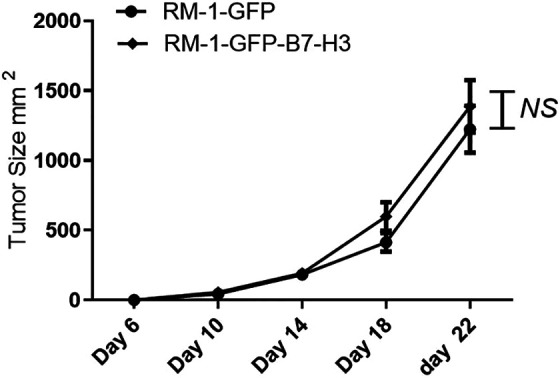
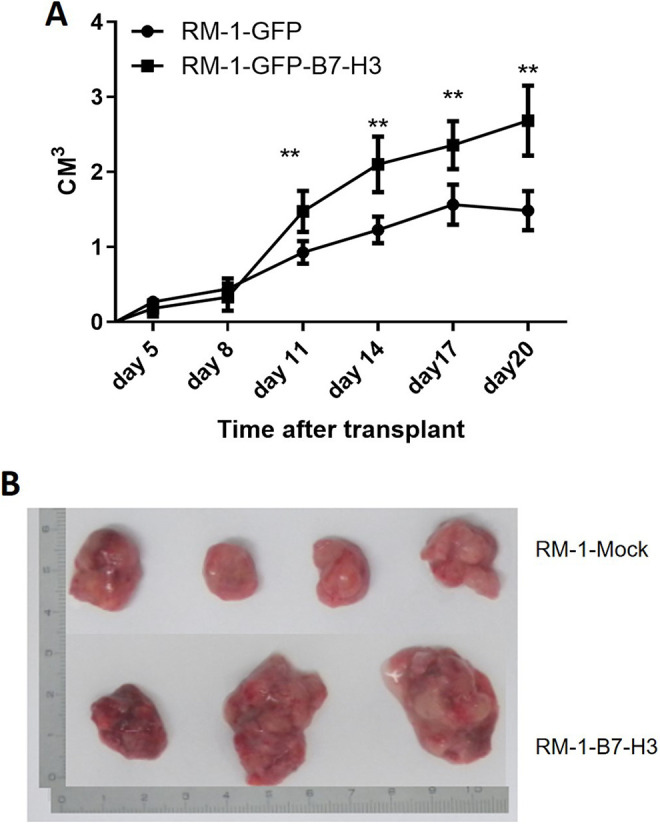
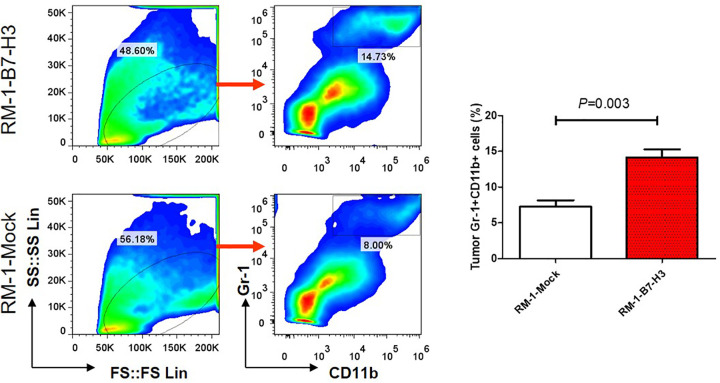
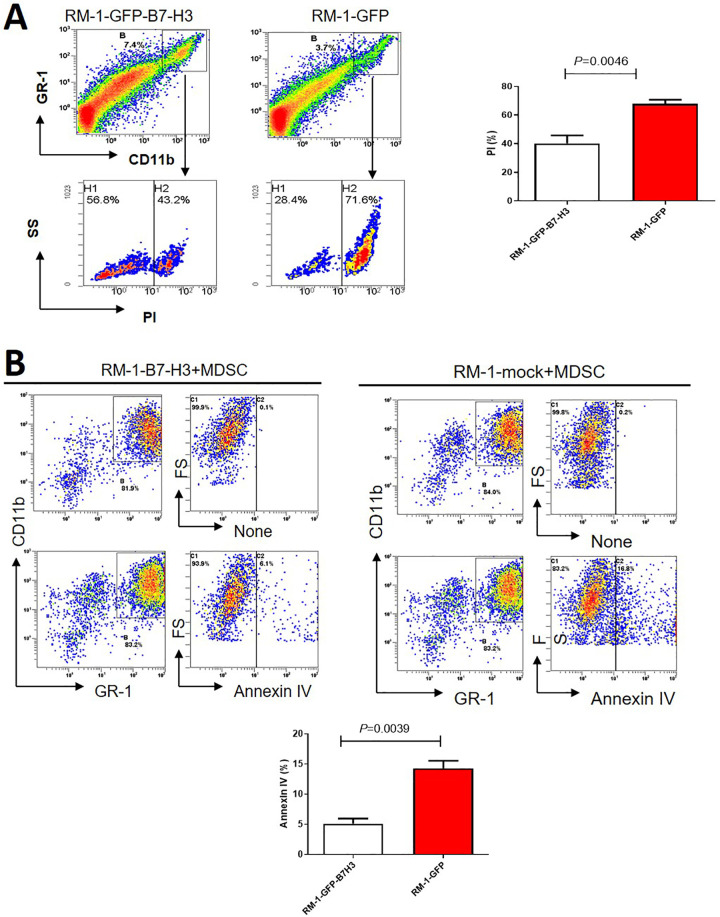
Compared with the control cell line (Mock-RM-1), the B7-H3-overexpressing prostate cancer cell line (B7-H3-RM-1) showed no significant growth differences , whereas the tumorigenesis rate of B7-H3-RM-1 was significantly higher than that of Mock-RM-1. These results suggest that B7-H3indirectly, rather than directly, promotes prostate cancer progression. Further analysis revealed that significantly higher levels of myeloid-derived suppressor cells (MDSCs) accumulated in B7-H3-RM-1 tumor-bearing mice than in Mock-RM-1 mice. and experiments showed that B7-H3-RM-1 cells significantly antagonized MDSC apoptosis. To further confirm the role of MDSCs in B7-H3-mediated prostate cancer progression, model mice were pretreated with cyclophosphamide before inoculation to clear immune cells and achieve myelo suppression. The results showed no significant differences in tumor growth between the B7-H3-RM-1 group and the Mock-RM-1 group.
We found, for the first time, that B7-H3 can antagonize MDSC apoptosis, leading to MDSC accumulation in the tumor microenvironment and thereby promoting prostate cancer progression.
B7-H3 是一种重要的免疫调节分子,临床研究证实其表达水平与前列腺癌预后密切相关。但其生物学作用机制尚不清楚。
构建了 B7-H3 过表达的工程细胞系。通过细胞凋亡、生长和增殖实验以及动物模型,分析了 B7-H3 在促进前列腺癌进展中的作用及其可能的机制。
与对照细胞系(Mock-RM-1)相比,B7-H3 过表达的前列腺癌细胞系(B7-H3-RM-1)的生长差异无统计学意义,而 B7-H3-RM-1 的肿瘤发生率明显高于 Mock-RM-1。这些结果表明,B7-H3 间接而非直接促进前列腺癌的进展。进一步分析发现,B7-H3-RM-1 荷瘤小鼠中骨髓来源的抑制性细胞(MDSCs)的积累明显高于 Mock-RM-1 小鼠。实验表明,B7-H3-RM-1 细胞明显拮抗 MDSC 凋亡。为进一步证实 MDSCs 在 B7-H3 介导的前列腺癌进展中的作用,在接种前用环磷酰胺预处理模型小鼠以清除免疫细胞并实现骨髓抑制。结果显示,B7-H3-RM-1 组与 Mock-RM-1 组之间肿瘤生长无显著差异。
我们首次发现 B7-H3 可拮抗 MDSC 凋亡,导致肿瘤微环境中 MDSC 积聚,从而促进前列腺癌进展。