• 文献检索
  • 文档翻译
  • 深度研究
  • 学术资讯
  • Suppr Zotero 插件Zotero 插件
  • 邀请有礼
  • 套餐&价格
  • 历史记录
应用&插件
Suppr Zotero 插件Zotero 插件浏览器插件Mac 客户端Windows 客户端微信小程序
定价
高级版会员购买积分包购买API积分包
服务
文献检索文档翻译深度研究API 文档MCP 服务
关于我们
关于 Suppr公司介绍联系我们用户协议隐私条款
关注我们

Suppr 超能文献

核心技术专利:CN118964589B侵权必究
粤ICP备2023148730 号-1Suppr @ 2026

文献检索

告别复杂PubMed语法,用中文像聊天一样搜索,搜遍4000万医学文献。AI智能推荐,让科研检索更轻松。

立即免费搜索

文件翻译

保留排版,准确专业,支持PDF/Word/PPT等文件格式,支持 12+语言互译。

免费翻译文档

深度研究

AI帮你快速写综述,25分钟生成高质量综述,智能提取关键信息,辅助科研写作。

立即免费体验

纤维蛋白原样蛋白2促进肝细胞癌肿瘤微环境中髓源性抑制细胞的积累。

Fibrinogen-like protein 2 promotes the accumulation of myeloid-derived suppressor cells in the hepatocellular carcinoma tumor microenvironment.

作者信息

Liu Bo-Qian, Bao Zhi-Ye, Zhu Jia-Yi, Liu Hao

机构信息

Department of Transplant and Hepatobilliary Surgery, The First Hospital of China Medical University, Shenyang, Liaoning 110000, P.R. China.

Department of Anorectal Surgery, The People's Hospital of Liaoning Province, Shenyang, Liaoning 110000, P.R. China.

出版信息

Oncol Lett. 2021 Jan;21(1):47. doi: 10.3892/ol.2020.12308. Epub 2020 Nov 17.

DOI:10.3892/ol.2020.12308
PMID:33281958
原文链接:https://pmc.ncbi.nlm.nih.gov/articles/PMC7709556/
Abstract

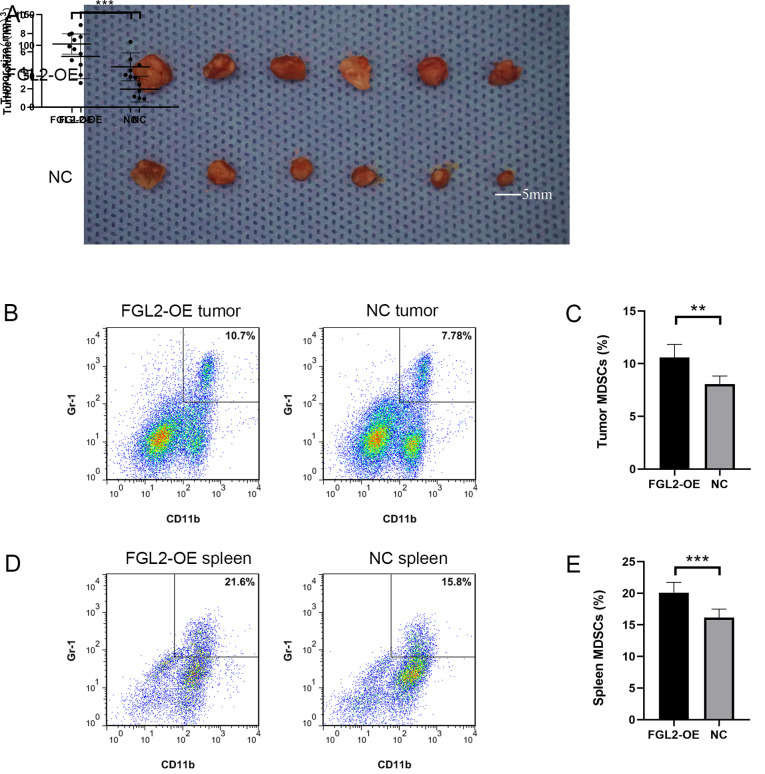
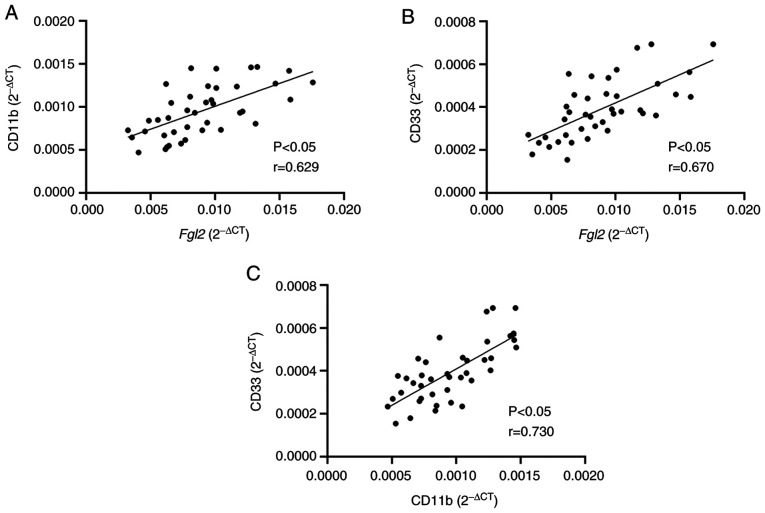
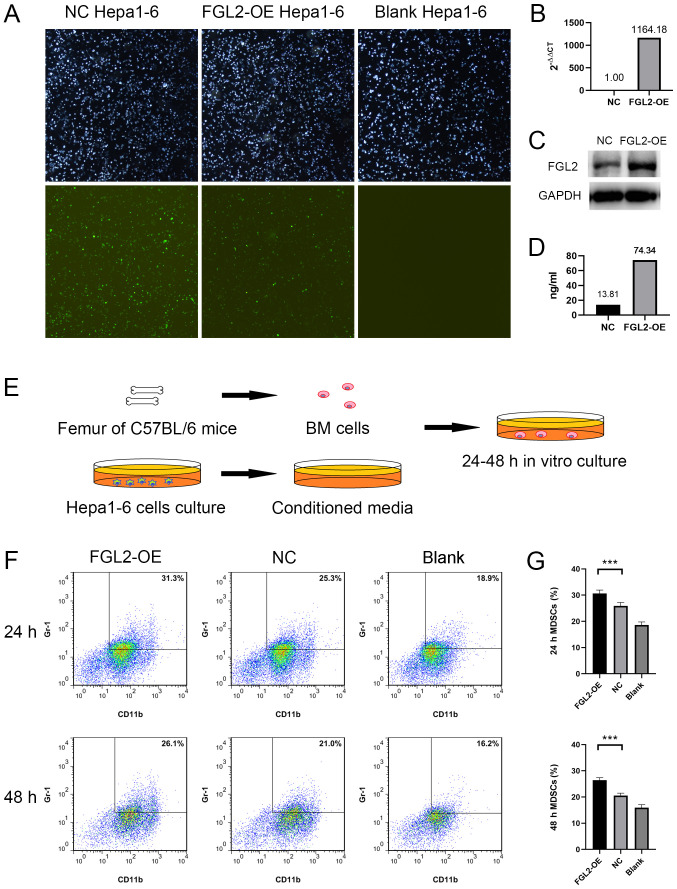
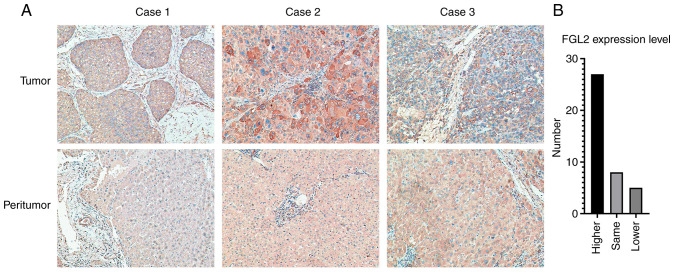
The tumor microenvironment in hepatocellular carcinoma can be classified into cellular and non-cellular components. Myeloid-derived suppressor cells (MDSCs) are cellular components of this microenvironment that serve an important role in the progression of hepatocellular carcinoma. Fibrinogen-like protein 2 (FGL2) has been demonstrated to promote tumor progression by regulating cellular components of the tumor microenvironment in various types of malignant tumor. The present study aimed to determine the expression of FGL2 in hepatocellular carcinoma and its effect on the tumor microenvironment in order to determine novel targets for liver cancer treatment. Immunohistochemistry and reverse transcription quantitative PCR were performed to determine the expression level of FGL2 and the correlation with surface markers of human MDSCs in hepatocellular carcinoma. Furthermore, a mouse hepatocellular carcinoma cell line overexpressing FGL2 was established by stable transfection of a lentivirus expressing FGL2. In addition, fresh bone marrow cells extracted from mouse femurs were cultured using conditioned medium derived from the cell line overexpressing FGL2. An orthotopic hepatocellular carcinoma mouse model was also established. The results demonstrated that FGL2 expression level in hepatocellular carcinoma tissues was closely associated with tumor size. FGL2 level was positively correlated with the expression level of the MDSC surface markers CD11b and CD33 in hepatocellular carcinoma. The results demonstrated that FGL2 could maintain the undifferentiated state of bone marrow cells, therefore promoting MDSC accumulation. Furthermore, in the orthotopic hepatocellular carcinoma mouse model, we observed that overexpression of FGL2 could promote tumor growth and significantly increase the number of MDSCs in the tumors and spleen. Taken together, these findings suggested that FGL2 may promote hepatocellular carcinoma tumor growth by promoting the accumulation of MDSCs in the tumor microenvironment.

摘要

肝细胞癌中的肿瘤微环境可分为细胞成分和非细胞成分。髓源性抑制细胞(MDSCs)是这种微环境的细胞成分,在肝细胞癌的进展中起重要作用。纤维蛋白原样蛋白2(FGL2)已被证明可通过调节各种类型恶性肿瘤中肿瘤微环境的细胞成分来促进肿瘤进展。本研究旨在确定FGL2在肝细胞癌中的表达及其对肿瘤微环境的影响,以确定肝癌治疗的新靶点。采用免疫组织化学和逆转录定量PCR检测FGL2在肝细胞癌中的表达水平及其与人MDSCs表面标志物的相关性。此外,通过稳定转染表达FGL2的慢病毒建立了过表达FGL2的小鼠肝癌细胞系。另外,使用来自过表达FGL2的细胞系的条件培养基培养从小鼠股骨中提取的新鲜骨髓细胞。还建立了原位肝细胞癌小鼠模型。结果表明,肝细胞癌组织中FGL2表达水平与肿瘤大小密切相关。FGL2水平与肝细胞癌中MDSC表面标志物CD11b和CD33的表达水平呈正相关。结果表明,FGL2可以维持骨髓细胞的未分化状态,从而促进MDSC的积累。此外,在原位肝细胞癌小鼠模型中,我们观察到FGL2的过表达可以促进肿瘤生长,并显著增加肿瘤和脾脏中MDSCs的数量。综上所述,这些发现表明FGL2可能通过促进肿瘤微环境中MDSCs的积累来促进肝细胞癌的肿瘤生长。
https://cdn.ncbi.nlm.nih.gov/pmc/blobs/2074/7709556/237fcfa03b99/ol-21-01-12308-g03.jpg
https://cdn.ncbi.nlm.nih.gov/pmc/blobs/2074/7709556/d737c35065e5/ol-21-01-12308-g00.jpg
https://cdn.ncbi.nlm.nih.gov/pmc/blobs/2074/7709556/ffb646bc6c2c/ol-21-01-12308-g01.jpg
https://cdn.ncbi.nlm.nih.gov/pmc/blobs/2074/7709556/fca680aa64bc/ol-21-01-12308-g02.jpg
https://cdn.ncbi.nlm.nih.gov/pmc/blobs/2074/7709556/237fcfa03b99/ol-21-01-12308-g03.jpg
https://cdn.ncbi.nlm.nih.gov/pmc/blobs/2074/7709556/d737c35065e5/ol-21-01-12308-g00.jpg
https://cdn.ncbi.nlm.nih.gov/pmc/blobs/2074/7709556/ffb646bc6c2c/ol-21-01-12308-g01.jpg
https://cdn.ncbi.nlm.nih.gov/pmc/blobs/2074/7709556/fca680aa64bc/ol-21-01-12308-g02.jpg
https://cdn.ncbi.nlm.nih.gov/pmc/blobs/2074/7709556/237fcfa03b99/ol-21-01-12308-g03.jpg

相似文献

1
Fibrinogen-like protein 2 promotes the accumulation of myeloid-derived suppressor cells in the hepatocellular carcinoma tumor microenvironment.纤维蛋白原样蛋白2促进肝细胞癌肿瘤微环境中髓源性抑制细胞的积累。
Oncol Lett. 2021 Jan;21(1):47. doi: 10.3892/ol.2020.12308. Epub 2020 Nov 17.
2
Stroma-derived Fibrinogen-like Protein 2 Activates Cancer-associated Fibroblasts to Promote Tumor Growth in Lung Cancer.基质衍生的纤维蛋白原样蛋白2激活癌症相关成纤维细胞以促进肺癌肿瘤生长。
Int J Biol Sci. 2017 Jun 1;13(6):804-814. doi: 10.7150/ijbs.19398. eCollection 2017.
3
Fibrinogen-like protein 2 promotes tumor immune suppression by regulating cholesterol metabolism in myeloid-derived suppressor cells.纤维蛋白原样蛋白 2 通过调节髓系来源抑制细胞中的胆固醇代谢促进肿瘤免疫抑制。
J Immunother Cancer. 2023 Dec 6;11(12):e008081. doi: 10.1136/jitc-2023-008081.
4
Subsets of myeloid-derived suppressor cells in hepatocellular carcinoma express chemokines and chemokine receptors differentially.肝细胞癌中髓源性抑制细胞亚群差异性表达趋化因子和趋化因子受体。
Int Immunopharmacol. 2015 Jun;26(2):314-21. doi: 10.1016/j.intimp.2015.04.010. Epub 2015 Apr 16.
5
Targeting monocyte-intrinsic enhancer reprogramming improves immunotherapy efficacy in hepatocellular carcinoma.靶向单核细胞内增强子重编程提高肝癌免疫治疗疗效。
Gut. 2020 Feb;69(2):365-379. doi: 10.1136/gutjnl-2018-317257. Epub 2019 May 10.
6
Hepatic carcinoma-associated fibroblasts enhance immune suppression by facilitating the generation of myeloid-derived suppressor cells.肝癌相关成纤维细胞通过促进髓系来源抑制细胞的产生来增强免疫抑制。
Oncogene. 2017 Feb 23;36(8):1090-1101. doi: 10.1038/onc.2016.273. Epub 2016 Sep 5.
7
Hypoxia induces myeloid-derived suppressor cell recruitment to hepatocellular carcinoma through chemokine (C-C motif) ligand 26.缺氧通过趋化因子(C-C 基序)配体 26 诱导髓源性抑制细胞向肝细胞癌募集。
Hepatology. 2016 Sep;64(3):797-813. doi: 10.1002/hep.28655. Epub 2016 Jun 30.
8
Downregulation of FGL2/prothrombinase delays HCCLM6 xenograft tumour growth and decreases tumour angiogenesis.下调 FGL2/凝血酶原酶可延缓 HCCLM6 异种移植瘤的生长并减少肿瘤血管生成。
Liver Int. 2012 Nov;32(10):1585-95. doi: 10.1111/j.1478-3231.2012.02865.x. Epub 2012 Aug 24.
9
CXCL2/MIF-CXCR2 signaling promotes the recruitment of myeloid-derived suppressor cells and is correlated with prognosis in bladder cancer.CXCL2/MIF-CXCR2 信号通路促进髓源性抑制细胞的募集,并与膀胱癌的预后相关。
Oncogene. 2017 Apr;36(15):2095-2104. doi: 10.1038/onc.2016.367. Epub 2016 Oct 10.
10
Jianpi Huayu Decoction Attenuates the Immunosuppressive Status of H Hepatocellular Carcinoma-Bearing Mice: By Targeting Myeloid-Derived Suppressor Cells.健脾化瘀汤通过靶向髓源性抑制细胞减轻肝癌荷瘤小鼠的免疫抑制状态
Front Pharmacol. 2020 Feb 18;11:16. doi: 10.3389/fphar.2020.00016. eCollection 2020.

引用本文的文献

1
FGL2 peptides improve the antitumor effect of HCMV-IE1mut vaccine against glioblastoma by modulating immunosuppressive cells in the tumor microenvironment.FGL2 肽通过调节肿瘤微环境中的免疫抑制细胞增强 HCMV-IE1mut 疫苗对胶质母细胞瘤的抗肿瘤作用。
Oncoimmunology. 2024 Dec 31;13(1):2423983. doi: 10.1080/2162402X.2024.2423983. Epub 2024 Nov 6.
2
FGL1 and FGL2: emerging regulators of liver health and disease.FGL1和FGL2:肝脏健康与疾病中新兴的调节因子。
Biomark Res. 2024 May 31;12(1):53. doi: 10.1186/s40364-024-00601-0.
3
The role of preoperative FPR and FAR in prognostic evaluation of stages II and III radical colorectal cancer: A single-center retrospective study.

本文引用的文献

1
Myeloid-Derived Suppressor Cells as a Therapeutic Target for Cancer.髓源性抑制细胞作为癌症治疗靶点。
Cells. 2020 Feb 27;9(3):561. doi: 10.3390/cells9030561.
2
The Generation and Identity of Human Myeloid-Derived Suppressor Cells.人髓源性抑制细胞的产生与鉴定
Front Oncol. 2020 Feb 7;10:109. doi: 10.3389/fonc.2020.00109. eCollection 2020.
3
Signaling through the Inhibitory Fc Receptor FcγRIIB Induces CD8 T Cell Apoptosis to Limit T Cell Immunity.抑制性 Fc 受体 FcγRIIB 通过信号转导诱导 CD8+T 细胞凋亡,从而限制 T 细胞免疫。
术前 FPR 和 FAR 在 II 期和 III 期直肠癌预后评估中的作用:一项单中心回顾性研究。
Medicine (Baltimore). 2024 May 17;103(20):e38145. doi: 10.1097/MD.0000000000038145.
4
The role of myeloid-derived suppressor cells in liver cancer.髓源性抑制细胞在肝癌中的作用。
Discov Oncol. 2023 May 23;14(1):77. doi: 10.1007/s12672-023-00681-8.
5
Presence and activity of Fibrinogen like protein 2 in platelets.血小板中纤维蛋白原样蛋白 2 的存在和活性。
PLoS One. 2023 May 18;18(5):e0285735. doi: 10.1371/journal.pone.0285735. eCollection 2023.
6
Targeting FGL2 in glioma immunosuppression and malignant progression.靶向FGL2在胶质瘤免疫抑制和恶性进展中的作用
Front Oncol. 2022 Oct 13;12:1004700. doi: 10.3389/fonc.2022.1004700. eCollection 2022.
7
CFTR interactome mapping using the mammalian membrane two-hybrid high-throughput screening system.使用哺乳动物膜双杂交高通量筛选系统进行 CFTR 相互作用组图谱绘制。
Mol Syst Biol. 2022 Feb;18(2):e10629. doi: 10.15252/msb.202110629.
8
FTH promotes the proliferation and renders the HCC cells specifically resist to ferroptosis by maintaining iron homeostasis.FTH通过维持铁稳态促进增殖并使肝癌细胞对铁死亡具有特异性抗性。
Cancer Cell Int. 2021 Dec 29;21(1):709. doi: 10.1186/s12935-021-02420-x.
9
The role of Fibrinogen-like proteins in Cancer.纤维蛋白原样蛋白在癌症中的作用。
Int J Biol Sci. 2021 Mar 8;17(4):1079-1087. doi: 10.7150/ijbs.56748. eCollection 2021.
Immunity. 2020 Jan 14;52(1):136-150.e6. doi: 10.1016/j.immuni.2019.12.006.
4
Immune Therapy for Liver Cancers.肝癌的免疫治疗
Cancers (Basel). 2019 Dec 27;12(1):77. doi: 10.3390/cancers12010077.
5
Therapeutic Targeting of Hepatic Macrophages for the Treatment of Liver Diseases.靶向肝脏巨噬细胞治疗肝脏疾病。
Front Immunol. 2019 Dec 3;10:2852. doi: 10.3389/fimmu.2019.02852. eCollection 2019.
6
Myeloid-Derived Suppressor Cells: Major Figures that Shape the Immunosuppressive and Angiogenic Network in Cancer.髓源性抑制细胞:塑造癌症中免疫抑制和血管生成网络的主要因子。
Cells. 2019 Dec 15;8(12):1647. doi: 10.3390/cells8121647.
7
The prognostic value of myeloid derived suppressor cell level in hepatocellular carcinoma: A systematic review and meta-analysis.髓系来源抑制细胞水平对肝细胞癌的预后价值:系统评价和荟萃分析。
PLoS One. 2019 Dec 2;14(12):e0225327. doi: 10.1371/journal.pone.0225327. eCollection 2019.
8
Multi-omics Analysis of Microenvironment Characteristics and Immune Escape Mechanisms of Hepatocellular Carcinoma.肝细胞癌微环境特征及免疫逃逸机制的多组学分析
Front Oncol. 2019 Oct 15;9:1019. doi: 10.3389/fonc.2019.01019. eCollection 2019.
9
[Liver cancer epidemiology in China, 2015].《2015年中国肝癌流行病学》
Zhonghua Zhong Liu Za Zhi. 2019 Oct 23;41(10):721-727. doi: 10.3760/cma.j.issn.0253-3766.2019.10.001.
10
Activated hepatic stellate cells regulate MDSC migration through the SDF-1/CXCR4 axis in an orthotopic mouse model of hepatocellular carcinoma.活化的肝星状细胞通过 SDF-1/CXCR4 轴调节 MDSC 在肝癌原位小鼠模型中的迁移。
Cancer Immunol Immunother. 2019 Dec;68(12):1959-1969. doi: 10.1007/s00262-019-02414-9. Epub 2019 Oct 23.