Ye Sa, Zhou Hong-Bin, Chen Ying, Li Kai-Qiang, Jiang Shan-Shan, Hao Ke
Department of Nutrition, Zhejiang Provincial People's Hospital, People's Hospital of Hangzhou Medical College, Hangzhou, Zhejiang 310014, P.R. China.
Department of Respiratory Medicine, Zhejiang Provincial People's Hospital, People's Hospital of Hangzhou Medical College, Hangzhou, Zhejiang 310014, P.R. China.
Oncol Lett. 2021 Jan;21(1):61. doi: 10.3892/ol.2020.12323. Epub 2020 Nov 19.
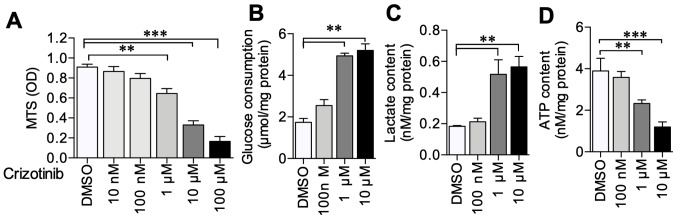
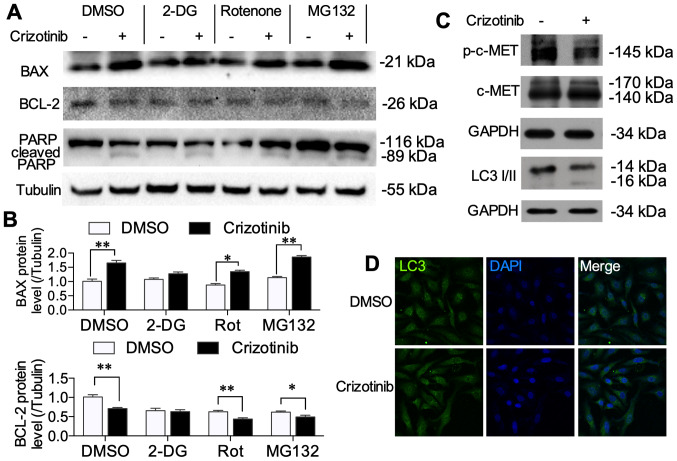
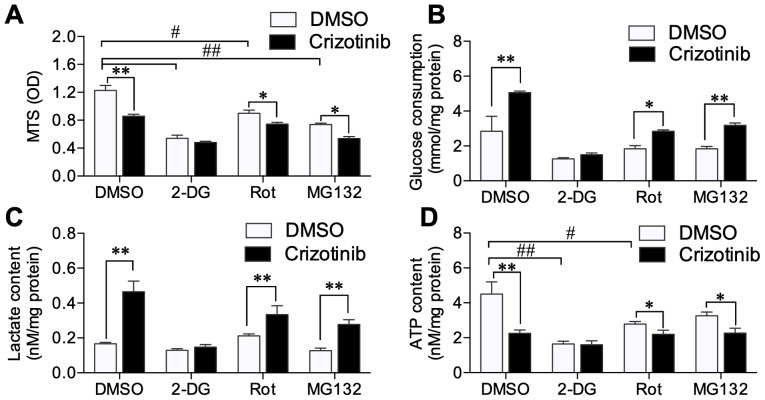
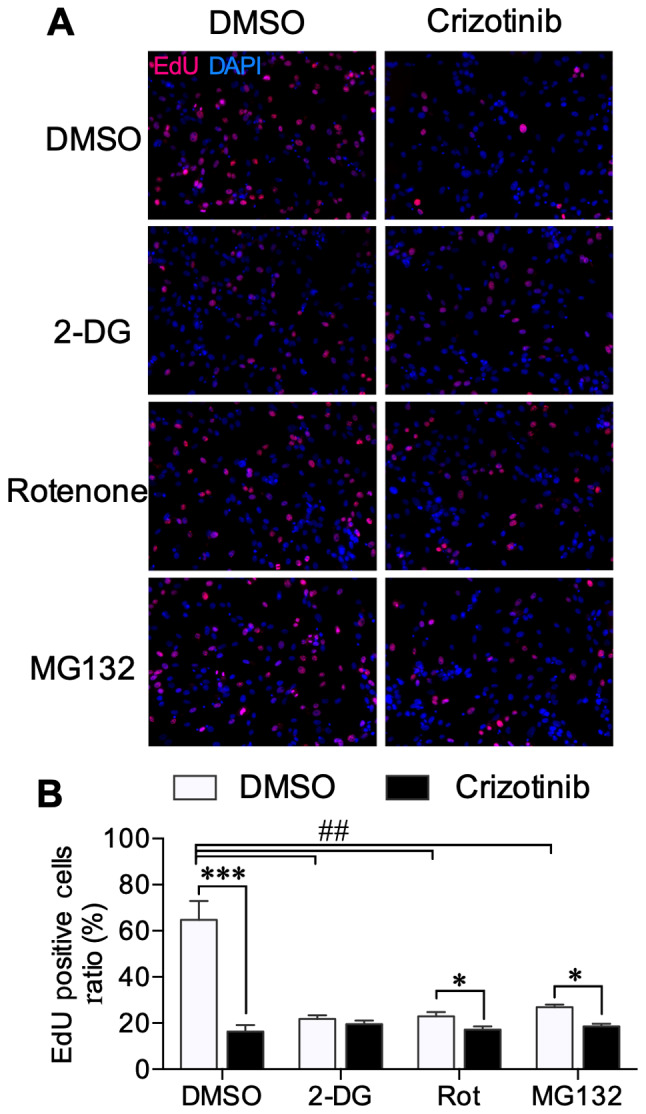
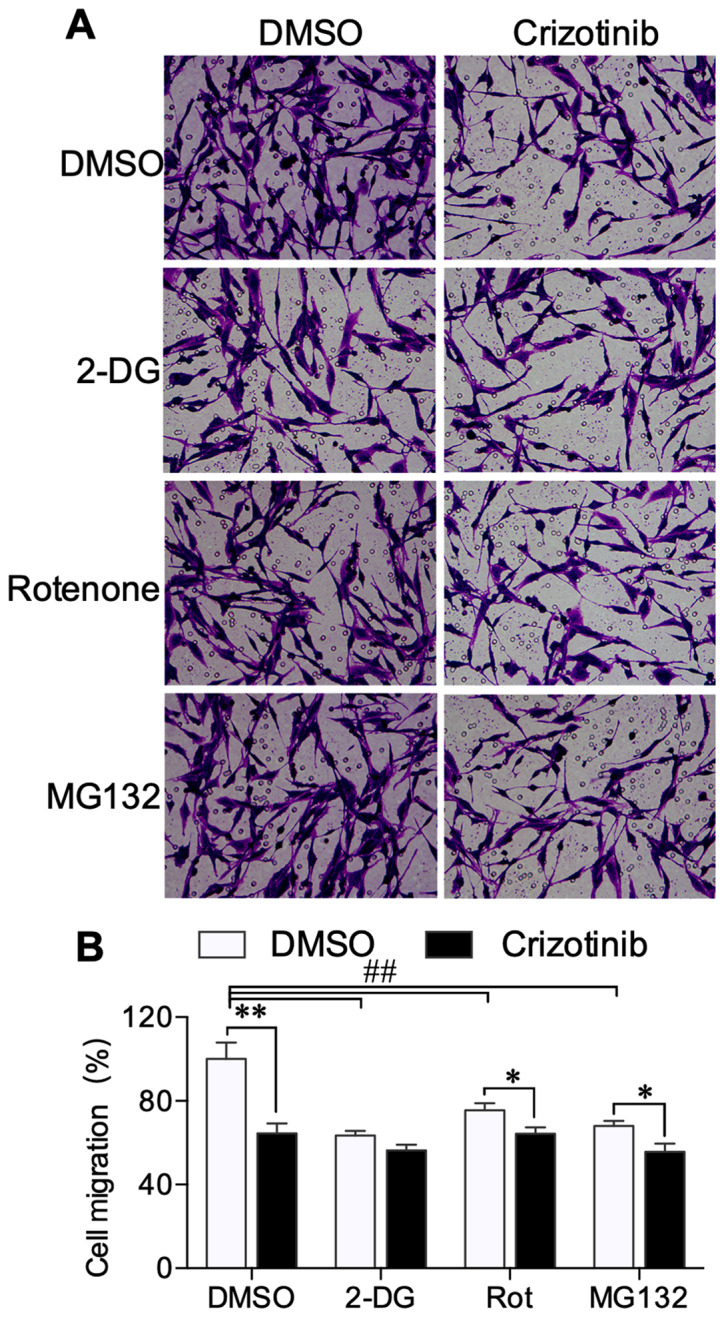
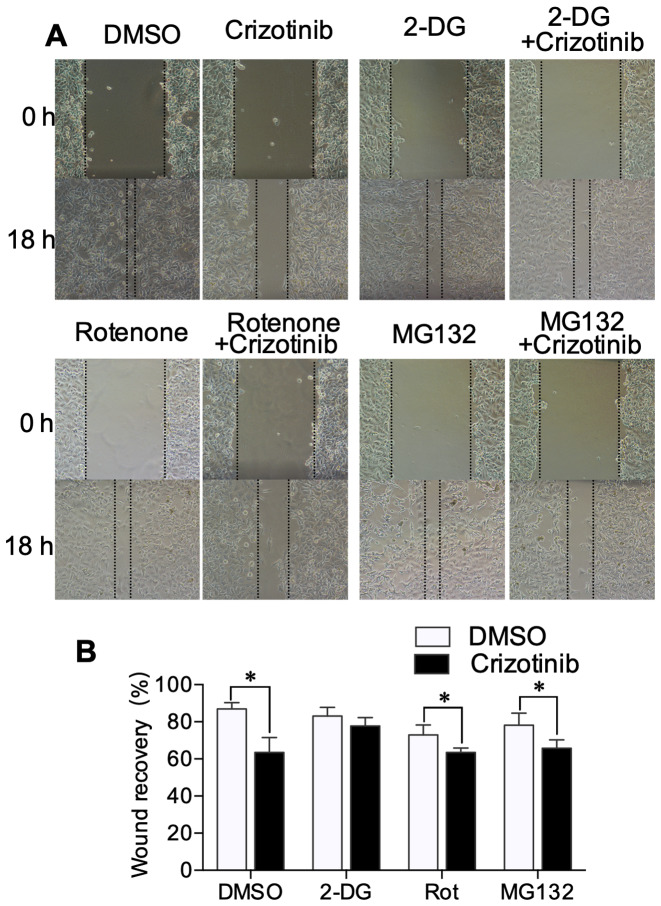
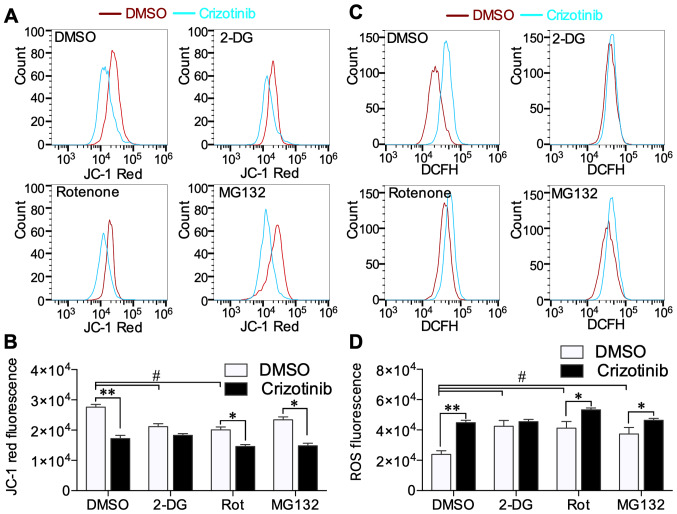
Crizotinib, an inhibitor of the hepatocyte growth factor receptor oncogene, has been studied extensively regarding its antitumor and clinically beneficial effects in non-small cell lung cancer (NSCLC). However, crizotinib's effects on cancer cell energy metabolism, which is linked with tumor proliferation and migration, in NSCLC are unclear. Therefore, the present study focused on crizotinib's effect on NSCLC glucose metabolism. Crizotinib's effects on glucose metabolism, proliferation, migration and apoptosis in A549 cells were explored. Several other inhibitors, including 2-DG, rotenone and MG132, were used to define the mechanism of action in further detail. Data showed that crizotinib treatment reduced A549 cell viability, increased glucose consumption and lactate production, while decreased mitochondrial transmembrane potential (Δψm) and ATP production. Crizotinib treatment, combined with rotenone and MG132 treatment, further inhibited ATP production and Δψm and increased reactive oxygen species content. However, crizotinib did not suppress cell proliferation, migration, ATP production, Δψm or mitochondrial-related apoptosis signals further following 2-DG-mediated inhibition of glycolysis. These results indicated that crizotinib induced low mitochondrial function and compensatory high anaerobic metabolism, but failed to maintain sufficient ATP levels. The alternation of metabolic pattern and insufficient ATP supply may serve important roles in the metabolic antitumor mechanism of crizotinib in A549 cells.
克唑替尼是一种肝细胞生长因子受体癌基因抑制剂,已对其在非小细胞肺癌(NSCLC)中的抗肿瘤作用和临床有益效果进行了广泛研究。然而,克唑替尼对NSCLC中与肿瘤增殖和迁移相关的癌细胞能量代谢的影响尚不清楚。因此,本研究聚焦于克唑替尼对NSCLC葡萄糖代谢的影响。探讨了克唑替尼对A549细胞葡萄糖代谢、增殖、迁移和凋亡的影响。使用了其他几种抑制剂,包括2-脱氧葡萄糖(2-DG)、鱼藤酮和MG132,以进一步详细确定其作用机制。数据显示,克唑替尼处理降低了A549细胞活力,增加了葡萄糖消耗和乳酸生成,同时降低了线粒体跨膜电位(Δψm)和ATP生成。克唑替尼处理与鱼藤酮和MG132处理相结合,进一步抑制了ATP生成和Δψm,并增加了活性氧含量。然而,在2-DG介导的糖酵解抑制后,克唑替尼并未进一步抑制细胞增殖、迁移、ATP生成、Δψm或线粒体相关凋亡信号。这些结果表明,克唑替尼诱导了低线粒体功能和代偿性高无氧代谢,但未能维持足够的ATP水平。代谢模式的改变和ATP供应不足可能在克唑替尼对A549细胞的代谢抗肿瘤机制中起重要作用。