Department of Orthodontics, Universitas Sumatera Utara, Medan, North Sumatera, 20155, Indonesia.
Department of Dental Public Health, Universitas Sumatera Utara, Medan, North Sumatera, 20155, Indonesia.
F1000Res. 2020 Sep 4;9:1093. doi: 10.12688/f1000research.25709.3. eCollection 2020.
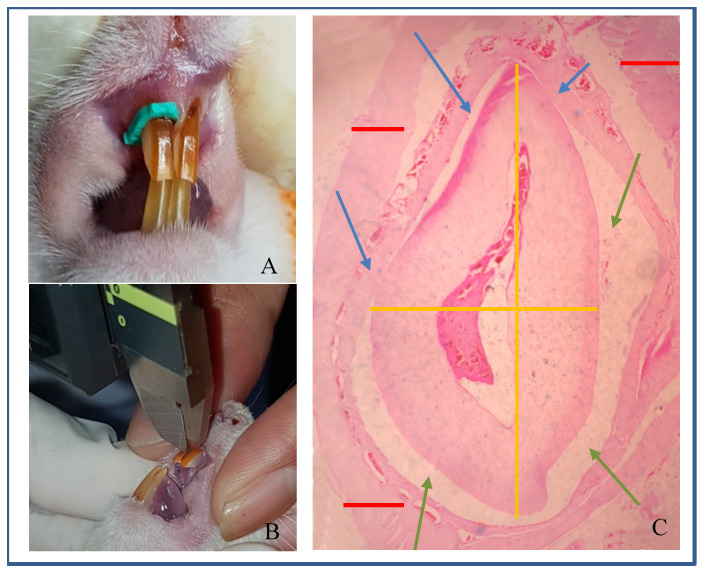
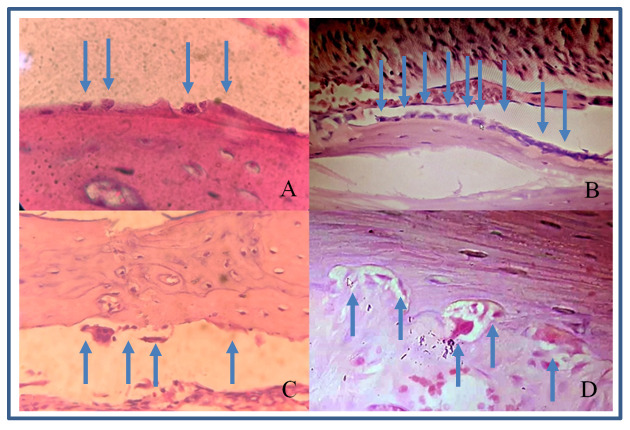
: Tooth movement induced by the application of orthodontic force was initiated by inflammatory process. Studies have shown that vitamin E has an anti-inflammatory and antioxidant properties which perhaps could inhibit the tooth to move. This study aimed to evaluate the effect of vitamin E supplementation on orthodontic tooth movement in Wistar rats. : Wistar rats (n=56) were divided into two groups. Group 1 served as the control groups, while group 2 was given vitamin E for 14 days before application of orthodontic force. Each group was divided into four subgroups (n=7), corresponding to the number of days orthodontic force lasted, i.e. 0, 1, 3, 7 days. At each of these four time points, distance measurements and quantity of osteoblasts-osteoclasts were measured in each rat. Tooth movement distance was increased for group 2 than group 1 for all time intervals, but this difference was only statistically different on day 3 ( =0.001). For both groups, tooth movement was significantly different between each time interval in each group ( =0.041). The mean number of osteoblast cells was increased for group 2 compared to group 1 for all time intervals (p<0.05), but was not significant different between time intervals ( =0.897). The number of osteoclasts was not significantly different between groups, but it was statistically different between time intervals (p=0.004). The outcome of this study demonstrated that group 2 resulted a better tooth movement compared to group 1 and significantly found on day 3, based on the distance measurement. The osteoclast cell numbers were the same within both control groups, whilst the number of osteoblast cells in group 2 was significantly higher than those in group 1.
正畸力引起的牙齿移动是由炎症过程引发的。研究表明,维生素 E 具有抗炎和抗氧化特性,或许可以抑制牙齿移动。本研究旨在评估维生素 E 补充剂对 Wistar 大鼠正畸牙齿移动的影响。
Wistar 大鼠(n=56)分为两组。第 1 组作为对照组,第 2 组在施加正畸力前 14 天给予维生素 E。每组再分为 4 个亚组(n=7),对应施加正畸力的天数,即 0、1、3、7 天。在这四个时间点的每一个时间点,测量每只大鼠的距离和成骨细胞-破骨细胞数量。
第 2 组的牙齿移动距离比第 1 组在所有时间间隔都增加,但这种差异仅在第 3 天具有统计学意义( =0.001)。对于两组,在每个组的每个时间间隔,牙齿移动都有显著差异( =0.041)。与第 1 组相比,第 2 组的成骨细胞数量在所有时间间隔都增加(p<0.05),但在时间间隔之间没有显著差异( =0.897)。破骨细胞数量在两组之间没有显著差异,但在时间间隔之间有统计学差异(p=0.004)。
本研究结果表明,与第 1 组相比,第 2 组的牙齿移动更好,基于距离测量,在第 3 天有显著差异。两组的破骨细胞数量相同,而第 2 组的成骨细胞数量明显高于第 1 组。