Shaikhan Fahad Mohammed, Makhlouf Mohamed M
Primary Health Care Corporation, Doha, Qatar.
High Institute of Public Health, Alexandria University, Alexandria, Egypt.
SAGE Open Med. 2020 Nov 24;8:2050312120973500. doi: 10.1177/2050312120973500. eCollection 2020.
Chronic paediatric diseases, as bronchial asthma, affect the quality of life, which can be defined as the ability to preserve personal well-being despite sickness. These diseases have a huge impact on the quality of life of both the children, their parents and or caregivers.
A cross-sectional study using convenient sampling was conducted in the paediatric pulmonology clinics at Hamad General Hospital in Qatar aiming to evaluate the quality of life among caregivers of asthmatic children. The quality of life of caregivers was assessed using the standard Paediatric Asthma Caregiver Quality of Life questionnaire. Depression and asthma control were assessed using the Beck Depression Inventory; second edition and the Paediatric Asthma Control and Communication Instrument, respectively.
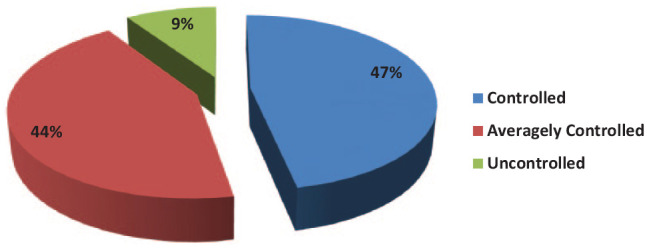
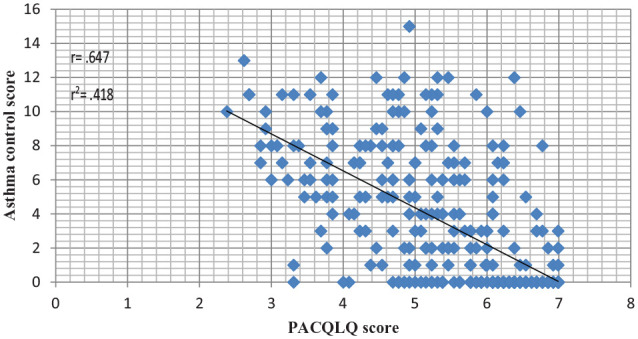
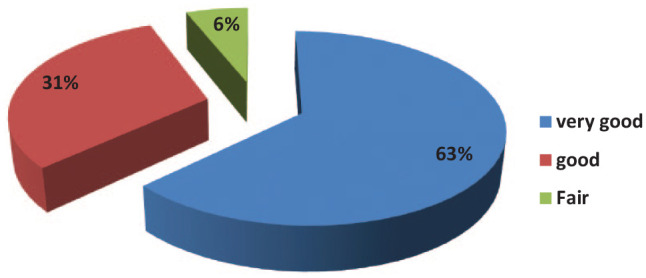
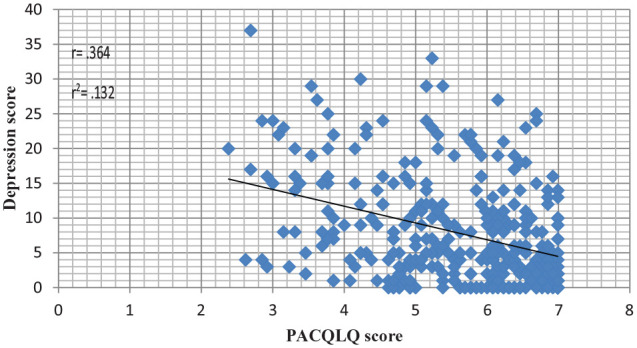
Total number of the caregivers was 330. Majority of the asthmatic children had controlled or partially controlled asthma (47% and 44%, respectively). Most of the caregivers had either very good or good quality of life (63% and 31%, respectively). Mean quality of life score was 5.55 ± 1.14. Males, married and father caregivers had significantly higher mean quality of life. In addition, gender, getting bothered about child's asthma, asthma control score and depression score were significant predictors of quality of life among the caregivers.
Most of the caregivers had either very good or good quality of life. Being a female, degree of asthma control and depression were important determinants of the quality of life of the caregivers. Provision of needed support to caregivers and effective approach to controlling asthma are recommended to improve the quality of life of caregivers.
慢性儿科疾病,如支气管哮喘,会影响生活质量,生活质量可定义为即使患病仍能保持个人幸福的能力。这些疾病对儿童及其父母和/或照顾者的生活质量都有巨大影响。
在卡塔尔哈马德总医院的儿科肺病诊所进行了一项采用便利抽样的横断面研究,旨在评估哮喘儿童照顾者的生活质量。使用标准的《儿科哮喘照顾者生活质量问卷》评估照顾者的生活质量。分别使用贝克抑郁量表第二版和《儿科哮喘控制与沟通工具》评估抑郁和哮喘控制情况。
照顾者总数为330人。大多数哮喘儿童的哮喘得到控制或部分控制(分别为47%和44%)。大多数照顾者的生活质量非常好或良好(分别为63%和31%)。生活质量平均得分为5.55±1.14。男性、已婚和父亲照顾者的生活质量平均得分显著更高。此外,性别、因孩子哮喘而烦恼的程度、哮喘控制得分和抑郁得分是照顾者生活质量的重要预测因素。
大多数照顾者的生活质量非常好或良好。女性、哮喘控制程度和抑郁是照顾者生活质量的重要决定因素。建议为照顾者提供所需支持并采取有效的哮喘控制方法,以提高照顾者的生活质量。