• 文献检索
  • 文档翻译
  • 深度研究
  • 学术资讯
  • Suppr Zotero 插件Zotero 插件
  • 邀请有礼
  • 套餐&价格
  • 历史记录
应用&插件
Suppr Zotero 插件Zotero 插件浏览器插件Mac 客户端Windows 客户端微信小程序
定价
高级版会员购买积分包购买API积分包
服务
文献检索文档翻译深度研究API 文档MCP 服务
关于我们
关于 Suppr公司介绍联系我们用户协议隐私条款
关注我们

Suppr 超能文献

核心技术专利:CN118964589B侵权必究
粤ICP备2023148730 号-1Suppr @ 2026

文献检索

告别复杂PubMed语法,用中文像聊天一样搜索,搜遍4000万医学文献。AI智能推荐,让科研检索更轻松。

立即免费搜索

文件翻译

保留排版,准确专业,支持PDF/Word/PPT等文件格式,支持 12+语言互译。

免费翻译文档

深度研究

AI帮你快速写综述,25分钟生成高质量综述,智能提取关键信息,辅助科研写作。

立即免费体验

与利益相关者共同创建一个工具包,以利用平板电脑在医院支持以患者为中心的痴呆症护理。

Creating a toolkit with stakeholders for leveraging tablet computers to support person-centred dementia care in hospitals.

作者信息

Shadarevian John, Chan Cheryl, Berndt Annette, Son Cathy, Gregorio Mario, Horne Neil, Mann Jim, Wallsworth Christine, Chow Bryan, O'Neill Ryan, Hung Lillian

机构信息

Faculty of Medicine, The University of British Columbia, Vancouver, BC, Canada.

School of Nursing, University of Victoria, Victoria, BC, Canada.

出版信息

J Rehabil Assist Technol Eng. 2020 Nov 23;7:2055668320960385. doi: 10.1177/2055668320960385. eCollection 2020 Jan-Dec.

DOI:10.1177/2055668320960385
PMID:33282336
原文链接:https://pmc.ncbi.nlm.nih.gov/articles/PMC7691942/
Abstract

INTRODUCTION

People with dementia may refuse care because they feel overwhelmed by an unfamiliar environment. Everyday technology such as tablets have the potential to support person-centred dementia care in hospitals.

AIMS

We aimed to identify barriers and enabling factors in order to develop a toolkit to support the use of tablets in engaging individual and group activities, especially to play family videos, for hospitalized older people with dementia.

METHODS

A participatory action research approach was employed. We facilitated staff focus groups and conducted interviews with stakeholders. A toolkit was developed based on participants' perspectives on how to support successful adoption.

RESULTS

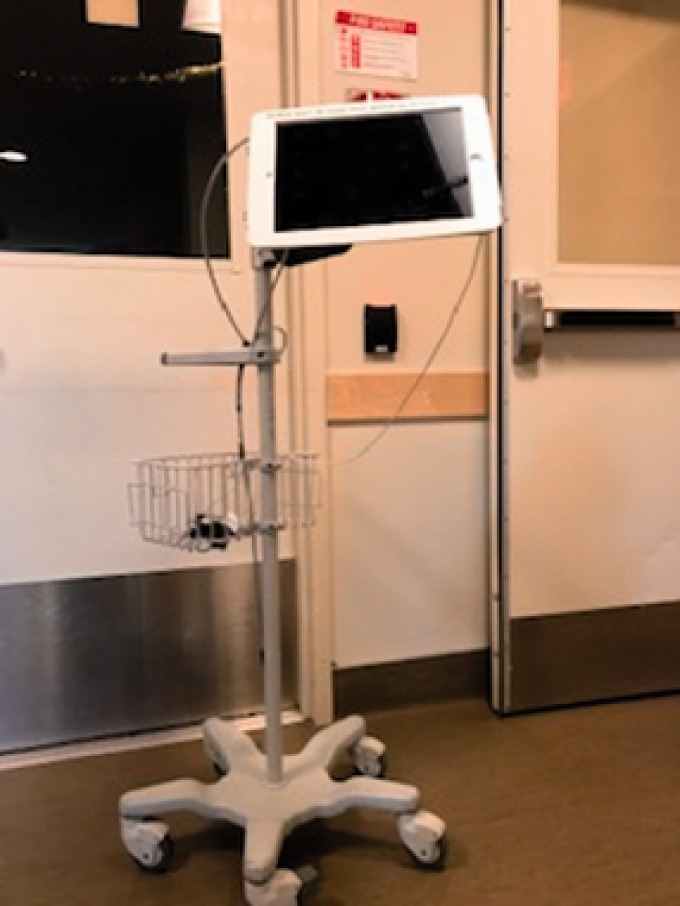
Our analysis identified two enabling factors: users' engagement in developing a toolkit for support and adapting implementation to meet local needs. Barriers included staff and family inexperience, mechanical instability of hardware, issues around privacy and data access, technology use and personalization of messages. The toolkit includes short videos, a brochure for family caregivers, and a pocket card for staff. Staff, family and patients start with varying levels of experience with the use of tablets, making education and support vitally important to implementation. Health organizations should involve staff, patients, and families to find practical solutions.

摘要

引言

患有痴呆症的人可能会拒绝护理,因为他们会因陌生的环境而感到不知所措。平板电脑等日常技术有潜力在医院中支持以患者为中心的痴呆症护理。

目的

我们旨在确定障碍和促成因素,以便开发一套工具包,以支持使用平板电脑开展个人和团体活动,特别是为住院的痴呆症老年人播放家庭视频。

方法

采用参与式行动研究方法。我们组织了工作人员焦点小组,并与利益相关者进行了访谈。根据参与者对如何支持成功采用的看法,开发了一套工具包。

结果

我们的分析确定了两个促成因素:用户参与开发支持工具包以及根据当地需求调整实施方式。障碍包括工作人员和家属缺乏经验、硬件机械不稳定、隐私和数据访问问题、技术使用以及信息的个性化。该工具包包括短视频、给家庭护理人员的手册以及给工作人员的袖珍卡片。工作人员、家属和患者在使用平板电脑方面的经验水平各不相同,因此教育和支持对实施至关重要。卫生组织应让工作人员、患者和家属参与进来,以找到切实可行的解决方案。
https://cdn.ncbi.nlm.nih.gov/pmc/blobs/5629/7691942/c682b0579475/10.1177_2055668320960385-fig1.jpg

相似文献

1
Creating a toolkit with stakeholders for leveraging tablet computers to support person-centred dementia care in hospitals.与利益相关者共同创建一个工具包,以利用平板电脑在医院支持以患者为中心的痴呆症护理。
J Rehabil Assist Technol Eng. 2020 Nov 23;7:2055668320960385. doi: 10.1177/2055668320960385. eCollection 2020 Jan-Dec.
2
The experience of hospital staff in applying the Gentle Persuasive Approaches to dementia care.医院工作人员在将温和劝导方法应用于痴呆症护理方面的经验。
J Psychiatr Ment Health Nurs. 2019 Feb;26(1-2):19-28. doi: 10.1111/jpm.12504. Epub 2018 Dec 6.
3
Using virtual care interventions to provide person-centred care to hospitalised older people with dementia.使用虚拟护理干预措施为住院的老年痴呆症患者提供以患者为中心的护理。
Nurs Older People. 2020 Nov 11. doi: 10.7748/nop.2020.e1294.
4
Co-design of a digital app "WhatMatters" to support person-centred care: A critical reflection.共同设计一款数字应用程序“重要的事情”,以支持以人为本的护理:批判性反思。
Int J Geriatr Psychiatry. 2023 Oct;38(10):e6014. doi: 10.1002/gps.6014.
5
6
Exploring nursing staff views of responsive behaviours of people with dementia in long-stay facilities.探究护理人员对长期护理机构中痴呆症患者反应性行为的看法。
J Psychiatr Ment Health Nurs. 2018 Feb;25(1):26-36. doi: 10.1111/jpm.12436. Epub 2017 Oct 26.
7
Healthcare stakeholders' perceptions and experiences of factors affecting the implementation of critical care telemedicine (CCT): qualitative evidence synthesis.医疗保健利益相关者对影响重症监护远程医疗(CCT)实施因素的看法和经验:定性证据综合分析。
Cochrane Database Syst Rev. 2021 Feb 18;2(2):CD012876. doi: 10.1002/14651858.CD012876.pub2.
8
Effectiveness of interventions to improve family-staff relationships in the care of people with dementia in residential aged care: a systematic review protocol.改善老年护理机构中痴呆症患者护理中家庭与工作人员关系的干预措施的有效性:一项系统评价方案。
JBI Database System Rev Implement Rep. 2015 Nov;13(11):52-63. doi: 10.11124/jbisrir-2015-2415.
9
Art, music, story: The evaluation of a person-centred arts in health programme in an acute care older persons' unit.艺术、音乐、故事:对急性护理老年病房中一项以患者为中心的艺术健康项目的评估。
Int J Older People Nurs. 2018 Jun;13(2):e12186. doi: 10.1111/opn.12186. Epub 2018 Jan 24.
10
Smart Home Sensing and Monitoring in Households With Dementia: User-Centered Design Approach.痴呆症家庭中的智能家居传感与监测:以用户为中心的设计方法。
JMIR Aging. 2021 Aug 11;4(3):e27047. doi: 10.2196/27047.

引用本文的文献

1
Internet-Based Supportive Interventions for Family Caregivers of People With Dementia: Randomized Controlled Trial.基于互联网的支持性干预措施对痴呆患者家属的影响:一项随机对照试验。
JMIR Aging. 2024 Oct 4;7:e50847. doi: 10.2196/50847.
2
Patient and Public Involvement in Technology-Related Dementia Research: Scoping Review.患者及公众参与技术相关痴呆症研究:范围综述
JMIR Aging. 2024 Mar 4;7:e48292. doi: 10.2196/48292.

本文引用的文献

1
Virtual special issue - Using touchscreen tablets for virtual connection.虚拟特刊——使用触摸屏平板电脑进行虚拟连接。
Dementia (London). 2020 Jul;19(5):1346-1348. doi: 10.1177/1471301220924578. Epub 2020 May 7.
2
Quality of life of patients with dementia in acute hospitals in Germany: a non-randomised, case-control study comparing a regular ward with a special care ward with dementia care concept.德国急性医院痴呆症患者的生活质量:一项非随机、病例对照研究,比较常规病房和具有痴呆护理概念的特别护理病房。
BMJ Open. 2019 Sep 6;9(9):e030743. doi: 10.1136/bmjopen-2019-030743.
3
Association of social contact with dementia and cognition: 28-year follow-up of the Whitehall II cohort study.
社交接触与痴呆和认知的关系:白厅 II 队列研究 28 年随访结果。
PLoS Med. 2019 Aug 2;16(8):e1002862. doi: 10.1371/journal.pmed.1002862. eCollection 2019 Aug.
4
Supporting general hospital staff to provide dementia sensitive care: A realist evaluation.支持综合医院员工提供痴呆症敏感护理:一个实际评估。
Int J Nurs Stud. 2019 Aug;96:61-71. doi: 10.1016/j.ijnurstu.2018.10.004. Epub 2018 Nov 30.
5
The experience of hospital staff in applying the Gentle Persuasive Approaches to dementia care.医院工作人员在将温和劝导方法应用于痴呆症护理方面的经验。
J Psychiatr Ment Health Nurs. 2019 Feb;26(1-2):19-28. doi: 10.1111/jpm.12504. Epub 2018 Dec 6.
6
'There is still so much inside': The impact of personalised reminiscence, facilitated by a tablet device, on people living with mild to moderate dementia and their family carers.“内心仍有诸多回忆”:平板电脑辅助的个性化回忆对轻度至中度痴呆症患者及其家庭护理人员的影响
Dementia (London). 2020 May;19(4):1131-1150. doi: 10.1177/1471301218795242. Epub 2018 Sep 7.
7
Feasibility and acceptability of an iPad intervention to support dementia care in the hospital setting.在医院环境中使用iPad干预措施支持痴呆症护理的可行性和可接受性。
Contemp Nurse. 2018 Aug-Oct;54(4-5):350-361. doi: 10.1080/10376178.2018.1505436. Epub 2018 Aug 1.
8
Using Video-Reflexive Ethnography to Engage Hospital Staff to Improve Dementia Care.运用视频反思民族志法促使医院工作人员改善痴呆症护理。
Glob Qual Nurs Res. 2018 Jul 11;5:2333393618785095. doi: 10.1177/2333393618785095. eCollection 2018 Jan-Dec.
9
Evidence-Based Interventions for Transitions in Care for Individuals Living With Dementia.循证干预措施在痴呆患者照护交接中的应用。
Gerontologist. 2018 Jan 18;58(suppl_1):S129-S140. doi: 10.1093/geront/gnx152.
10
'We don't even have Wi-Fi': a descriptive study exploring current use and availability of communication technologies in residential aged care.“我们甚至没有无线网络”:一项探索老年护理机构中通信技术当前使用情况和可用性的描述性研究。
Contemp Nurse. 2018 Feb;54(1):35-43. doi: 10.1080/10376178.2017.1411203. Epub 2017 Dec 5.