Department of Medical Sociology, University Medical Center Hamburg-Eppendorf, Hamburg, Germany
Station DAVID, Evangelisches Krankenhaus Alsterdorf, Hamburg, Germany.
BMJ Open. 2019 Sep 6;9(9):e030743. doi: 10.1136/bmjopen-2019-030743.
To identify factors that predict the quality of life (QoL) of patients with dementia in acute hospitals and to analyse if a special care concept can increase patients' QoL.
A non-randomised, case-control study including two internal medicine wards from hospitals in Hamburg, Germany.
In all, 526 patients with dementia from two hospitals were included in the study (intervention: n=333; control: n=193). The inclusion criterion was an at least mild cognitive impairment or dementia. The intervention group was a hospital with a special care ward for internal medicine focusing on patients with dementia. The control group was from a hospital with a regular care ward without special dementia care concept.
Our main outcome was the QoL (range 0-100) from patients with dementia in two different hospitals. A Bayesian multilevel analysis was conducted to identify predictors such as age, dementia, agitation, physical and chemical restraints, or functional limitations that affect QoL.
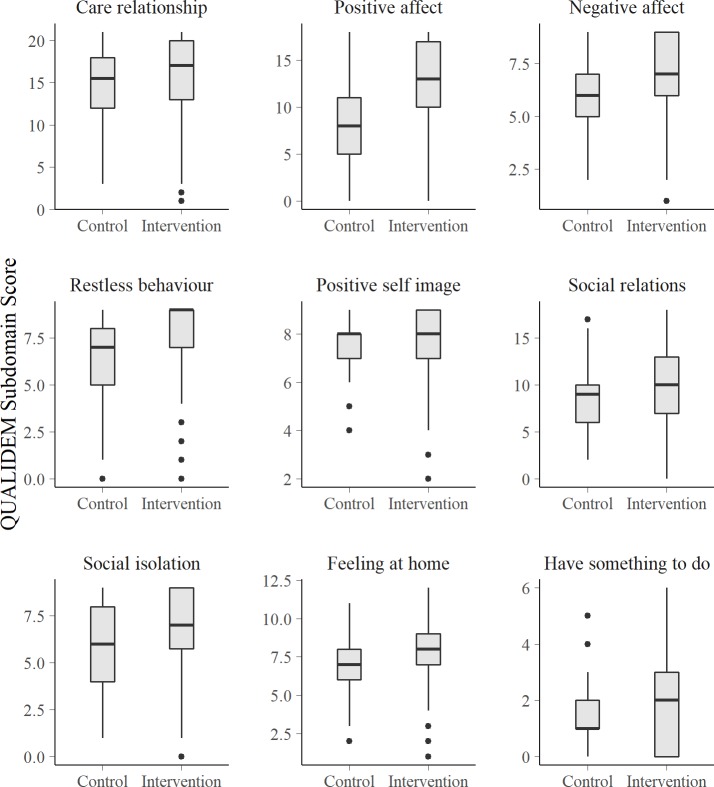
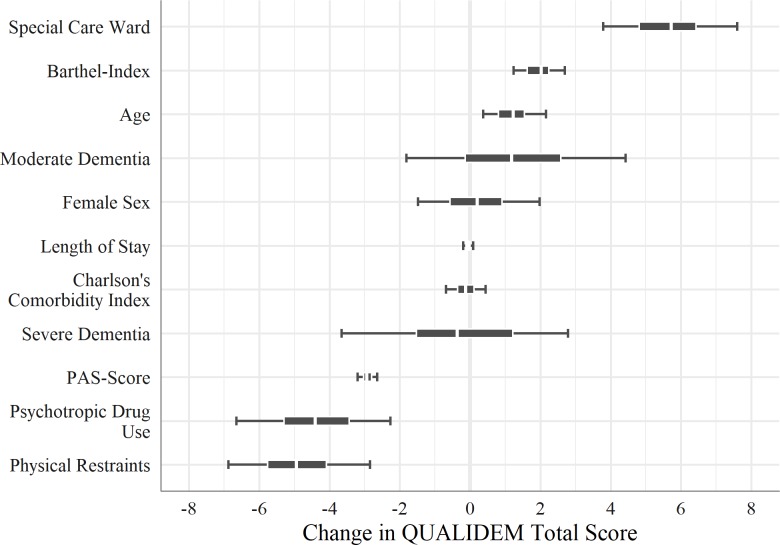
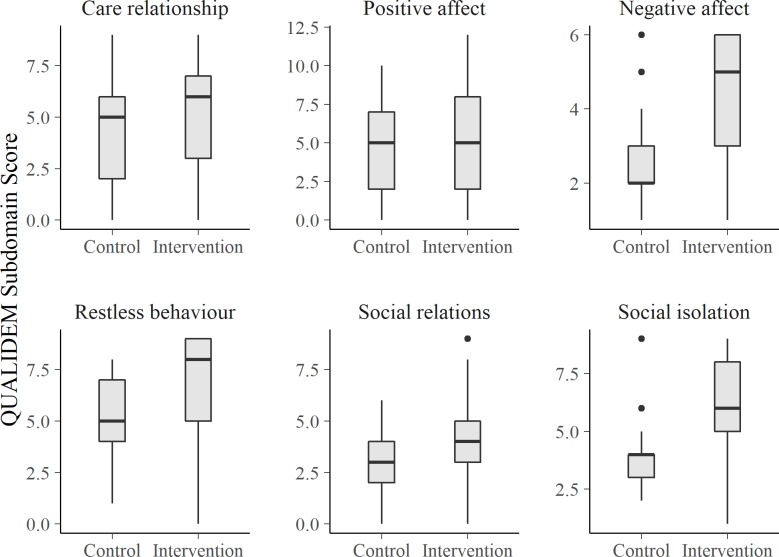
QoL differs significantly between the control (40.7) and the intervention (51.2) group (p<0.001). Regression analysis suggests that physical restraint (estimated effect: -4.9), psychotropic drug use (-4.4) and agitation (-2.9) are negatively associated with QoL. After controlling for confounders, the positive effect of the special care concept remained (5.7).
A special care ward will improve the quality of care and has a positive impact on the QoL of patients with dementia. Health policies should consider the benefits of special care concepts and develop incentives for hospitals to improve the QoL and quality of care for these patients.
确定影响急性医院痴呆症患者生活质量(QoL)的因素,并分析特殊护理概念是否能提高患者的 QoL。
一项非随机、病例对照研究,包括德国汉堡的两家医院的两个内科病房。
共有来自两家医院的 526 名痴呆症患者纳入研究(干预组:n=333;对照组:n=193)。纳入标准为至少有轻度认知障碍或痴呆。干预组是一家有专门的内科痴呆护理病房的医院。对照组是一家没有专门的痴呆护理概念的常规护理病房的医院。
我们的主要结局是来自两家不同医院的痴呆症患者的 QoL(范围 0-100)。采用贝叶斯多层次分析来确定影响 QoL 的预测因素,如年龄、痴呆、激越、身体和化学约束或功能限制。
对照组(40.7)和干预组(51.2)之间的 QoL 差异有统计学意义(p<0.001)。回归分析表明,身体约束(估计效应:-4.9)、精神药物使用(-4.4)和激越(-2.9)与 QoL 呈负相关。在控制混杂因素后,特殊护理概念的积极影响仍然存在(5.7)。
特殊护理病房将改善护理质量,并对痴呆症患者的 QoL 产生积极影响。卫生政策应考虑特殊护理概念的益处,并为医院提供激励措施,以提高这些患者的 QoL 和护理质量。