Sun Ling, Zhu Wenwu, Chen Xin, Jiang Jianguang, Ji Yuan, Liu Nan, Xu Yajing, Zhuang Yi, Sun Zhiqin, Wang Qingjie, Zhang Fengxiang
Department of Cardiology, The Affiliated Changzhou No. 2 People's Hospital of Nanjing Medical University, Changzhou, China.
Section of Pacing and Electrophysiology, Division of Cardiology, The First Affiliated Hospital of Nanjing Medical University, Nanjing, China.
Front Med (Lausanne). 2020 Nov 13;7:592007. doi: 10.3389/fmed.2020.592007. eCollection 2020.
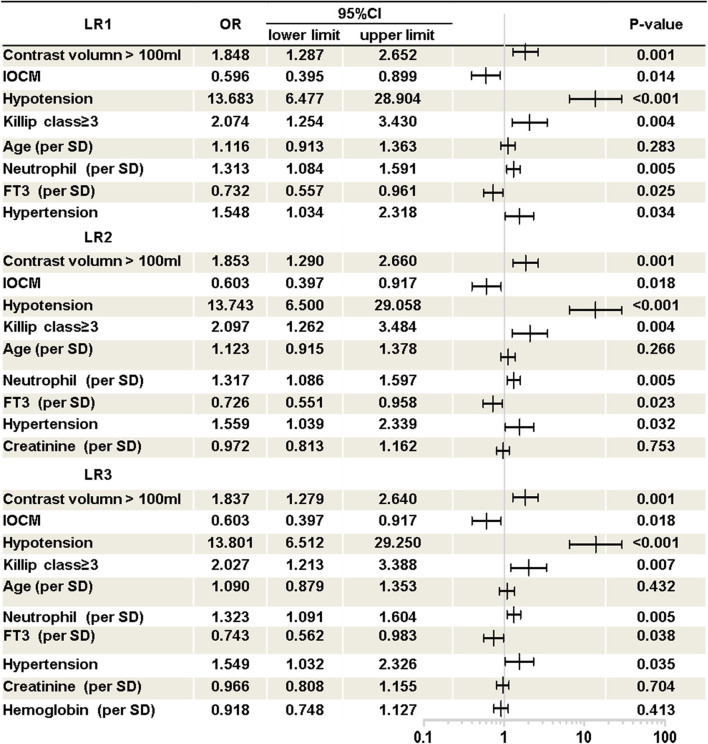
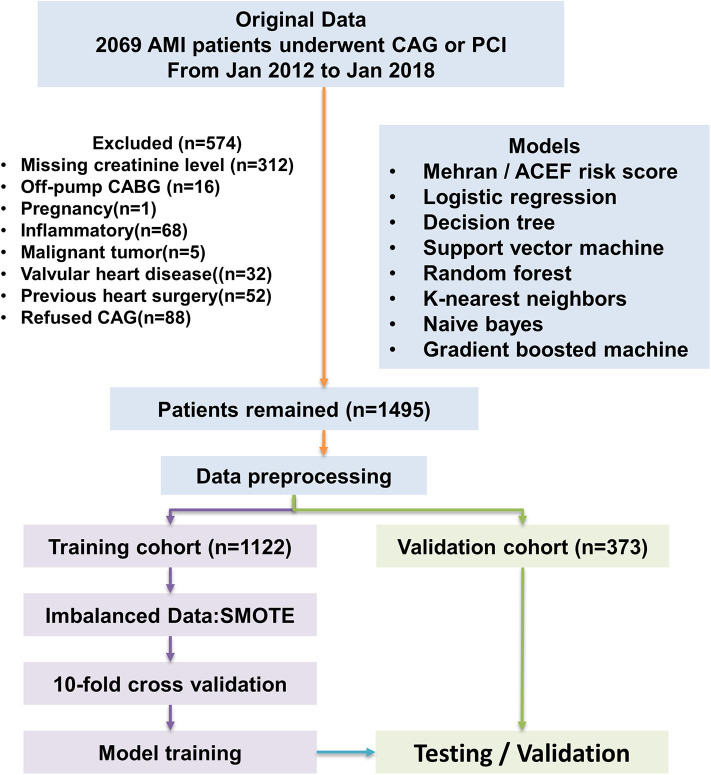
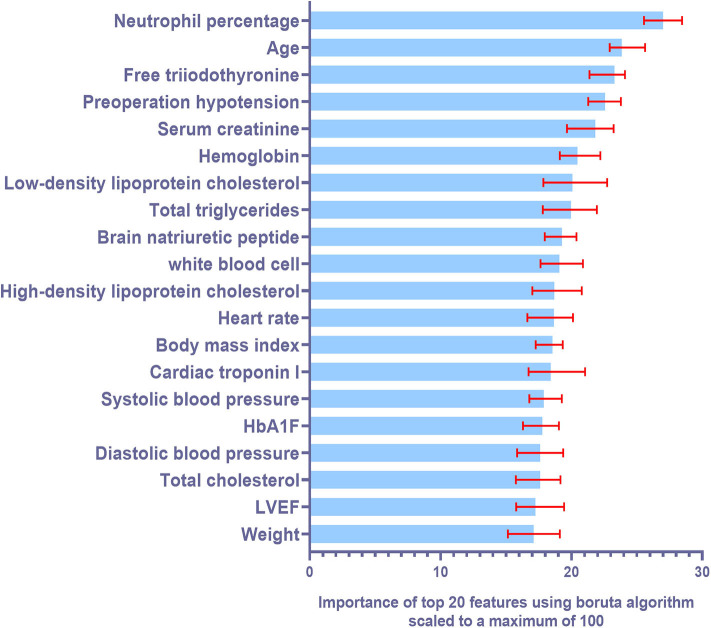
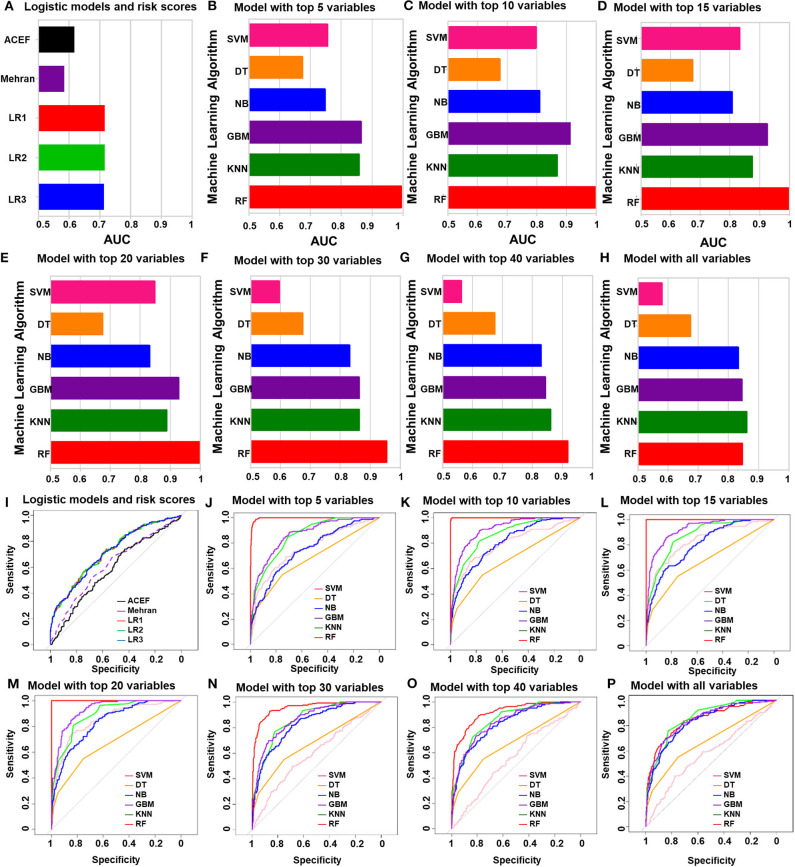
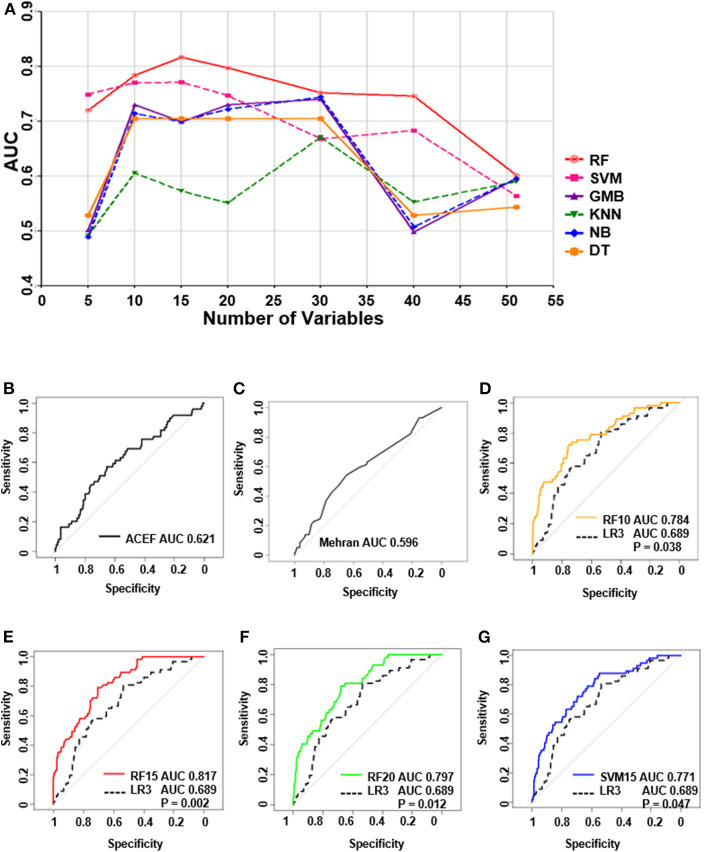
To develop predictive models for contrast induced acute kidney injury (CI-AKI) among acute myocardial infarction (AMI) patients treated invasively. Patients with AMI who underwent angiography therapy were enrolled and randomly divided into training cohort (75%) and validation cohort (25%). Machine learning algorithms were used to construct predictive models for CI-AKI. The predictive models were tested in a validation cohort. A total of 1,495 patients with AMI were included. Of all the patients, 226 (15.1%) cases developed CI-AKI. In the validation cohort, Random Forest (RF) model with top 15 variables reached an area under the curve (AUC) of 0.82 (95% CI: 0.76-0.87), while the best logistic model had an AUC of 0.69 (95% CI: 0.62-0.76). ACEF (age, creatinine, and ejection fraction) model reached an AUC of 0.62 (95% CI: 0.53-0.71). RF model with top 15 variables achieved a high recall rate of 71.9% and an accuracy of 73.5% in the validation group. Random Forest model significantly outperformed logistic regression in every comparison. Machine learning algorithms especially Random Forest algorithm improves the accuracy of risk stratifying patients with AMI and should be used to accurately identify the risk of CI-AKI in AMI patients.
为侵袭性治疗的急性心肌梗死(AMI)患者建立对比剂诱导的急性肾损伤(CI-AKI)预测模型。纳入接受血管造影治疗的AMI患者,并随机分为训练队列(75%)和验证队列(25%)。使用机器学习算法构建CI-AKI预测模型,并在验证队列中对预测模型进行测试。共纳入1495例AMI患者。所有患者中,226例(15.1%)发生CI-AKI。在验证队列中,包含前15个变量的随机森林(RF)模型的曲线下面积(AUC)为0.82(95%CI:0.76-0.87),而最佳逻辑模型的AUC为0.69(95%CI:0.62-0.76)。ACEF(年龄、肌酐和射血分数)模型的AUC为0.62(95%CI:0.53-0.71)。包含前15个变量的RF模型在验证组中的召回率高达71.9%,准确率为73.5%。在各项比较中,随机森林模型均显著优于逻辑回归。机器学习算法尤其是随机森林算法提高了AMI患者风险分层的准确性,应用于准确识别AMI患者发生CI-AKI的风险。