
使用核磁共振疗法治疗犬肘关节骨关节炎临床症状:一项随机双盲试验
Treatment of the Clinical Symptoms of Osteoarthritis in the Elbow Joints of Dogs Using Nuclear Magnetic Resonance Therapy: A Randomized, Double-Blinded Trial.
作者信息
Huels Nikolaus, Harms Oliver, Keim Dana, Rohn Karl, Fehr Michael
机构信息
Clinic for Small Animals, University of Veterinary Medicine Hannover Foundation, Hanover, Germany.
Institute for Biometry, Epidemiology and Information Processing, University of Veterinary Medicine, Hanover, Germany.
出版信息
Front Vet Sci. 2020 Nov 13;7:500278. doi: 10.3389/fvets.2020.500278. eCollection 2020.
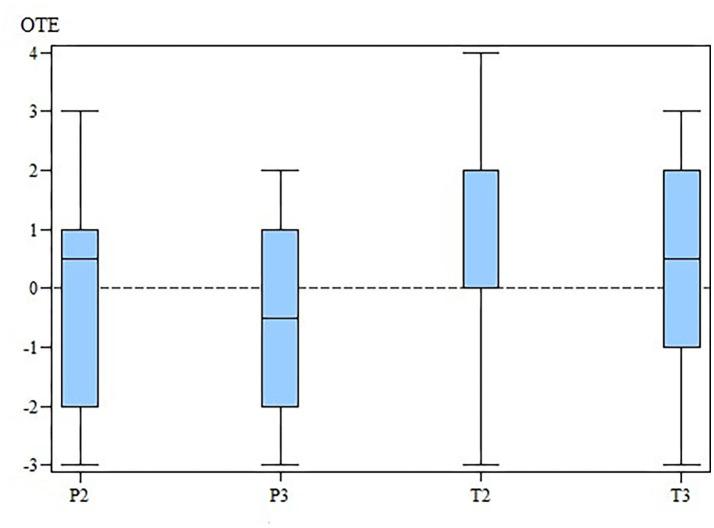
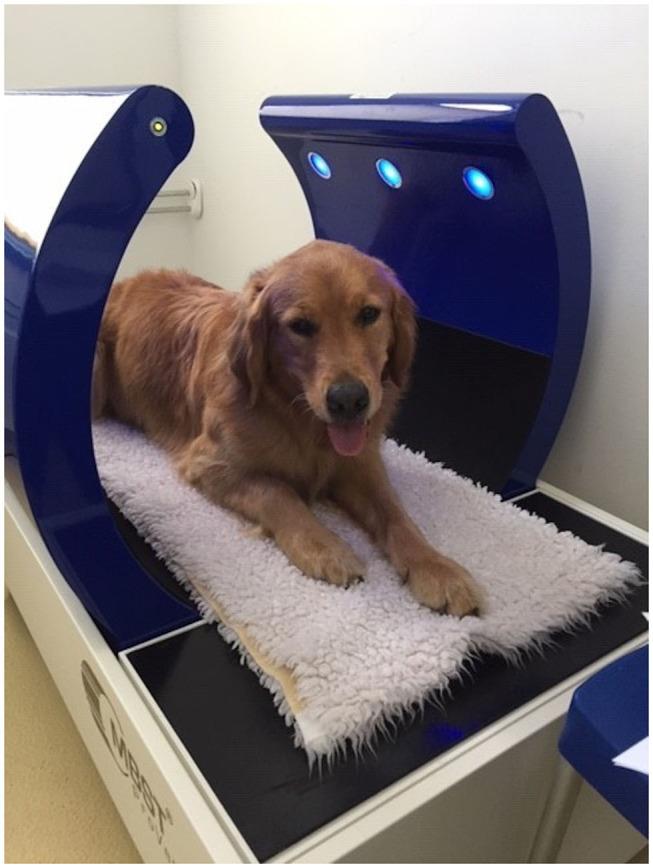
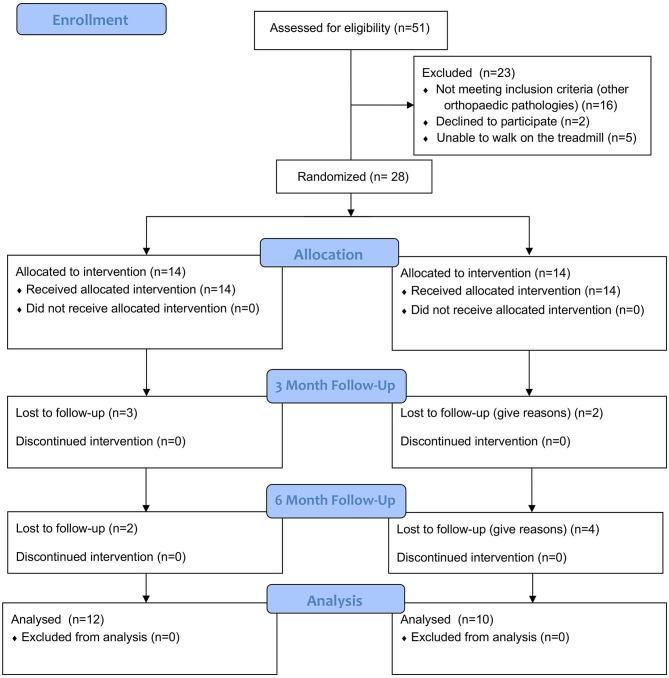
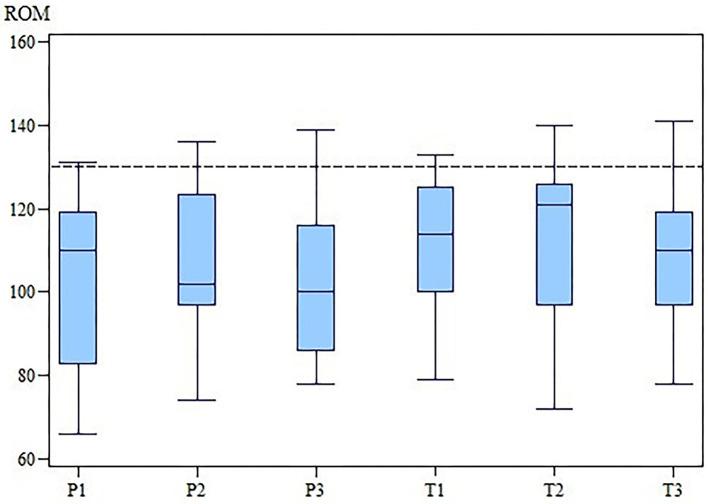
To evaluate the effects of nuclear magnetic resonance therapy (MBST®) on the clinical symptoms of osteoarthritis (OA) in the elbow joints of dogs. In this double-blind study, 28 dogs with lameness caused by OA in the elbow joint were randomly allocated to two groups: 14 dogs received nuclear magnetic resonance (NMR) therapy [treatment group (TG)], and 14 dogs received a placebo [placebo group (PG)] over a period of 7 consecutive days. Visual and objective gait analyses were performed before treatment (M1) and at 3 (M2) and 6 months (M3) after treatment. At M2 and M3 Symmetry indices (SI) of the peak vertical force (PVFz) and the vertical impulse (IFz), lameness scores, and pain scores were compared with their values at M1 to calculate the overall treatment effectiveness (OTE) score. We also documented additional pain medication and medical physiotherapy during the time of study. Finally, we measured the range of motion (ROM) in order to evaluate the functional development of the joint. The median OTE score of dogs in the TG indicates no change after 3 month and was improved after 6 months of treatment. There was an improvement of the median OTE score of dogs in the PG after 3 months of treatment. Further, the OTE scores of dogs in the PG were actually worse after 6 months. Nevertheless, there were no significance differences in SIPVFz, SIIFz, ROM, and lameness- and pain scores between the TG and PG at M1, M2, and M3. When considering all collected parameters (excluding the ROM) to calculate the OTE, no significant difference between groups was measurable for the OTE. There was a positive effect of NMR therapy (MBST®) on the treatment of OA in dogs. However, future studies should investigate the mechanisms underlying NMR therapy and the pathophysiology of OA to provide optimal treatments for patients. Our results demonstrated that the response to NMR treatment was individualized for each dog. As an integral way of treating dogs with chronic OA, NMR therapy may be an alternative therapeutic approach to support traditional medications.
评估核磁共振疗法(MBST®)对犬肘关节骨关节炎(OA)临床症状的影响。在这项双盲研究中,将28只因肘关节OA导致跛行的犬随机分为两组:14只犬接受核磁共振(NMR)疗法[治疗组(TG)],14只犬接受安慰剂[安慰剂组(PG)],为期连续7天。在治疗前(M1)以及治疗后3个月(M2)和6个月(M3)进行视觉和客观步态分析。在M2和M3时,将峰值垂直力(PVFz)和垂直冲量(IFz)的对称性指数(SI)、跛行评分和疼痛评分与其在M1时的值进行比较,以计算总体治疗效果(OTE)评分。我们还记录了研究期间额外的止痛药物和医学物理治疗情况。最后,测量关节活动范围(ROM)以评估关节的功能发育。TG组犬的OTE评分中位数在治疗3个月后无变化,治疗6个月后有所改善。PG组犬的OTE评分中位数在治疗3个月后有所改善。此外,PG组犬在6个月后的OTE评分实际上更差。然而,在M1、M2和M3时TG组和PG组之间的SIPVFz、SIIFz、ROM以及跛行和疼痛评分无显著差异。在考虑所有收集的参数(不包括ROM)来计算OTE时,两组之间的OTE无显著差异。NMR疗法(MBST®)对犬OA的治疗有积极作用。然而,未来的研究应探究NMR疗法的潜在机制以及OA的病理生理学,以便为患者提供最佳治疗方案。我们的结果表明,每只犬对NMR治疗的反应是个体化的。作为治疗慢性OA犬的一种综合方法,NMR疗法可能是支持传统药物治疗的一种替代治疗方法。
 Zotero 插件