Oblak Adrian L, Forner Stefania, Territo Paul R, Sasner Michael, Carter Gregory W, Howell Gareth R, Sukoff-Rizzo Stacey J, Logsdon Benjamin A, Mangravite Lara M, Mortazavi Ali, Baglietto-Vargas David, Green Kim N, MacGregor Grant R, Wood Marcelo A, Tenner Andrea J, LaFerla Frank M, Lamb Bruce T
Indiana University School of Medicine Indianapolis Indiana USA.
Stark Neurosciences Research Institute Indianapolis Indiana USA.
Alzheimers Dement (N Y). 2020 Nov 23;6(1):e12110. doi: 10.1002/trc2.12110. eCollection 2020.
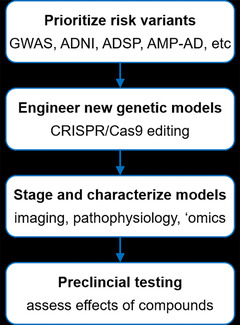
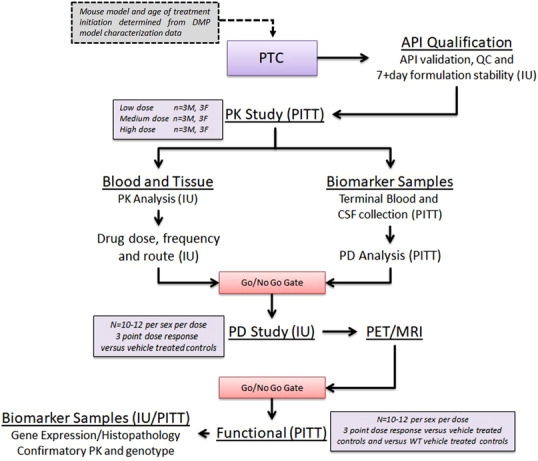
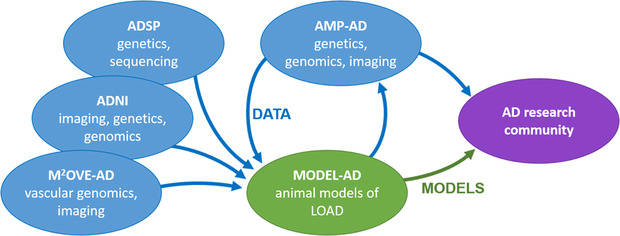
Alzheimer's disease (AD) is a major cause of dementia, disability, and death in the elderly. Despite recent advances in our understanding of the basic biological mechanisms underlying AD, we do not know how to prevent it, nor do we have an approved disease-modifying intervention. Both are essential to slow or stop the growth in dementia prevalence. While our current animal models of AD have provided novel insights into AD disease mechanisms, thus far, they have not been successfully used to predict the effectiveness of therapies that have moved into AD clinical trials. The Model Organism Development and Evaluation for Late-onset Alzheimer's Disease (MODEL-AD; www.model-ad.org) Consortium was established to maximize human datasets to identify putative variants, genes, and biomarkers for AD; to generate, characterize, and validate the next generation of mouse models of AD; and to develop a preclinical testing pipeline. MODEL-AD is a collaboration among Indiana University (IU); The Jackson Laboratory (JAX); University of Pittsburgh School of Medicine (Pitt); Sage BioNetworks (Sage); and the University of California, Irvine (UCI) that will generate new AD modeling processes and pipelines, data resources, research results, standardized protocols, and models that will be shared through JAX's and Sage's proven dissemination pipelines with the National Institute on Aging-supported AD Centers, academic and medical research centers, research institutions, and the pharmaceutical industry worldwide.
阿尔茨海默病(AD)是老年人痴呆、残疾和死亡的主要原因。尽管我们对AD潜在的基本生物学机制的理解最近有所进展,但我们既不知道如何预防它,也没有获批的疾病修饰干预措施。这两者对于减缓或阻止痴呆患病率的增长都至关重要。虽然我们目前的AD动物模型为AD疾病机制提供了新的见解,但到目前为止,它们尚未成功用于预测已进入AD临床试验的疗法的有效性。迟发性阿尔茨海默病模式生物开发与评估(MODEL-AD;www.model-ad.org)联盟的成立是为了最大限度地利用人类数据集来识别AD的推定变体、基因和生物标志物;生成、表征和验证下一代AD小鼠模型;并开发一个临床前测试流程。MODEL-AD是印第安纳大学(IU)、杰克逊实验室(JAX)、匹兹堡大学医学院(匹兹堡)、Sage生物网络公司(Sage)和加利福尼亚大学欧文分校(UCI)之间的合作,将产生新的AD建模流程和管道、数据资源、研究结果、标准化方案和模型,并将通过JAX和Sage成熟的传播管道与美国国立衰老研究所支持的AD中心、学术和医学研究中心、研究机构以及全球制药行业共享。