Department of Orthodontics, Institute of Oral Health Science, Ajou University School of Medicine, Suwon, South Korea.
Department of Epidemiology, School of Public Health, Seoul National University, Seoul, South Korea.
Prog Orthod. 2020 Dec 7;21(1):44. doi: 10.1186/s40510-020-00344-2.
The purpose of this study is to investigate the heritability of total rotation, matrix rotation, and intramatrix rotation of the mandible in Korean monozygotic (MZ) twins, dizygotic (DZ) twins, and their siblings.
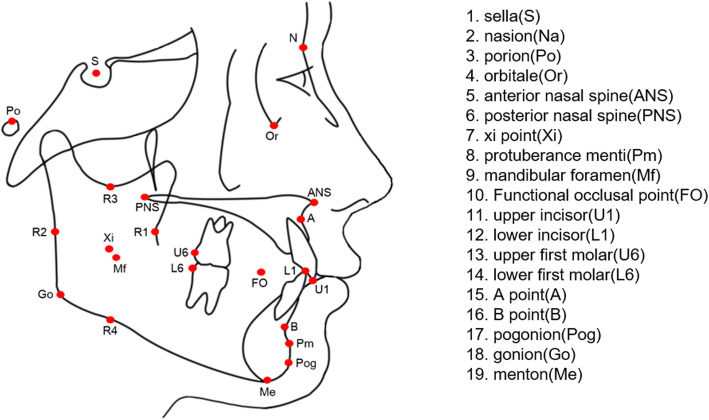
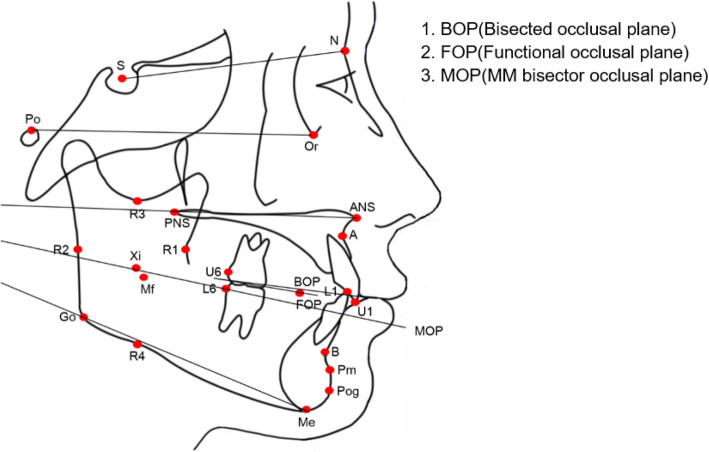
The samples consisted of 75 pairs of Korean twins (39.7 + 9.26 years; MZ group, 36 pairs; DZ group, 13 pairs; sibling group, 26 pairs). Lateral cephalograms were taken, and 13 variables related to internal and external mandible rotation were measured. Three types of occlusal planes (bisected occlusal plane, functional occlusal plane, and the MM bisector occlusal plane) were used to evaluate genetic influence on the occlusal plane. Heritability (h) was calculated by using the intraclass correlation coefficient (ICC) and Falconer's method.
With regard to mandibular rotation, the MZ twin group showed significantly higher ICC values compared to the DZ twin and sibling groups. The ICC mean values for 13 cephalometric measurements were 0.85 (MZ), 0.62 (DZ), and 0.52 (siblings) respectively. The heritability of the total rotation (0.48) and matrix rotation (0.5) between the MZ and DZ groups was higher than that of the intramatrix rotation (- 0.14). All of the three types of occlusal plane showed high heritability, and among the three types, the functional occlusal plane showed the highest heritability (h = 0.76).
Based on these findings that showed a strong genetic effect on total rotation and matrix rotation, maintaining these rotations should be carefully considered in the orthodontic treatment plan, while the lower border of the mandible may be responsive to various treatments. Occlusal plane change, especially with regard to the functional occlusal plane, may not be stable due to strong genetic influences.
本研究旨在探讨韩国同卵(MZ)双胞胎、异卵(DZ)双胞胎及其兄弟姐妹的下颌骨总旋转、基质旋转和基质内旋转的遗传性。
样本包括 75 对韩国双胞胎(39.7+9.26 岁;MZ 组 36 对,DZ 组 13 对,兄弟姐妹组 26 对)。拍摄侧位头颅侧位片,测量与下颌骨内外旋转相关的 13 个变量。使用三种咬合平面(二分咬合平面、功能咬合平面和 MM 等分咬合平面)来评估遗传对咬合平面的影响。使用组内相关系数(ICC)和 Falconer 法计算遗传率(h)。
在下颌骨旋转方面,MZ 双胞胎组的 ICC 值明显高于 DZ 双胞胎组和兄弟姐妹组。13 项头影测量的 ICC 平均值分别为 0.85(MZ)、0.62(DZ)和 0.52(兄弟姐妹)。MZ 和 DZ 组之间总旋转(0.48)和基质旋转(0.5)的遗传率高于基质内旋转(-0.14)。所有三种咬合平面均表现出较高的遗传性,其中功能咬合平面的遗传性最高(h=0.76)。
基于这些发现,即总旋转和基质旋转具有很强的遗传效应,在正畸治疗计划中应仔细考虑保持这些旋转,而下颌骨的下缘可能对各种治疗有反应。咬合平面的变化,尤其是功能咬合平面,由于强烈的遗传影响,可能不稳定。