Sandlersky Robert, Krenke Alexander
A.N. Severtsov Institute of Ecology and Evolution, Russian Academy of Sciences, Moscow 119071, Russia.
Institute of Geography, Russian Academy of Sciences, Leninskiy Prospekt, 14, Moscow 119017, Russia.
Entropy (Basel). 2020 Oct 6;22(10):1132. doi: 10.3390/e22101132.
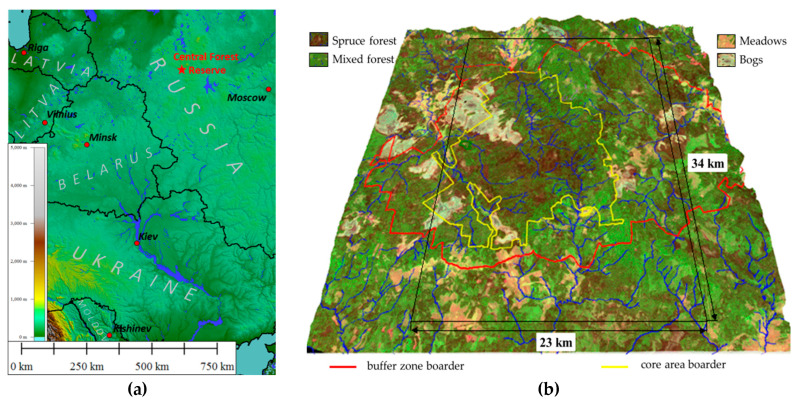
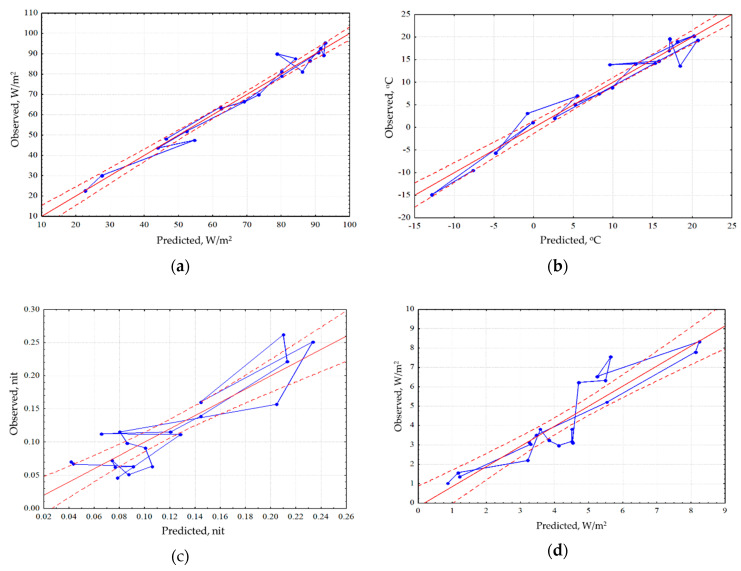
The hypothesis of an increase in free energy (exergy) by ecosystems during evolution is tested on direct measurements. As a measuring system of thermodynamic parameters (exergy, information, entropy), a series of measurements of reflected solar radiation in bands of Landsat multispectral imagery for 20 years is used. The thermodynamic parameters are compared for different types of ecosystems depending on the influx of solar radiation, weather conditions and the composition of communities. It is shown that maximization of free energy occurs only in a succession series (time scale of several hundred years), and on a short evolutionary time scale of several thousand years, various strategies of energy use are successfully implemented at the same time: forests always maximize exergy and, accordingly, transpiration, meadows-disequilibrium and biological productivity in summer, and swamps, due to a prompt response to changes in temperature and moisture, maintaining disequilibrium and productivity throughout the year. On the basis of the obtained regularities, we conclude that on an evolutionary time scale, the thermodynamic system changes in the direction of increasing biological productivity and saving moisture, which contradicts the hypothesis of maximizing free energy in the course of evolution.
关于生态系统在进化过程中自由能(有效能)增加的假说通过直接测量进行了检验。作为热力学参数(有效能、信息、熵)的测量系统,使用了20年来陆地卫星多光谱图像波段中反射太阳辐射的一系列测量数据。根据太阳辐射的流入量、天气条件和群落组成,对不同类型的生态系统的热力学参数进行了比较。结果表明,自由能最大化仅出现在演替序列中(时间尺度为几百年),而在几千年的短进化时间尺度上,各种能量利用策略同时成功实施:森林总是使有效能最大化,并相应地使蒸腾作用最大化,草地在夏季处于非平衡状态且生物生产力较高,而沼泽由于对温度和湿度变化的迅速响应,全年保持非平衡状态和生产力。根据所获得的规律,我们得出结论,在进化时间尺度上,热力学系统朝着生物生产力增加和水分节约的方向变化,这与进化过程中自由能最大化的假说相矛盾。