Dobre Cătălina, Grosu Lavinia, Costea Monica, Constantin Mihaela
Department of Engineering Thermodynamics, Engines, Thermal and Refrigeration Equipments, University Politehnica of Bucharest, Splaiul Independenței 313, 060042 Bucharest, Romania.
Laboratory of Energy, Mechanics and Electromagnetic, Paris West Nanterre La Défense University, 50, Rue de Sèvres, 92410 Ville d'Avray, France.
Entropy (Basel). 2020 Nov 11;22(11):1278. doi: 10.3390/e22111278.
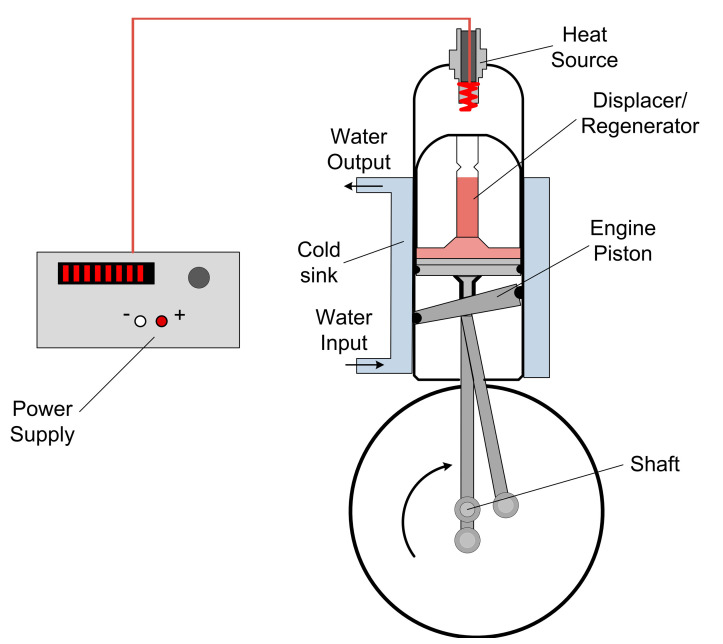
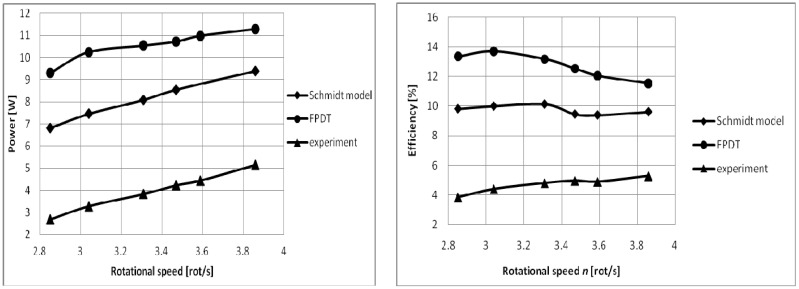
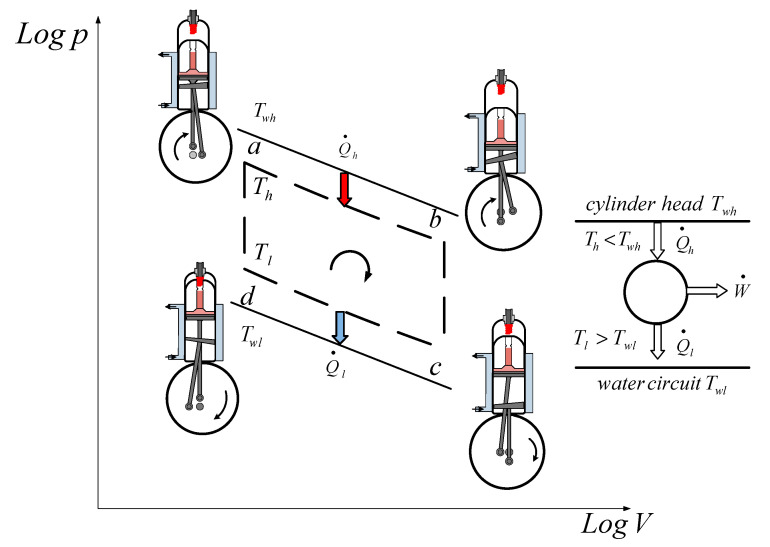
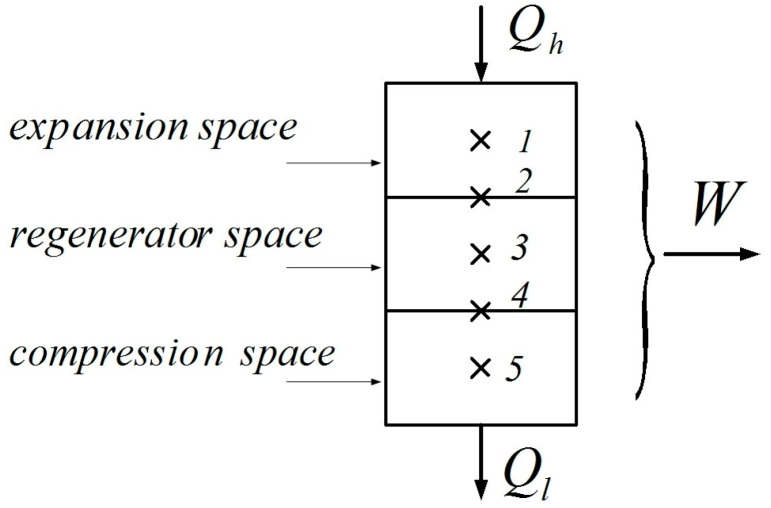
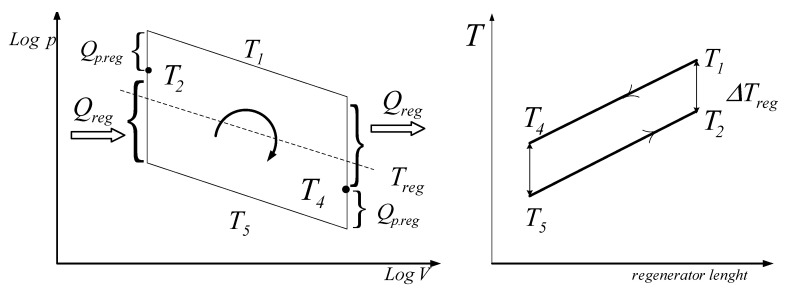
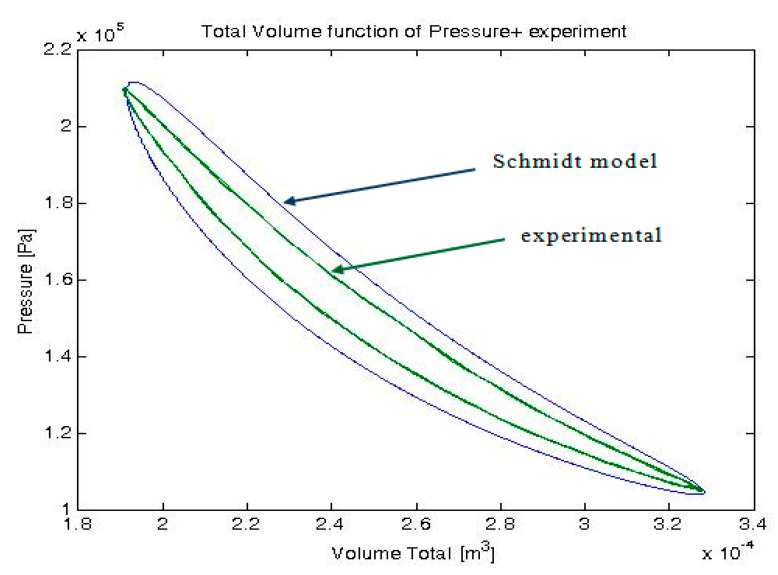
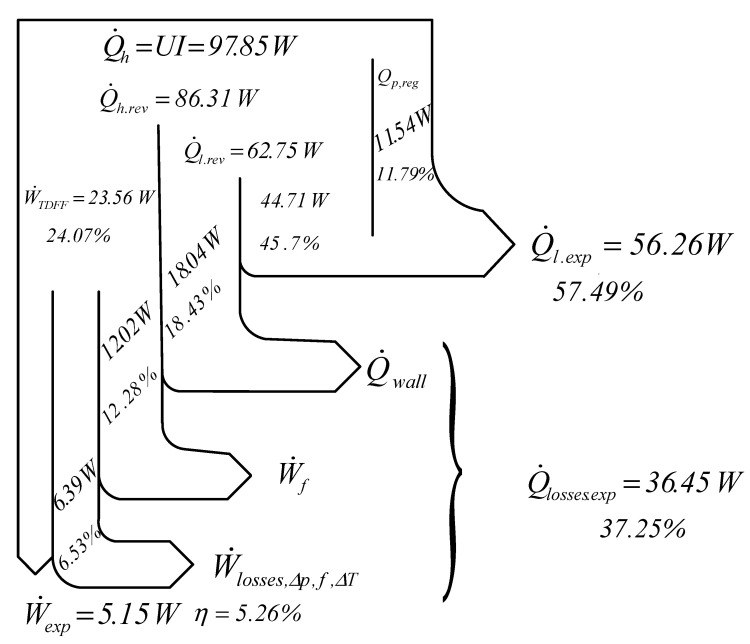
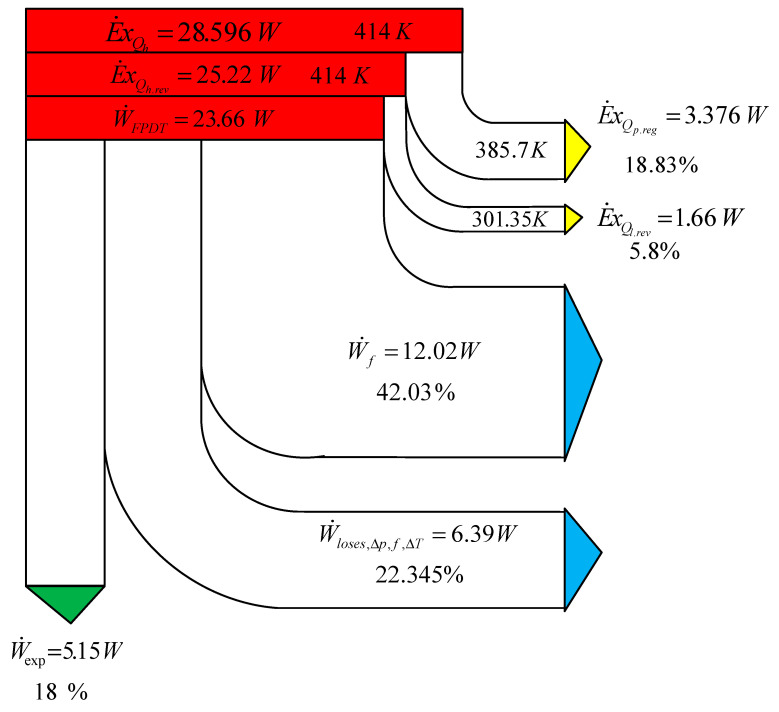
The paper presents experimental tests and theoretical studies of a Stirling engine cycle applied to a -type machine. The finite physical dimension thermodynamics (FPDT) method and 0D modeling by the imperfectly regenerated Schmidt model are used to develop analytical models for the Stirling engine cycle. The purpose of this study is to show that two simple models that take into account only the irreversibility due to temperature difference in the heat exchangers and imperfect regeneration are able to indicate engine behavior. The share of energy loss for each is determined using these two models as well as the experimental results of a particular engine. The energies exchanged by the working gas are expressed according to the practical parameters, which are necessary for the engineer during the entire project, namely the maximum pressure, the maximum volume, the compression ratio, the temperature of the heat sources, etc. The numerical model allows for evaluation of the energy processes according to the angle of the crankshaft (kinematic-thermodynamic coupling). The theoretical results are compared with the experimental research. The effect of the engine rotation speed on the power and efficiency of the actual operating machine is highlighted. The two methods show a similar variation in performance, although heat loss due to imperfect regeneration is evaluated differently.
本文介绍了应用于α型机器的斯特林发动机循环的实验测试和理论研究。采用有限物理尺寸热力学(FPDT)方法和不完全再生施密特模型的零维建模来开发斯特林发动机循环的分析模型。本研究的目的是表明,两个仅考虑热交换器中温差引起的不可逆性和不完全再生的简单模型能够指示发动机性能。使用这两个模型以及特定发动机的实验结果确定每种能量损失的占比。工作气体交换的能量根据实际参数表示,这些参数是工程师在整个项目中所必需的,即最大压力、最大体积、压缩比、热源温度等。数值模型允许根据曲轴角度(运动 - 热力学耦合)评估能量过程。将理论结果与实验研究进行比较。突出了发动机转速对实际运行机器的功率和效率的影响。尽管对不完全再生引起的热损失评估不同,但这两种方法显示出相似的性能变化。