Institute of Molecular Pathobiochemistry, Experimental Gene Therapy and Clinical Chemistry (IFMPEGKC), RWTH University Hospital Aachen, D-52074 Aachen, Germany.
Int J Mol Sci. 2020 Dec 3;21(23):9247. doi: 10.3390/ijms21239247.
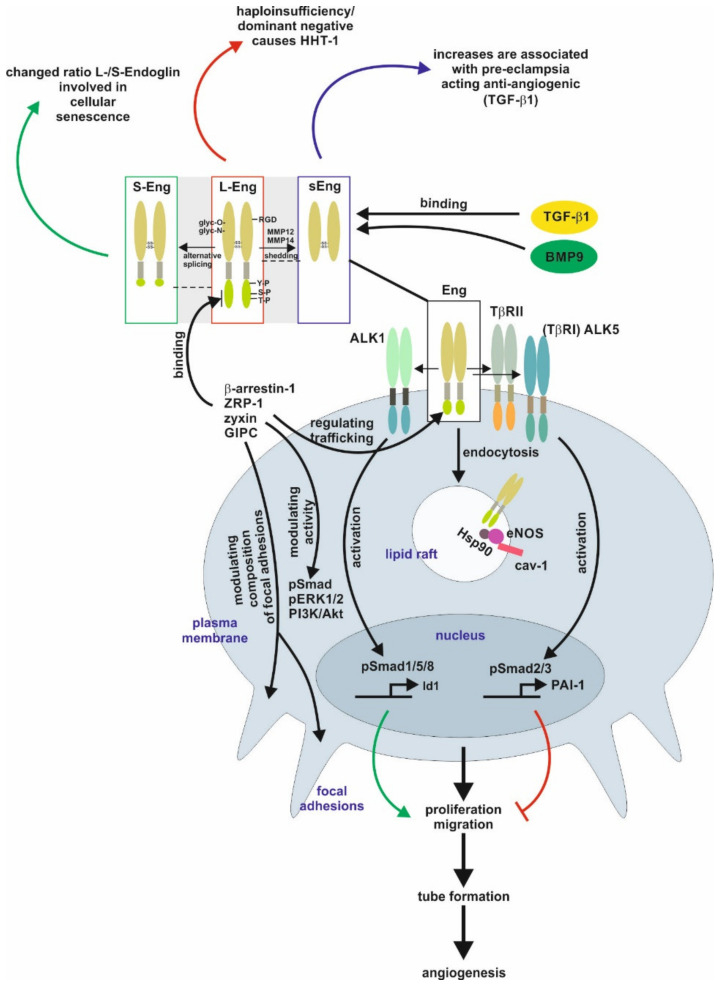
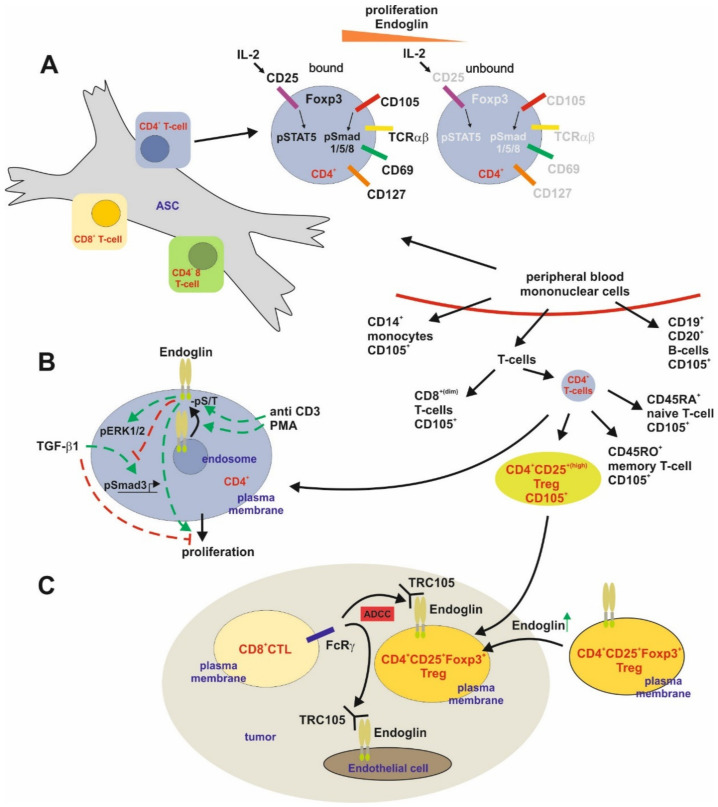
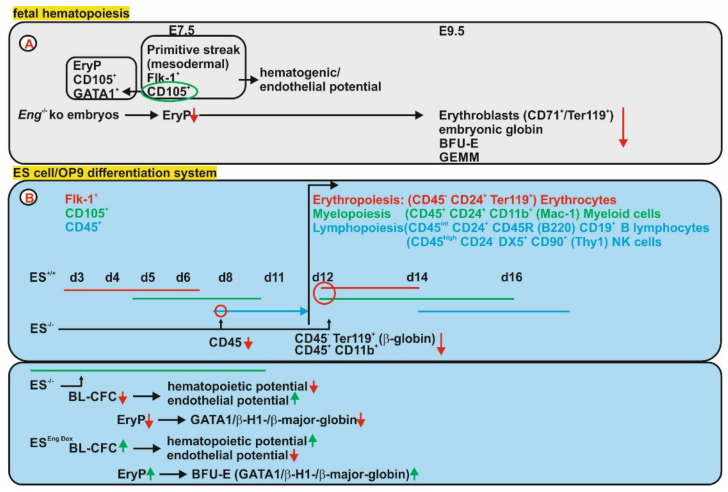
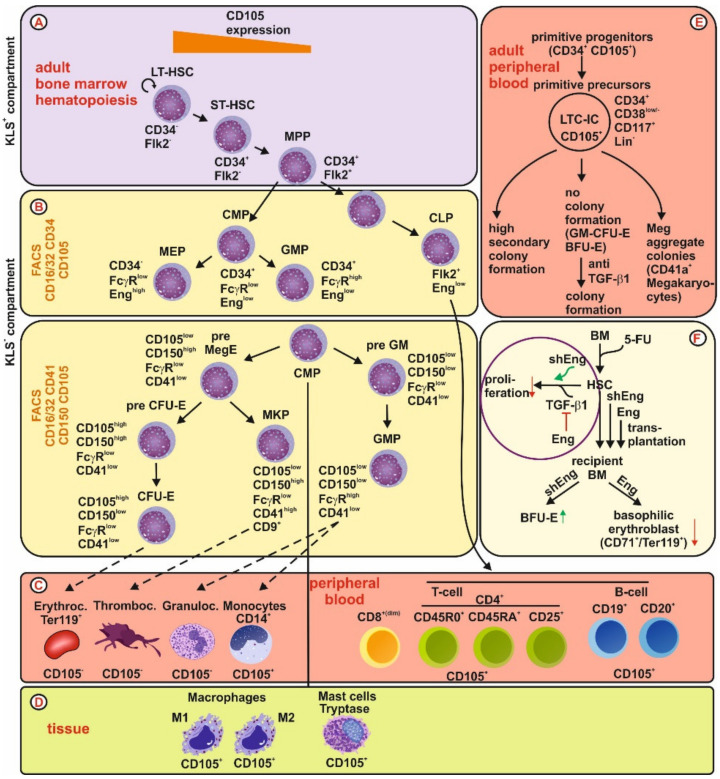
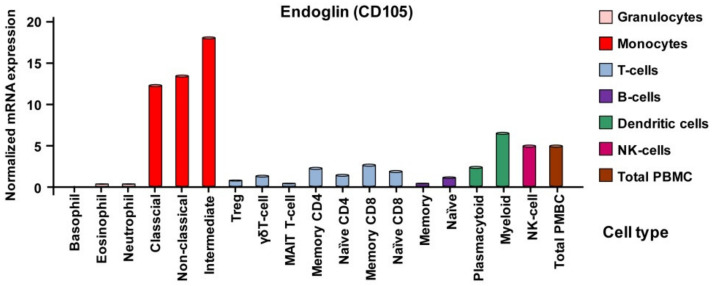
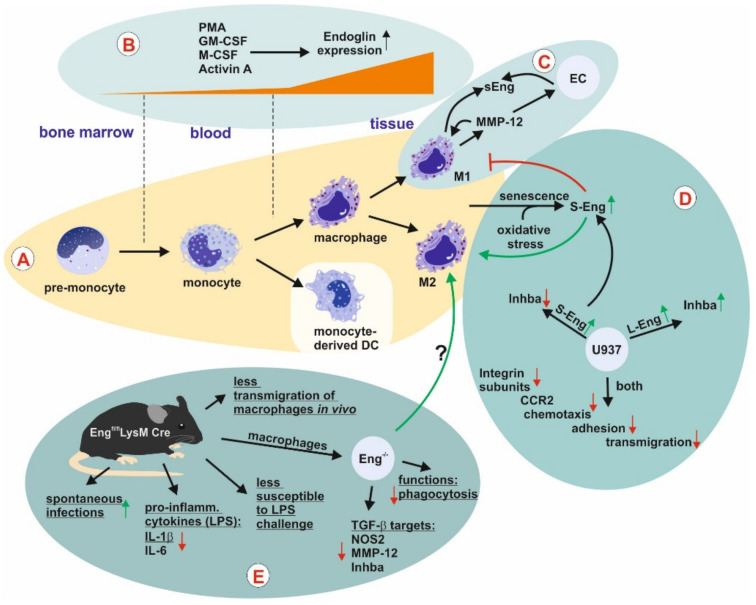
Transforming growth factor-β1 (TGF-β1) is a pleiotropic factor sensed by most cells. It regulates a broad spectrum of cellular responses including hematopoiesis. In order to process TGF-β1-responses in time and space in an appropriate manner, there is a tight regulation of its signaling at diverse steps. The downstream signaling is mediated by type I and type II receptors and modulated by the 'accessory' receptor Endoglin also termed cluster of differentiation 105 (CD105). Endoglin was initially identified on pre-B leukemia cells but has received most attention due to its high expression on activated endothelial cells. In turn, Endoglin has been figured out as the causative factor for diseases associated with vascular dysfunction like hereditary hemorrhagic telangiectasia-1 (HHT-1), pre-eclampsia, and intrauterine growth restriction (IUPR). Because HHT patients often show signs of inflammation at vascular lesions, and loss of Endoglin in the myeloid lineage leads to spontaneous inflammation, it is speculated that Endoglin impacts inflammatory processes. In line, Endoglin is expressed on progenitor/precursor cells during hematopoiesis as well as on mature, differentiated cells of the innate and adaptive immune system. However, so far only pro-monocytes and macrophages have been in the focus of research, although Endoglin has been identified in many other immune system cell subsets. These findings imply a functional role of Endoglin in the maturation and function of immune cells. Aside the functional relevance of Endoglin in endothelial cells, CD105 is differentially expressed during hematopoiesis, arguing for a role of this receptor in the development of individual cell lineages. In addition, Endoglin expression is present on mature immune cells of the innate (i.e., macrophages and mast cells) and the adaptive (i.e., T-cells) immune system, further suggesting Endoglin as a factor that shapes immune responses. In this review, we summarize current knowledge on Endoglin expression and function in hematopoietic precursors and mature hematopoietic cells of different lineages.
转化生长因子-β1(TGF-β1)是一种多效因子,被大多数细胞感知。它调节广泛的细胞反应,包括造血。为了以适当的方式及时和空间地处理 TGF-β1 反应,其信号转导在多个步骤中受到严格调节。下游信号转导由 I 型和 II 型受体介导,并由“辅助”受体内皮糖蛋白(也称为分化群 105(CD105))调节。内皮糖蛋白最初在 pre-B 白血病细胞上被鉴定出来,但由于其在激活的内皮细胞上的高表达而受到了最多的关注。反过来,内皮糖蛋白已被确定为与血管功能障碍相关的疾病的致病因素,如遗传性出血性毛细血管扩张症 1(HHT-1)、先兆子痫和宫内生长受限(IUPR)。由于 HHT 患者的血管病变常伴有炎症迹象,而髓系谱系中内皮糖蛋白的缺失会导致自发性炎症,因此推测内皮糖蛋白会影响炎症过程。同样,内皮糖蛋白在造血过程中表达于祖细胞/前体细胞以及先天和适应性免疫系统的成熟、分化细胞上。然而,到目前为止,尽管内皮糖蛋白已在许多其他免疫系统细胞亚群中被鉴定出来,但研究仅集中在原单核细胞和巨噬细胞上。这些发现表明内皮糖蛋白在免疫细胞的成熟和功能中具有功能作用。除了内皮细胞中内皮糖蛋白的功能相关性外,CD105 在造血过程中也有差异表达,这表明该受体在个别细胞谱系的发育中起作用。此外,成熟的先天(即巨噬细胞和肥大细胞)和适应性(即 T 细胞)免疫系统的免疫细胞上也存在内皮糖蛋白的表达,这进一步表明内皮糖蛋白是塑造免疫反应的一个因素。在这篇综述中,我们总结了内皮糖蛋白在不同谱系造血前体细胞和成熟造血细胞中的表达和功能的最新知识。