Department of Global Public Health and Primary Care, University of Bergen, Post box 7804, N-5020, Bergen, Norway.
Department of Global Health and Population, Harvard T.H. Chan School of Public Health, Boston, MA, USA.
BMC Public Health. 2020 Dec 7;20(1):1869. doi: 10.1186/s12889-020-09764-5.
Expansion of designated cycling networks increases cycling for transport that, in turn, increases physical activity, contributing to improvement in public health. This paper aims to determine whether cycle-network construction in a large city is cost-effective when compared to the status-quo. We developed a cycle-network investment model (CIM) for Oslo and explored its impact on overall health and wellbeing resulting from the increased physical activity.
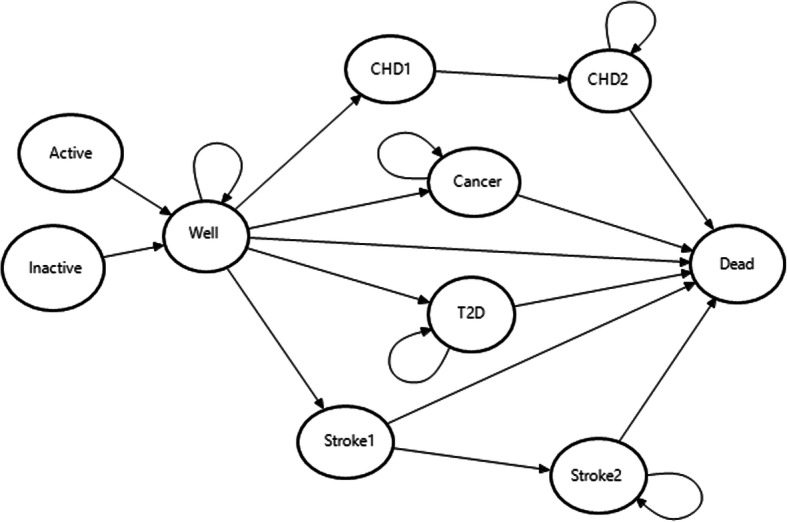
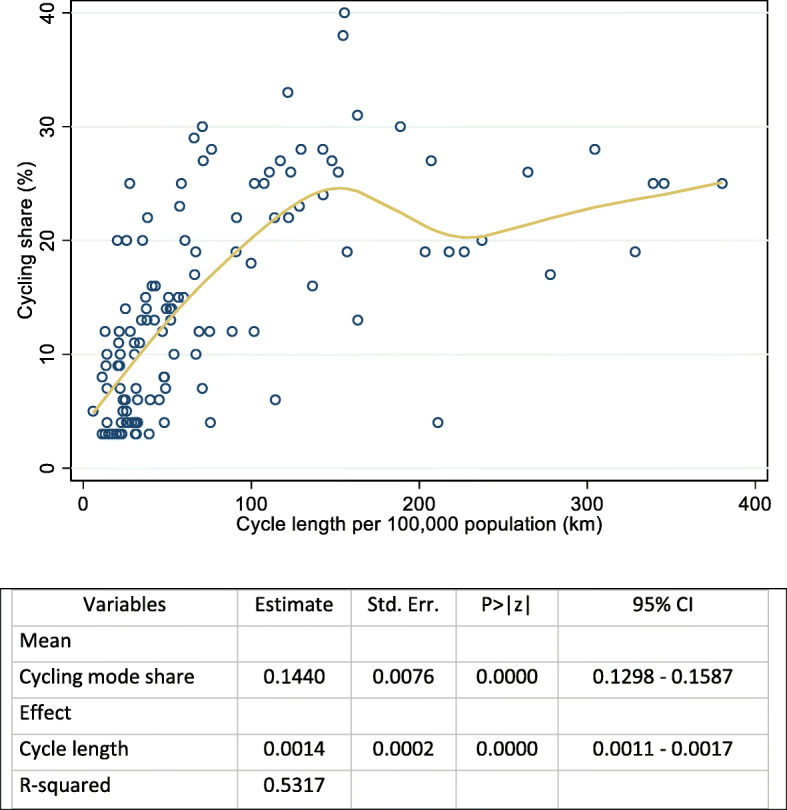
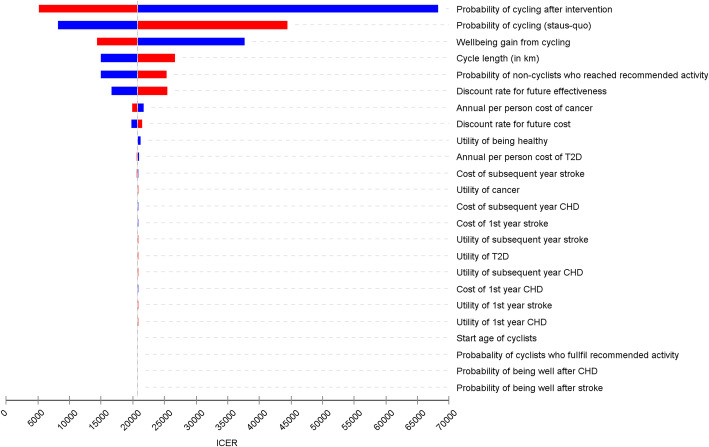
First, we applied a regression technique on cycling data from 123 major European cities to model the effect of additional cycle-networks on the share of cyclists. Second, we used a Markov model to capture health benefits from increased cycling for people starting to ride cycle at the age of 30 over the next 25 years. All health gains were measured in quality-adjusted life years (QALYs). Costs were estimated in US dollars. Other data to populate the model were derived from a comprehensive literature search of epidemiological and economic evaluation studies. Uncertainty was assessed using deterministic and probabilistic sensitivity analyses.
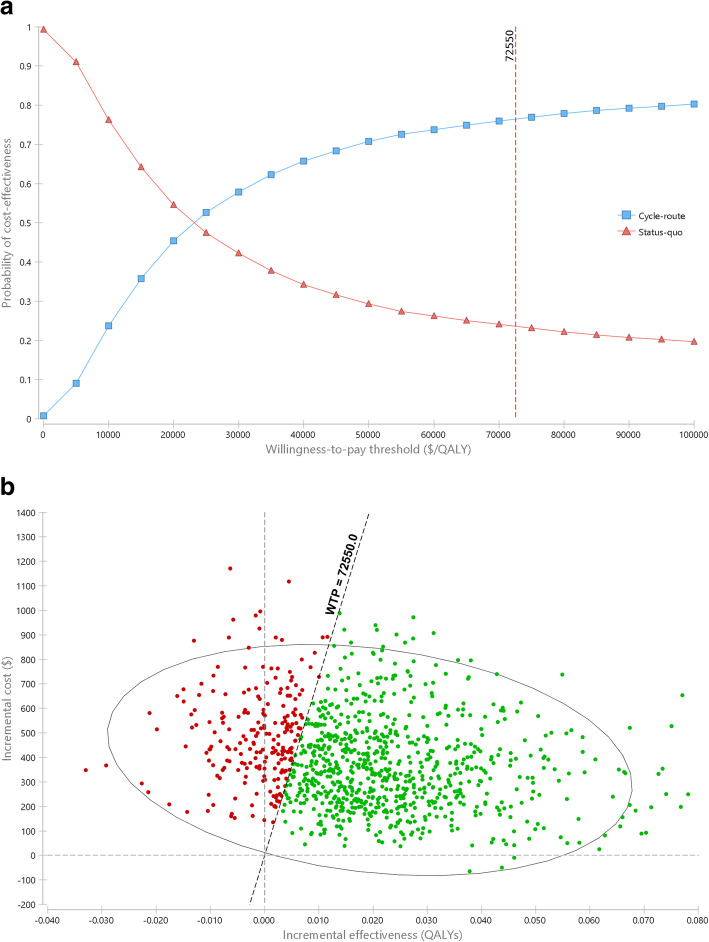
Our regression analysis reveals that a 100 km new cycle network construction in Oslo city would increase cycling share by 3%. Under the base-case assumptions, where the benefits of the cycle-network investment relating to increased physical activity are sustained over 25 years, the predicted average increases in costs and QALYs per person are $416 and 0.019, respectively. Thus, the incremental costs are $22,350 per QALY gained. This is considered highly cost-effective in a Norwegian setting.
The results support the use of CIM as part of a public health program to improve physical activity and consequently avert morbidity and mortality. CIM is affordable and has a long-term effect on physical activity that in turn has a positive impact on health improvement.
指定自行车网络的扩展增加了用于交通的自行车出行,进而增加了身体活动,有助于改善公众健康。本文旨在确定与现状相比,在大城市建设自行车网络是否具有成本效益。我们为奥斯陆开发了一个自行车网络投资模型(CIM),并探讨了其对由于身体活动增加而导致的整体健康和福利的影响。
首先,我们应用回归技术对来自 123 个主要欧洲城市的自行车数据进行了分析,以模拟额外自行车网络对自行车出行比例的影响。其次,我们使用马尔可夫模型来捕捉因 30 岁开始骑自行车的人在未来 25 年内增加骑自行车而带来的健康益处。所有健康收益均以质量调整生命年(QALY)衡量。成本以美元计。用于填充模型的其他数据源自对流行病学和经济评估研究的全面文献检索。使用确定性和概率敏感性分析评估不确定性。
我们的回归分析表明,在奥斯陆市新建 100 公里自行车网络将使自行车出行比例增加 3%。在基本情况下,假设自行车网络投资增加身体活动的效益持续 25 年,预计每人的成本和 QALY 平均增加分别为 416 美元和 0.019。因此,每获得一个 QALY 的增量成本为 22,350 美元。在挪威的背景下,这被认为是极具成本效益的。
结果支持使用 CIM 作为改善身体活动从而避免发病率和死亡率的公共卫生计划的一部分。CIM 具有成本效益,对身体活动具有长期影响,进而对健康改善产生积极影响。