Department of Medical Biotechnology, Faculty of Biochemistry, Biophysics and Biotechnology, Jagiellonian University, Gronostajowa 7, 30-387, Kraków, Poland.
Malopolska Centre of Biotechnology, Jagiellonian University, Kraków, Poland.
Skelet Muscle. 2020 Dec 8;10(1):35. doi: 10.1186/s13395-020-00255-0.
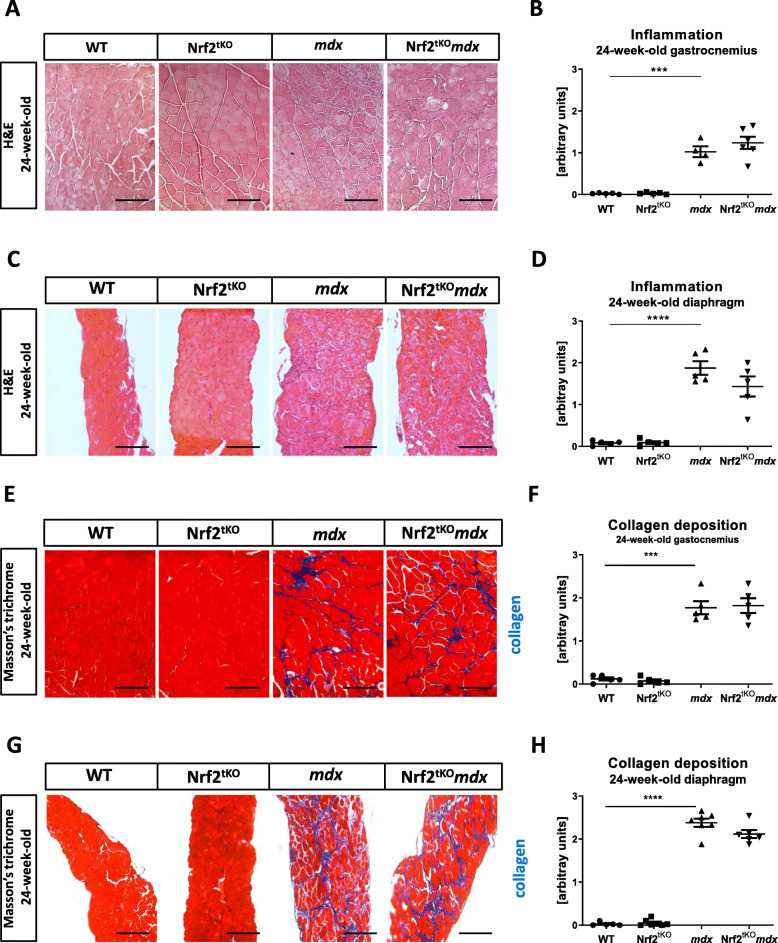
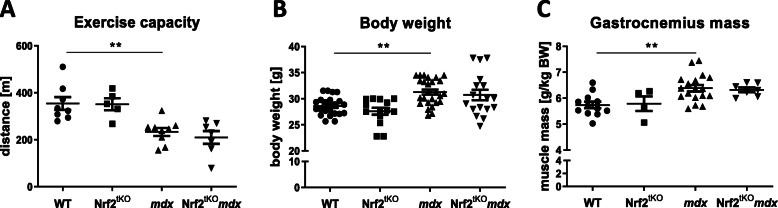
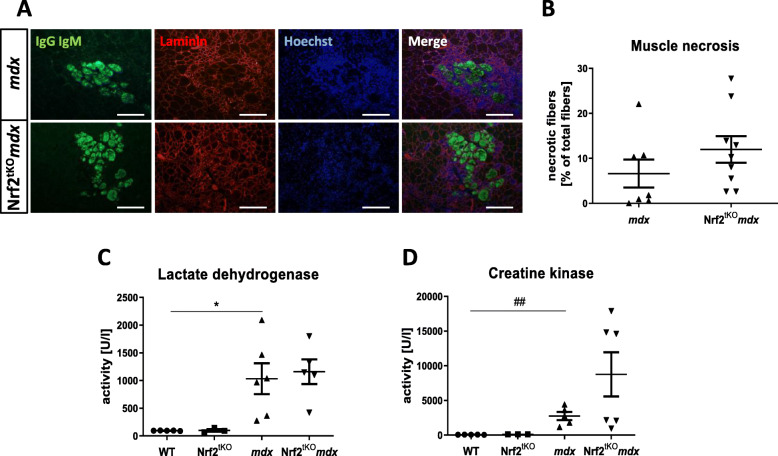
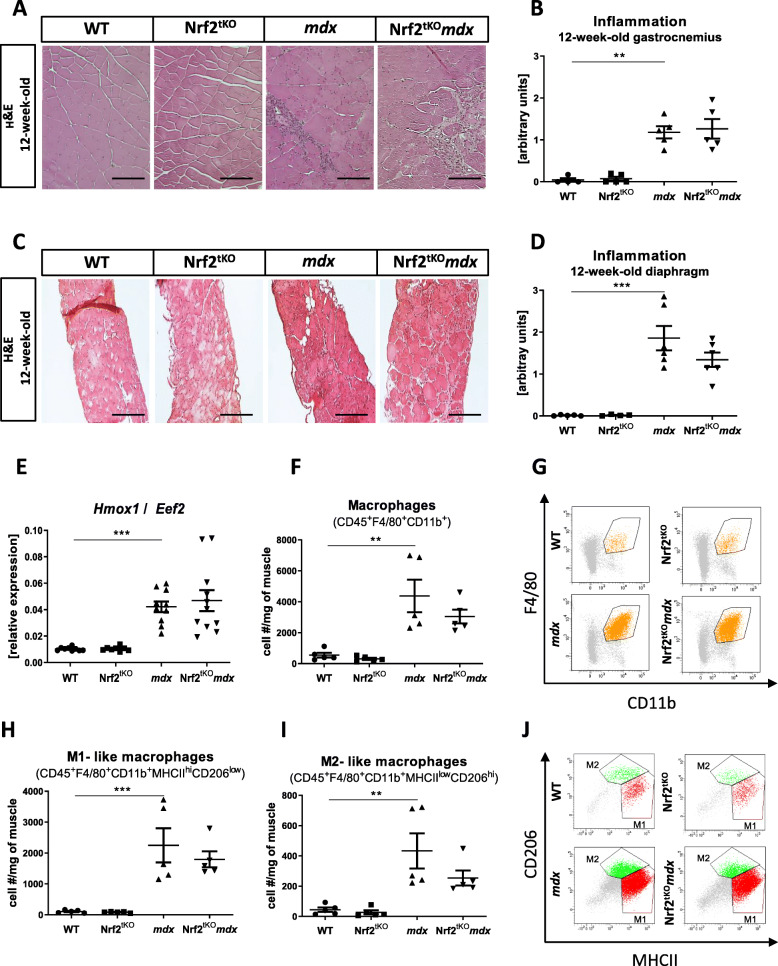
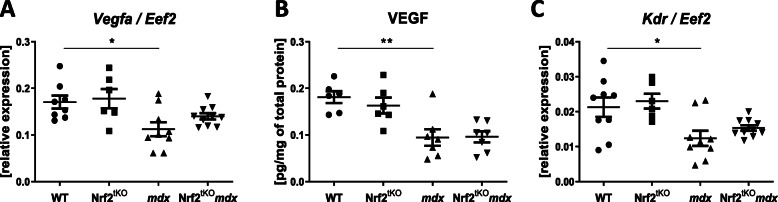
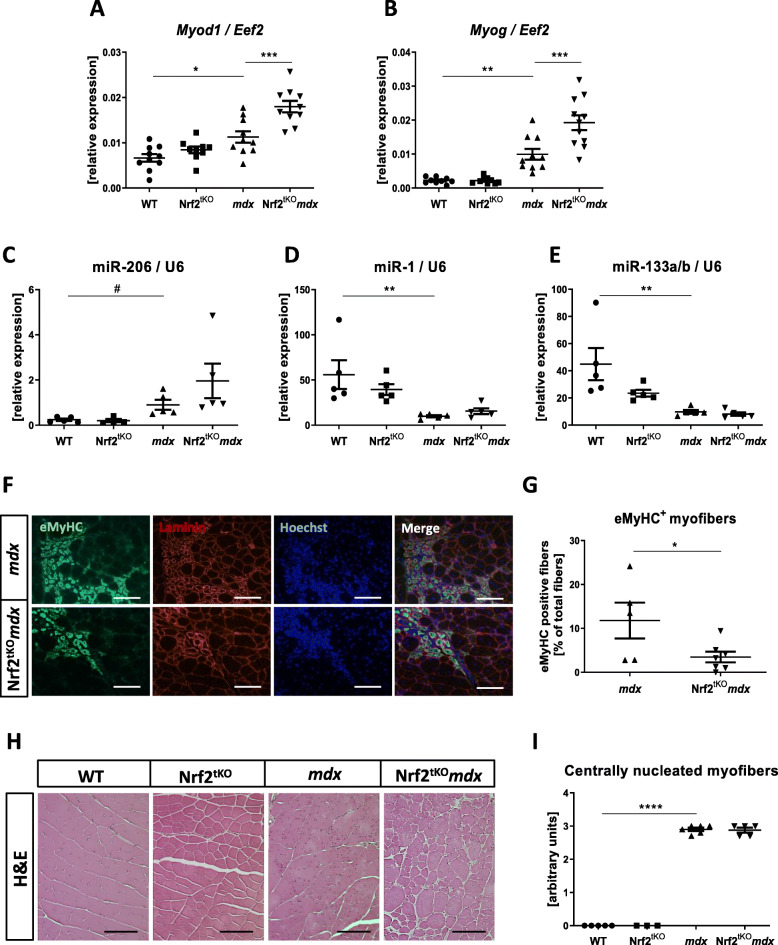
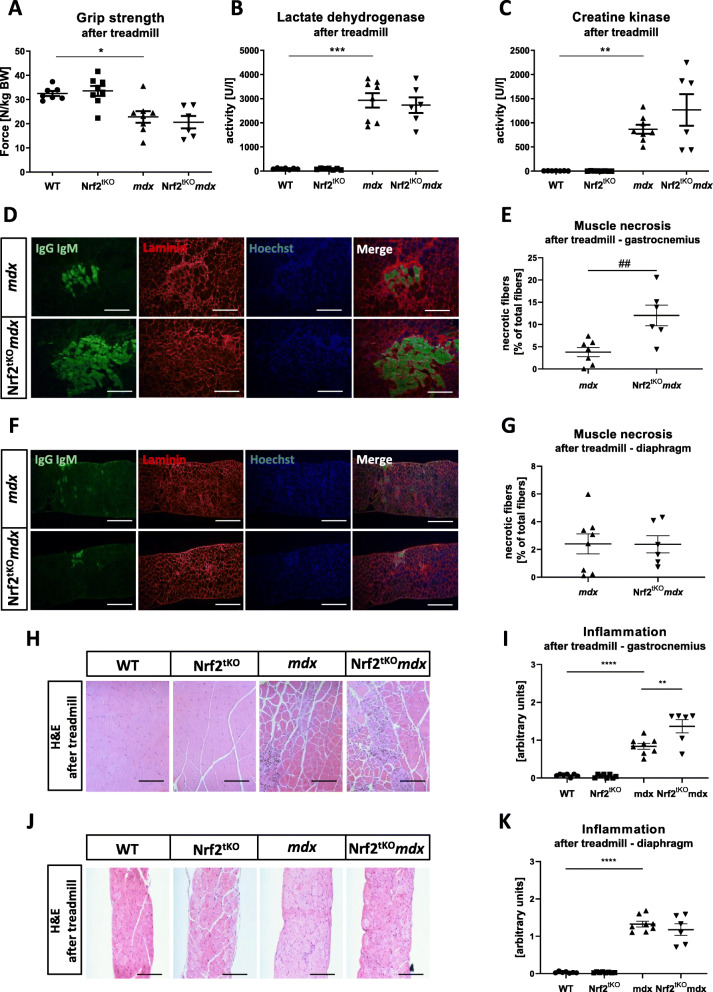
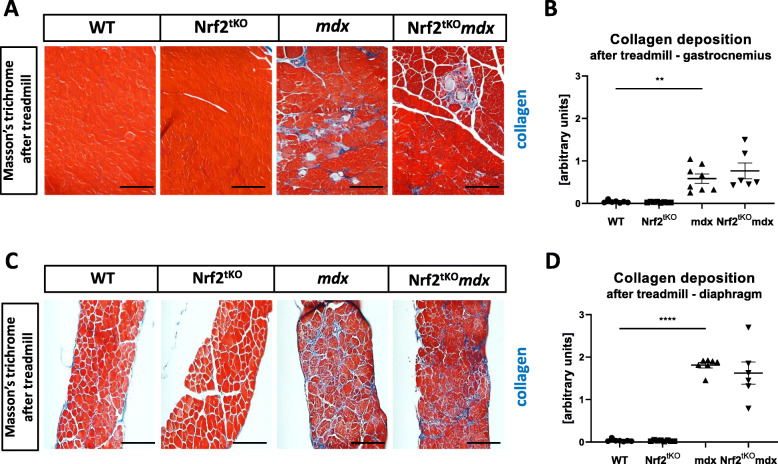
The nuclear factor erythroid 2-related factor 2 (Nrf2) is considered as a master cytoprotective factor regulating the expression of genes encoding anti-oxidant, anti-inflammatory, and detoxifying proteins. The role of Nrf2 in the pathophysiology of skeletal muscles has been evaluated in different experimental models, however, due to inconsistent data, we aimed to investigate how Nrf2 transcriptional deficiency (Nrf2) affects muscle functions both in an acute and chronic injury. The acute muscle damage was induced in mice of two genotypes-WT and Nrf2 mice by cardiotoxin (CTX) injection. To investigate the role of Nrf2 in chronic muscle pathology, mdx mice that share genetic, biochemical, and histopathological features with Duchenne muscular dystrophy (DMD) were crossed with mice lacking transcriptionally active Nrf2 and double knockouts (mdx/Nrf2) were generated. To worsen the dystrophic phenotype, the analysis of disease pathology was also performed in aggravated conditions, by applying a long-term treadmill test. We have observed slightly increased muscle damage in Nrf2 mice after CTX injection. Nevertheless, transcriptional ablation of Nrf2 in mdx mice did not significantly aggravate the most deleterious, pathological hallmarks of DMD related to degeneration, inflammation, fibrotic scar formation, angiogenesis, and the number and proliferation of satellite cells in non-exercised conditions. On the other hand, upon chronic exercises, the degeneration and inflammatory infiltration of the gastrocnemius muscle, but not the diaphragm, turned to be increased in Nrf2mdx in comparison to mdx mice. In conclusion, the lack of transcriptionally active Nrf2 influences moderately muscle pathology in acute CTX-induced muscle injury and chronic DMD mouse model, without affecting muscle functionality. Hence, in general, we demonstrated that the deficiency of Nrf2 transcriptional activity has no profound impact on muscle pathology in various models of muscle injury.
核因子红细胞 2 相关因子 2(Nrf2)被认为是调节抗氧化、抗炎和解毒蛋白基因表达的主要细胞保护因子。Nrf2 在骨骼肌病理生理学中的作用在不同的实验模型中已经得到了评估,然而,由于数据不一致,我们旨在研究 Nrf2 转录缺陷(Nrf2)如何影响急性和慢性损伤时的肌肉功能。两种基因型(WT 和 Nrf2 小鼠)的小鼠通过心脏毒素(CTX)注射诱导急性肌肉损伤。为了研究 Nrf2 在慢性肌肉病理学中的作用,将具有与杜氏肌营养不良症(DMD)相似的遗传、生化和组织病理学特征的 mdx 小鼠与缺乏转录活性 Nrf2 的小鼠杂交,并生成双敲除(mdx/Nrf2)小鼠。为了使营养不良表型恶化,通过进行长期跑步机测试,在加重的条件下也对疾病病理进行了分析。我们观察到在 CTX 注射后 Nrf2 小鼠的肌肉损伤略有增加。然而,在 mdx 小鼠中 Nrf2 的转录缺失并没有显著加重与变性、炎症、纤维瘢痕形成、血管生成以及卫星细胞数量和增殖相关的最具危害性的 DMD 病理特征,在非运动条件下。另一方面,在慢性运动时,与 mdx 小鼠相比,Nrf2mdx 的腓肠肌退化和炎症浸润增加,但膈肌没有增加。总之,缺乏转录活性的 Nrf2 适度影响急性 CTX 诱导的肌肉损伤和慢性 DMD 小鼠模型中的肌肉病理学,但不影响肌肉功能。因此,总的来说,我们证明了 Nrf2 转录活性的缺乏对各种肌肉损伤模型中的肌肉病理学没有深远影响。